

When your liver is damaged by cirrhosis, pressure builds up in the portal vein-the main blood vessel carrying blood from your gut to your liver. This pressure forces blood to find new paths, creating swollen, fragile veins in your esophagus or stomach. These are called varices. And when they burst? It’s a medical emergency. About 1 in 5 people die within six weeks of a first major bleed. That’s why knowing how to stop it, prevent it, and manage it isn’t just important-it’s life-saving.
What Happens When a Varix Bleeds?
Variceal bleeding doesn’t come with warning signs. No stomach ache, no nausea-just sudden vomiting of bright red blood or passing black, tarry stools. It happens fast. The veins are thin-walled and under high pressure. Even a small tear can lead to massive blood loss. The key to survival? Acting within 12 hours. That’s the window doctors use to get you to an endoscopy suite and stop the bleed before it kills you.
Endoscopic band ligation (EBL) is the gold standard. A thin tube with a camera is inserted through your mouth. Once the bleeding varix is seen, a device places tiny rubber bands around it. The band cuts off blood flow. The vein shrinks, scars, and disappears over time. Success rates? 90 to 95% for stopping the bleed right away. It’s not perfect-sometimes the bleeding is too heavy to see clearly, and banding fails. But compared to older methods like injecting chemicals (sclerotherapy), banding is safer, more effective, and causes fewer long-term problems like strictures.
Why Banding Isn’t Enough Alone
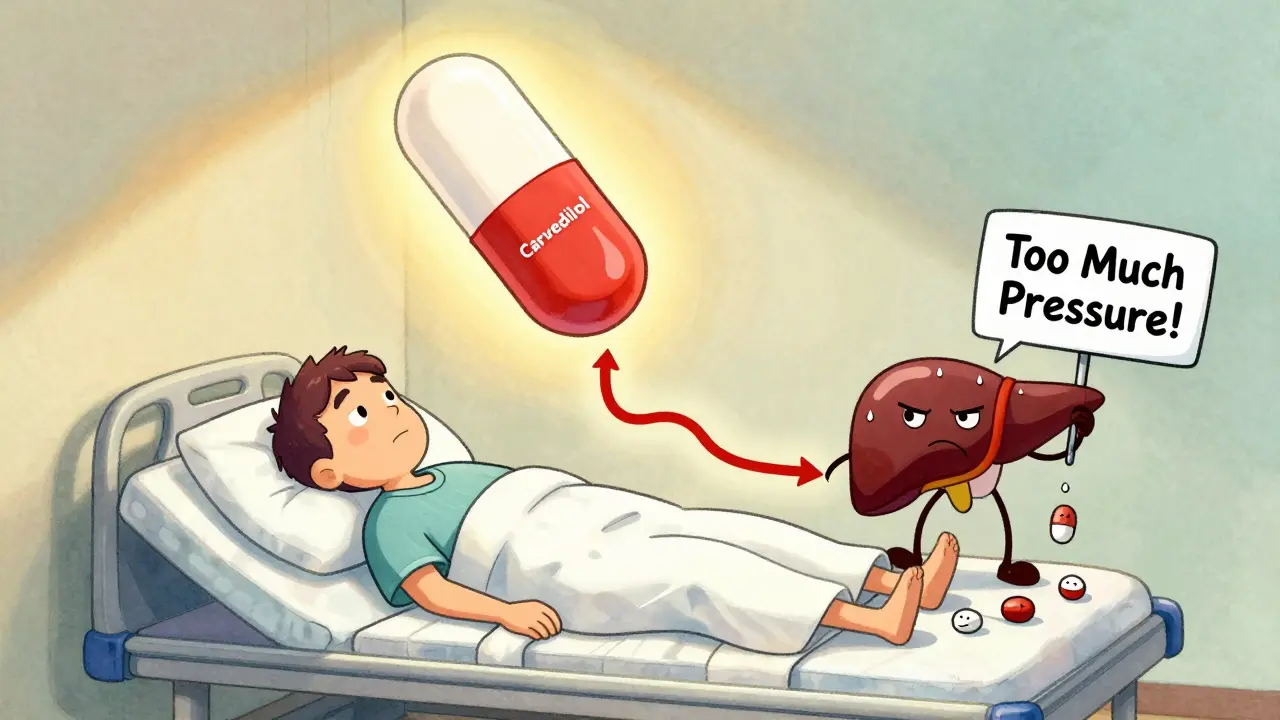
Stopping the bleed is step one. Preventing it from happening again is step two. And that’s where beta-blockers come in. These aren’t your typical heart meds. Non-selective beta-blockers like propranolol and carvedilol reduce pressure in the portal vein by slowing your heart and relaxing blood vessels in your gut. Think of it like turning down the water pressure in a leaky pipe.
Carvedilol is now preferred over propranolol. Studies show it lowers portal pressure more-22% versus 15%. It also cuts your risk of rebleeding by about half. But it’s not easy to take. Side effects? Fatigue, dizziness, low heart rate. About 1 in 4 people can’t tolerate the full dose. One patient on Reddit said, “Propranolol made me so tired I couldn’t get out of bed.” Switching to carvedilol helped, but the cost? Up to $40 a month. For people on fixed incomes, that’s a real barrier.
Here’s the catch: beta-blockers alone won’t stop an active bleed. That’s why guidelines say you need both banding and a beta-blocker together. Alone, beta-blockers only stop bleeding in about half the cases. Together with banding? That jumps to 90%.
Who Needs What? A Quick Guide
Not every patient gets the same treatment. It depends on how bad your liver is, whether you’ve bled before, and what kind of varices you have.
- First-time bleed? Band the varix immediately, start beta-blockers right away, and give a vasoactive drug like terlipressin or octreotide to reduce blood flow while you prepare for endoscopy.
- Already bled before? You’ll need lifelong banding sessions (usually 3-4 spaced two weeks apart) plus daily beta-blockers. Some patients get a combination of both to keep varices gone.
- Gastric varices? These are harder to treat with banding. Sometimes you need a procedure called BRTO, where a balloon is used to block blood flow and inject glue into the vein. Mortality drops from over 6% with banding alone to under 3% with BRTO.
- High-risk cirrhosis (Child-Pugh B or C)? You might be a candidate for TIPS-a tiny metal stent placed inside the liver to create a shortcut for blood flow. It cuts rebleeding risk dramatically, but 1 in 3 patients develop brain fog (hepatic encephalopathy) from it. Only 45% of U.S. hospitals can do it within 24 hours, so access is limited.
The Real Cost of Treatment
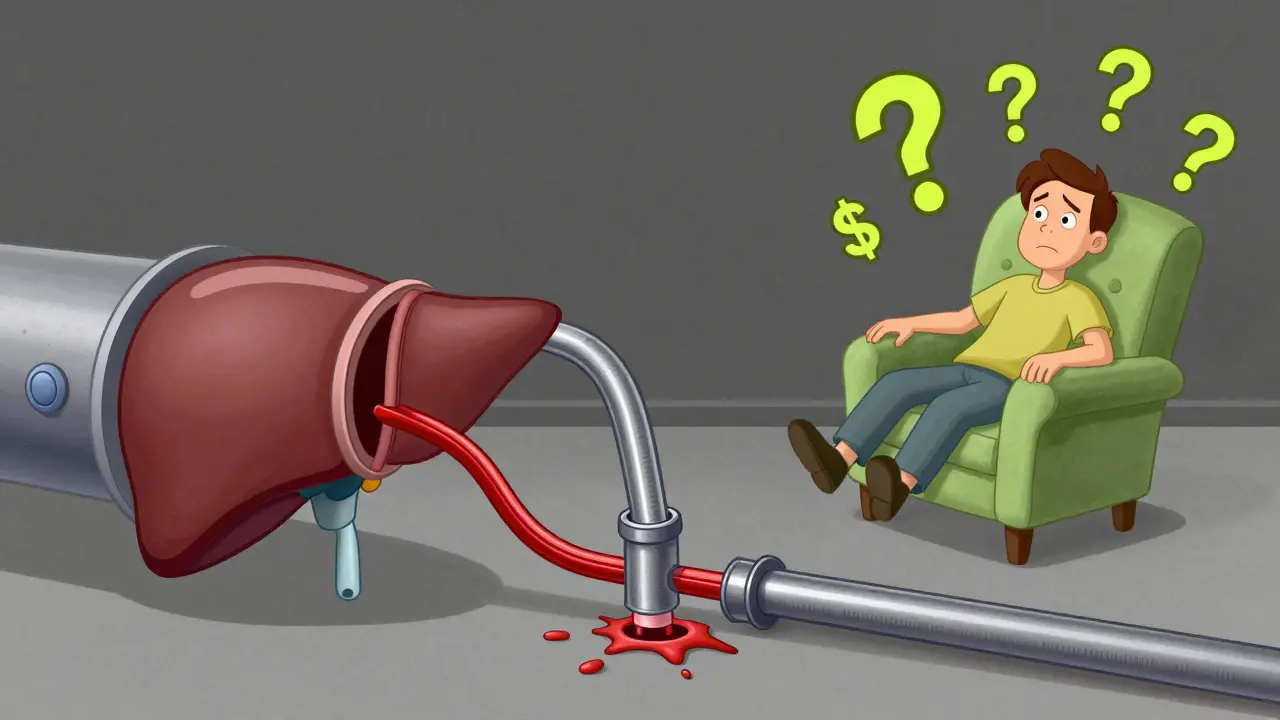
Variceal bleeding isn’t just dangerous-it’s expensive. In the U.S., one banding session costs between $1,200 and $1,800. If you need four sessions? That’s $7,200 minimum. Beta-blockers? Generic propranolol runs $4 to $10 a month. Carvedilol? $25 to $40. Vasoactive drugs like octreotide? Daily injections can hit $500 a week. The new long-acting version (Sandostatin LAR) costs more upfront but cuts dosing to once a month, which helps adherence.
And then there’s the hidden cost: time. Banding sessions require hospital visits every 1-2 weeks for months. Many patients say they dread them. One person wrote, “I dread the banding appointments every 2 weeks, but I know it’s saving my life.” That emotional toll is real. So is the physical one-throat pain after banding can last weeks, making eating painful.
Why Prevention Is the Best Strategy
The best way to avoid a bleed? Don’t let varices form in the first place. If you have cirrhosis and large varices, even if you’ve never bled, guidelines now recommend starting carvedilol early. A 2023 study showed it works almost as well as banding for primary prevention-with fewer procedures and less risk of complications.
But here’s the problem: only 55% of patients ever reach the full therapeutic dose of beta-blockers. Why? Side effects, forgetfulness, lack of follow-up. That’s why programs like the American Liver Foundation’s nurse navigator service matter. They help patients get meds, schedule appointments, and understand what’s happening to their body.
And yet-despite all this, 65% of patients still have at least one rebleed within a year. That’s a sobering number. It means our tools work, but they’re not enough. We still need better drugs, better access, and better ways to predict who’s going to bleed before it happens.
What’s Next?
The future is coming. New research is testing artificial intelligence to predict bleeding risk by analyzing scans and lab results. One trial is exploring a new way to do TIPS without going through the neck vein-using a needle through the spleen instead. If it works, TIPS could be offered in 75% of hospitals instead of just 45%.
And there’s growing evidence that carvedilol might replace banding entirely for primary prevention in some patients. The Baveno VIII meeting in 2024 will decide if that’s the new standard.
For now, the message is clear: if you have cirrhosis, get screened for varices. If you have them, treat them. Banding stops the bleeding. Beta-blockers prevent it. Together, they save lives. But they’re only part of the solution. The real breakthrough will come when we stop waiting for the bleed to happen-and start predicting it before it starts.
What is the most effective treatment for an active variceal bleed?
The most effective treatment is endoscopic band ligation (EBL) performed within 12 hours of bleeding. It stops the bleed in 90-95% of cases. It’s combined with intravenous vasoactive drugs like terlipressin or octreotide to reduce blood flow while preparing for the procedure. Beta-blockers are started afterward to prevent rebleeding, but they don’t stop active bleeding on their own.
Why is carvedilol preferred over propranolol for variceal prevention?
Carvedilol lowers portal pressure more effectively than propranolol-22% versus 15%-according to head-to-head trials. It also reduces the risk of rebleeding by about 50%, similar to propranolol, but with potentially better outcomes in patients with advanced cirrhosis. While both are effective, carvedilol’s added vasodilating properties make it superior for reducing pressure in the portal system.
Can varices be treated without endoscopy?
For primary prevention (before a bleed), yes-beta-blockers like carvedilol can prevent varices from rupturing. But once bleeding occurs, endoscopy is required to stop it. For gastric varices, alternatives like BRTO (balloon-occluded retrograde transvenous obliteration) or TIPS may be used, but these still require specialized procedures. There is no non-invasive method to stop an active variceal bleed.
How often do you need banding sessions?
Most patients need 3 to 4 banding sessions, spaced 1 to 2 weeks apart, to fully eliminate varices. After that, maintenance endoscopies are done every 6 to 12 months to check for recurrence. Even after varices are gone, patients continue taking beta-blockers long-term because new varices can form if liver disease progresses.
What are the risks of TIPS for variceal bleeding?
TIPS (transjugular intrahepatic portosystemic shunt) is highly effective at preventing rebleeding, especially in high-risk patients. But it carries a 30% risk of hepatic encephalopathy-brain fog, confusion, even coma-because blood bypasses the liver. It’s also technically complex and only available in about half of U.S. hospitals. For that reason, it’s usually reserved for patients who keep rebleeding despite banding and meds.
Can you live a normal life after variceal bleeding?
Yes, but it requires lifelong management. You’ll need regular endoscopies, daily medications, and strict avoidance of alcohol. Many people return to work and daily activities after recovery. The biggest challenges are side effects from beta-blockers and the emotional burden of frequent hospital visits. Survival rates improve significantly with adherence to treatment, but the underlying liver disease must still be managed to prevent further damage.
What You Can Do Right Now
If you or someone you know has cirrhosis, ask your doctor about screening for varices. It’s a simple endoscopy that takes 10 minutes. If varices are found, start beta-blockers early-don’t wait for a bleed. If you’re already on propranolol and feel exhausted, ask about switching to carvedilol. It might work better for you.
If you’ve had a bleed, stick with your banding schedule. Skip one session, and your risk of rebleeding jumps. Talk to your care team about financial help programs-many drug manufacturers offer copay assistance for carvedilol.
And if you’re feeling overwhelmed? Reach out. The American Liver Foundation has nurse navigators who help patients get through treatment. You’re not alone in this.


Post A Comment