

When someone is taking multiple medications every day, especially older adults with chronic conditions, keeping track of what to take, when, and why can become overwhelming. That’s where family members or caregivers come in. But simply saying "Can you help with the pills?" isn’t enough. Effective medication support requires structure, clear communication, and practical tools. This isn’t about doing things for someone-it’s about working together so they stay safe, healthy, and in control.
Start with a Complete Medication List
The first thing any caregiver should do is create a master list of every medication the person is taking. Not just the names. Every detail matters. Write down the brand name and generic name, the exact dose (like "Lisinopril 10mg"), how often it’s taken ("once daily at 8 AM with food"), why it was prescribed, and any known side effects or interactions. Don’t rely on memory. Don’t use scraps of paper. Use a notebook, a digital document, or a printable template from the Agency for Healthcare Research and Quality (AHRQ). Update this list within 24 hours of any change-whether it’s a new prescription, a dose adjustment, or a drug being stopped.
Why does this matter? A 2021 study in the Journal of General Internal Medicine found that 50-60% of medication errors happen during transitions-like when someone leaves the hospital and goes home. That’s when prescriptions change, and nobody has the full picture. A complete list cuts that risk in half. Bring this list to every doctor visit. Ask the pharmacist to review it. If a specialist prescribes something new, ask: "Does this interact with any of the other meds on this list?"
Use a Pill Organizer That Actually Works
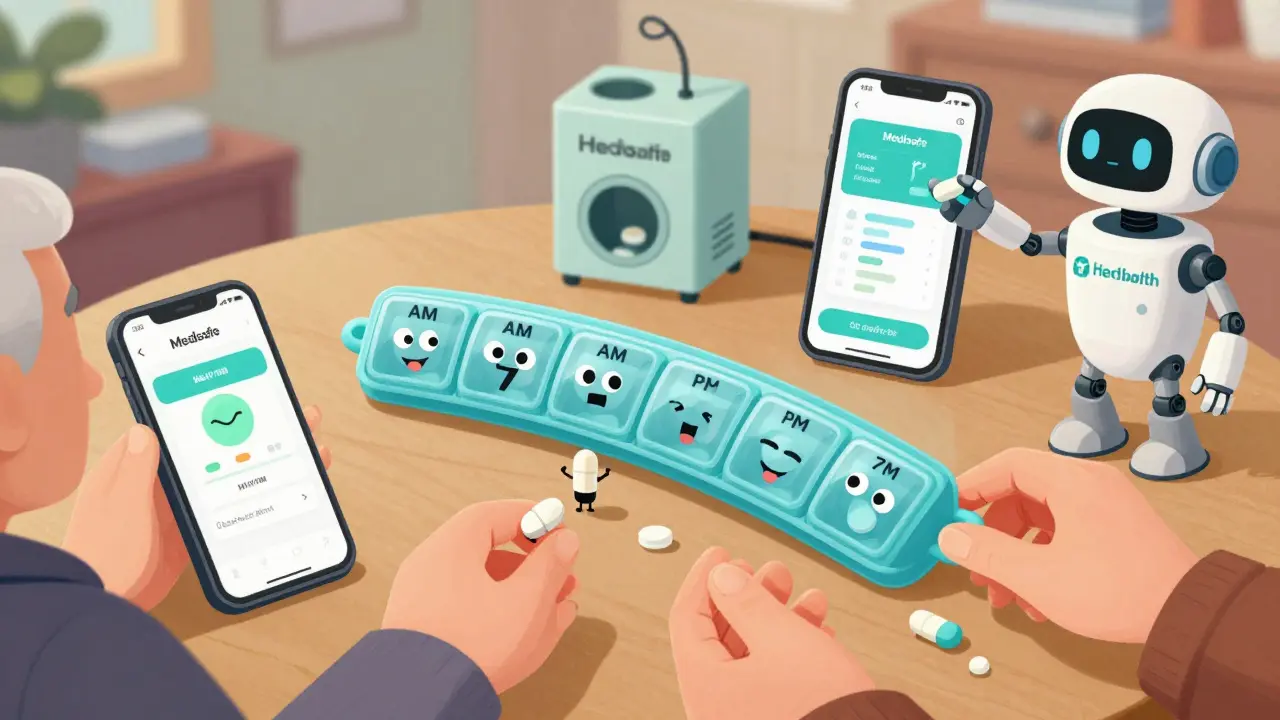
Pill organizers aren’t just convenient-they’re proven. A 2022 study in the Journal of the American Geriatrics Society found that using a 7-day AM/PM pill organizer reduced medication errors by 37%. But not all organizers are equal. For someone taking meds three or four times a day, a simple weekly box won’t cut it. Look for ones with labeled compartments for morning, afternoon, evening, and bedtime. Some even have locking lids to prevent accidental overuse.
For more complex regimens, consider electronic pill dispensers. Devices like Hero Health automatically dispense pills at set times, send alerts to phones, and notify caregivers if a dose is skipped. Clinical trials show these systems reduce missed doses by 62%. They’re not cheap, but for someone with memory issues or a complicated schedule, they’re worth it. Medicare Part D and some private insurers may cover part of the cost if prescribed by a doctor.
Build Routines Around Daily Habits
People remember habits better than schedules. That’s why linking medication times to daily routines works. This technique is called "habit stacking." For example:
- Take blood pressure pills right after brushing your teeth in the morning.
- Take diabetes meds with breakfast, not before.
- Take evening pain reliever after turning off the TV.
A 2022 study from the National Institute on Aging showed that habit stacking improves adherence by 28%. It doesn’t require tech or tools-just consistency. Pick one or two meds to start with. Once those stick, add more. The goal is to make taking meds automatic, not another task on a to-do list.
Set Up Reliable Reminders
Even with a routine, reminders help. Paper calendars fade. Phone alarms get silenced. Digital tools are more reliable. Apps like Medisafe and Round Health send push notifications, track adherence, and let caregivers get alerts if a dose is missed. One study found these apps improve adherence by 45% compared to paper logs.
For people with dementia or hearing loss, voice assistants like Amazon Alexa are game-changers. A 2023 University of Pittsburgh study showed voice-activated reminders reduced missed doses by 37% in cognitively impaired patients. Set up a routine like: "Alexa, remind me at 8 AM to take my pills." Then link it to a smart speaker in the kitchen or bedroom where the person spends most of their time.
Get Pharmacy Support
Pharmacists are the most underused resource in medication management. Nearly 92% of U.S. pharmacies have pharmacists available for free consultations without an appointment, according to the American Pharmacists Association (2023). Take the medication list to the pharmacy. Ask these four questions:
- What time should this be taken relative to meals?
- Are there foods, drinks, or other meds it shouldn’t be taken with?
- What should I do if a dose is missed?
- When should I expect to see results?
Also, sign up for automatic refills. Most major pharmacies-including CVS, Walgreens, and Medicare Part D plans-offer this. It prevents last-minute shortages and reduces the chance of running out. Set up refills 7-10 days before the bottle runs out. You’ll get a text or email when it’s ready.
Review Medications Regularly
Medications shouldn’t be taken forever just because they were prescribed once. The American Geriatrics Society’s Beers Criteria lists 30 drug classes that are risky for older adults-like certain sleep aids, antihistamines, and muscle relaxers. These can increase fall risk, confusion, or even death.
Ask the doctor or pharmacist to review all meds every three to four months, especially if the person is on four or more prescriptions. A 2022 analysis in JAMA Internal Medicine found that regular reviews reduced inappropriate prescriptions by 22%. Bring the full list. Say: "Can we go through each one? Is this still needed? Are there safer options?"
Create an Emergency Plan
Some meds can’t be skipped. Missing one dose of insulin, blood thinners like warfarin, or heart medications can lead to a hospital visit-or worse. Create a "medication red list"-a separate note with the names of these critical drugs and what to do if a dose is missed. For example:
- If insulin is missed: Call the doctor immediately. Check blood sugar. Do not double the next dose.
- If warfarin is missed: Call the clinic. Do not take a double dose. Record the date and time.
A 2023 study in the Annals of Internal Medicine found that families with a clear emergency plan reduced emergency room visits by 19%. Tape this list to the fridge. Save it in your phone. Give a copy to the neighbor or local pharmacy.
Attend Appointments Together
When you go to the doctor, come along. Bring the medication list. Take notes. Ask questions. The AARP 2023 Caregiving Survey found that 89% of caregivers who attended appointments reported better understanding of the medication plan. Doctors talk faster than most people realize. If the patient is confused, you can ask: "Can you explain that again?" or "What happens if they skip this?"
Also, ask if the doctor uses electronic health records that let patients view their own med lists. The 21st Century Cures Act requires this by 2025. Start using these portals now. They’re free and help keep everyone on the same page.
Avoid Common Mistakes
Not all caregivers succeed. The biggest pitfalls:
- Multiple prescribers: If the person sees four doctors, each might prescribe something without knowing what the others did. That’s how dangerous interactions happen. A Reddit user from r/caregivers said, "Nobody knew what the others prescribed until I created a master list and brought it to every appointment."
- Complex schedules: Medications taken three or more times a day have 40% lower adherence, according to the New England Journal of Medicine. Simplify when possible. Ask if a once-daily version exists.
- Ignoring side effects: Dizziness? Confusion? Falls? These aren’t "just aging." They might be drug reactions. Document them. Bring them up.
- Carrying over old meds: Don’t assume a medication is still needed just because it’s been taken for years. Review it.
Take Care of Yourself Too
Medication management is stressful. The National Alliance for Caregiving found that 42% of caregivers say managing meds is their most stressful task. Burnout is real. If you’re overwhelmed, ask for help. Can a sibling take over refills? Can a home care worker check the pill box? Use community resources. Many local Area Agencies on Aging offer free caregiver training. Some pharmacies now have dedicated "caregiver support hubs," like Walgreens’s 2024 launch. You don’t have to do it all alone.
Can a caregiver legally give someone their medication?
Yes, caregivers can help administer medications as long as they’re not the one prescribing them. This includes opening bottles, setting up pill organizers, reminding the person to take meds, and even helping them swallow pills. But caregivers should never adjust doses, stop meds, or start new ones without approval from a doctor or pharmacist. Always follow the written instructions exactly.
What if the person refuses to take their meds?
Refusal is common, especially if side effects are uncomfortable or the person doesn’t feel sick. Don’t force it. Talk to the doctor. Maybe the dose can be lowered, switched to a different drug, or taken at a better time. Sometimes, changing the form helps-like switching from pills to liquid. If the person has dementia, try using habit stacking or visual cues (like a picture of a pill next to breakfast). If refusal is persistent, the care team may need to reassess whether the medication is still necessary.
Are there free tools to help track medications?
Yes. Many pharmacies offer free printable medication logs. Apps like Medisafe and Round Health have free versions with basic reminders and tracking. The Agency for Healthcare Research and Quality (AHRQ) provides downloadable medication lists on their website. Medicare Part D beneficiaries can also get free medication reviews through their plan’s Medication Therapy Management (MTM) program. All you need is the full list of meds and a phone call.
How often should medication lists be updated?
Update the list immediately after any change-whether it’s a new prescription, a dose change, or a medication being stopped. Hospitals discharge patients with new regimens every day, and 68% of caregivers report confusion during this transition. Keep the list current. A 2023 study showed that caregivers who updated their lists within 24 hours of a change reduced medication errors by 33%.
What should I do if I miss a dose?
It depends on the medication. For most drugs, if you miss a dose, take it as soon as you remember-unless it’s almost time for the next one. In that case, skip it and go back to the regular schedule. Never double the next dose unless instructed. For critical meds like insulin, blood thinners, or seizure drugs, always call the doctor or pharmacist immediately. Keep a "red list" of these high-risk drugs and what to do if they’re missed.
Medication support isn’t about perfection. It’s about progress. Start with one step-maybe just writing down the meds. Then add a pill box. Then set a phone reminder. Over time, these small actions add up. The goal isn’t to control everything-it’s to make sure the person gets the right meds at the right time, without fear, confusion, or danger.


Post A Comment