
Every year, millions of people in the U.S. take prescription drugs, over-the-counter medicines, and medical devices without issue. But for some, things go wrong. A rash that won’t go away. A sudden drop in blood pressure. Liver damage from a drug you’ve taken for years. These aren’t rare - they’re adverse drug events, and they need to be reported. The FDA’s MedWatch program is the main way this happens. If you’re a patient, a nurse, a pharmacist, or even a doctor, knowing how to report these events isn’t just helpful - it could save someone’s life.
What Is MedWatch, Really?
MedWatch isn’t just a form or a website. It’s the U.S. Food and Drug Administration’s official system for tracking bad reactions to drugs, medical devices, and other products. Since 1993, it’s been the go-to channel for reporting anything unexpected or harmful that happens after taking a medication. The FDA doesn’t just rely on clinical trials to know if a drug is safe. Real-world use reveals things labs never saw - like rare side effects, interactions with other meds, or reactions in older adults or pregnant people. MedWatch collects those reports, and when enough come in, the FDA acts. They might add a black box warning, change dosing instructions, or even pull a drug off the market.
Each year, the FDA gets about 1.3 million reports through MedWatch. That sounds like a lot - but experts say it’s likely only 1% to 10% of actual events are reported. That’s a huge gap. Why? Many people don’t know how to report. Others think, “It’s probably just me.” Or, “The doctor already knows.” But here’s the truth: if you don’t report it, the FDA doesn’t see it. And that means no one else will know to be careful.
Who Can Report?
Anyone can report. You don’t need to be a doctor. You don’t need proof. You don’t even need to be sure the drug caused the problem. If you or someone you know had a bad reaction after taking a medication, device, or supplement - report it. The FDA wants to know.
There are two main groups who report:
- Healthcare professionals - doctors, nurses, pharmacists, and others - use Form 3500. This form asks for detailed clinical info: lab results, timing of symptoms, other medications, patient history.
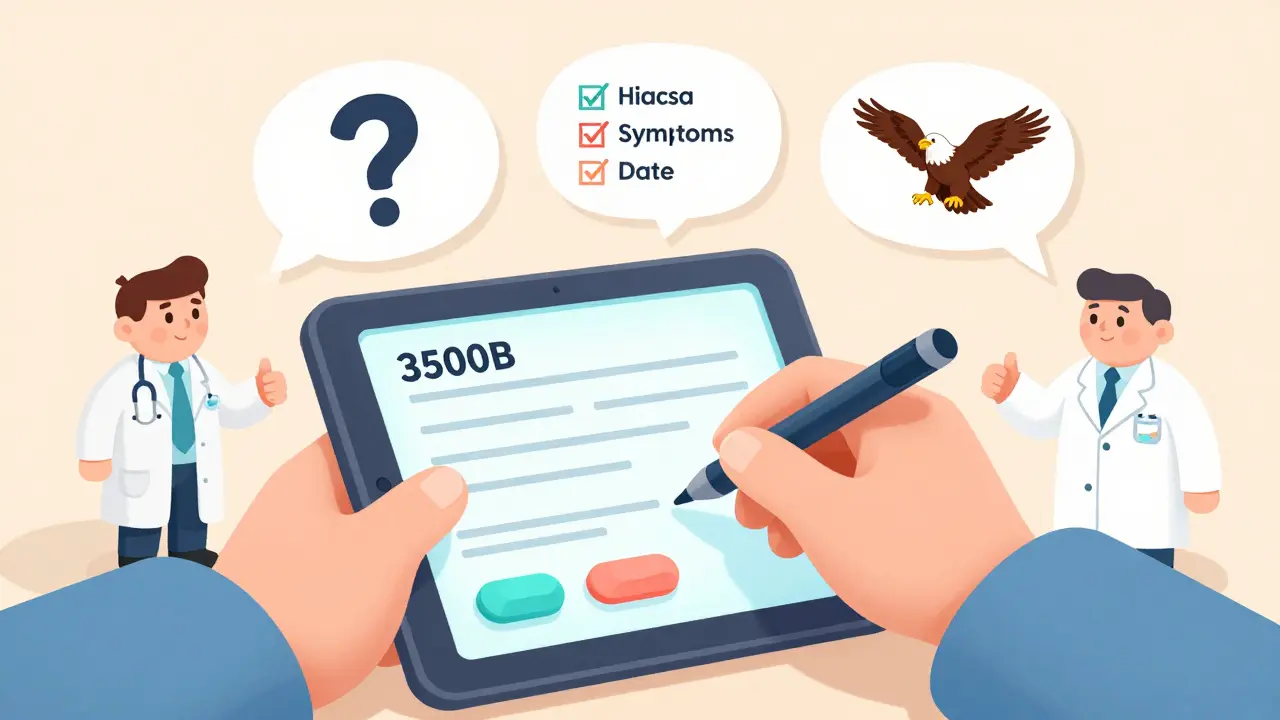
- Patients and consumers - that’s you - use Form 3500B. It’s shorter, simpler, and written in plain language. No medical jargon required.
Manufacturers and hospitals must report too - but that’s not your job. Your job is to notice, document, and report if something feels wrong.
What Counts as an Adverse Event?
You don’t need to be a scientist to know if something’s off. The FDA defines an adverse event as any unintended, unfavorable medical occurrence after taking a product. That includes:
- Severe nausea or vomiting lasting more than a day
- Unexplained bruising or bleeding
- Swelling, rash, or difficulty breathing
- Changes in mood, anxiety, or suicidal thoughts after starting a new drug
- Kidney or liver problems detected in blood tests
- A reaction that required a hospital visit or emergency care
Even if you’re not sure the drug caused it - report it anyway. The FDA doesn’t need you to prove causation. They’ll figure that out. Your job is to flag the pattern. One report might not change anything. But 50? 100? That’s when the system wakes up.
How to Report: The 5-Step Process
Reporting is easier than you think. Here’s how to do it right:
- Gather your info. Before you start, have ready: the name of the drug (brand and generic), dosage, when you started and stopped taking it, when the reaction happened, how long it lasted, and any related symptoms. If you have lab results or doctor’s notes, keep them handy - you won’t upload them, but you’ll need to describe them.
- Choose your form. Go to FDA.gov/MedWatch. If you’re a patient, click “Consumer Reporting.” You’ll get Form 3500B. If you’re a professional, click “Healthcare Professional Reporting” for Form 3500.
- Fill it out. The form walks you through step by step. You’ll need: patient age and sex (no full name or SSN needed - initials are fine), drug name, event description, outcome (did you recover? Was it permanent?), and your contact info (so they can follow up if needed). Don’t skip the “time to event” field - knowing if the reaction happened 2 hours or 2 weeks after taking the drug helps experts spot patterns.
- Submit. You can submit online, by fax, or by mail. Online is fastest - and it’s free. The system auto-saves as you go, so you won’t lose your work if you get interrupted. After you submit, you’ll get a confirmation email. The FDA says you’ll get an acknowledgment within 21 days.
- Follow up if needed. If your symptoms worsen or you get new info (like a lab result), you can submit a follow-up report. It’s not required, but it helps.
What You Don’t Need to Worry About
People often hesitate because they think:
- “I’ll get in trouble.” Nope. Reporting is anonymous. The FDA doesn’t share your name with the drug company.
- “It’s not serious enough.” If it affected your life - even if you recovered - report it. Mild reactions can be early signs of bigger problems.
- “The doctor already knows.” Maybe. But they might not report it. Only about 32% of community pharmacies have formal reporting protocols. You’re the one who lived it. You’re the best source.
- “It’ll take too long.” Form 3500B takes 10-15 minutes. Most people finish in under 12. The online form is designed to be quick.
What’s New in 2026?
The FDA isn’t standing still. In 2023, they launched the MedWatch AI Assistant - a tool that auto-fills form fields using clinical notes. In 2024, they added new fields for cannabis-derived products, since reports of liver issues and dizziness from CBD and THC products have jumped 327% since 2020. And by January 2025, hospitals will be required to report electronically - meaning more data, faster.
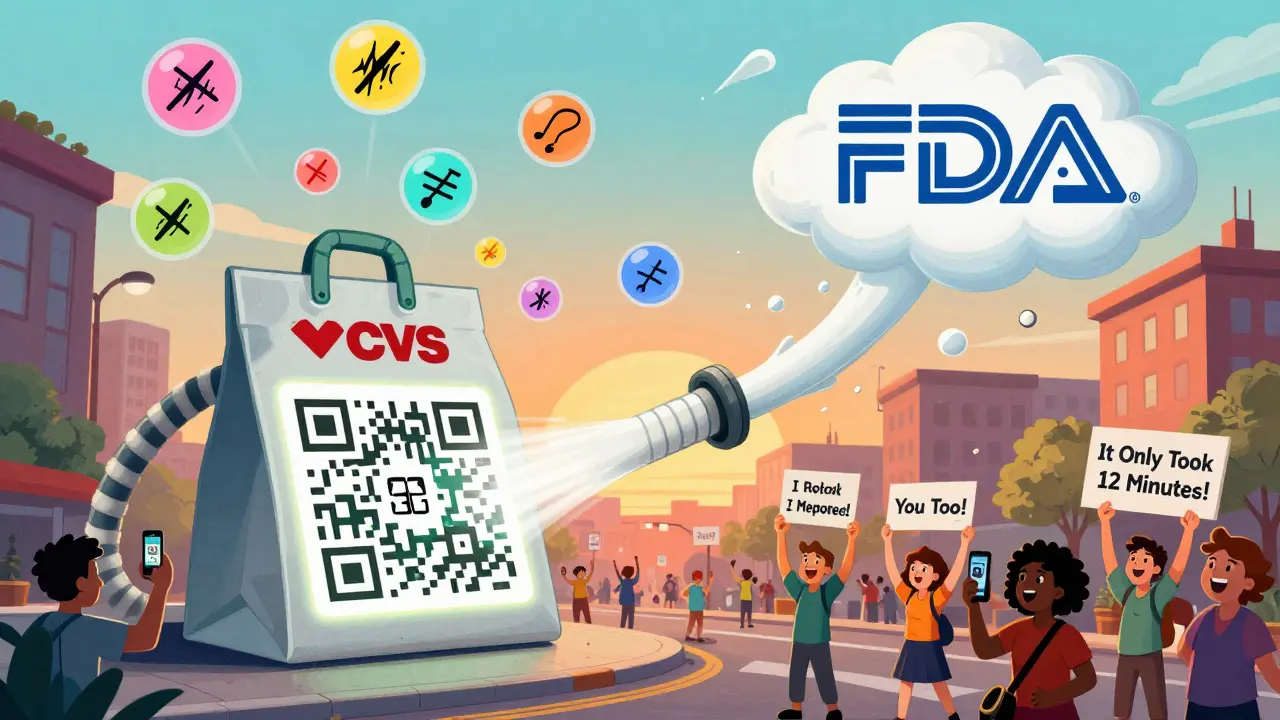
They’re also running the “MedWatch Everywhere” campaign. You’ll now find QR codes on prescription bags at major pharmacies like CVS and Walgreens. Scan it, answer three questions, and you’re done. No forms. No login. Just report.
What If You Report and Nothing Happens?
It’s frustrating. You report a reaction. You wait. You check. Nothing changes. But here’s the thing: change doesn’t happen because of one report. It happens because of patterns. One person’s rash. Ten people’s dizziness. A hundred people’s kidney damage. That’s when the FDA starts digging. That’s when they look at 20,000 other reports. That’s when they say, “We need to warn everyone.”
Dr. Janet Woodcock, former head of the FDA’s drug division, said it best: “Voluntary reports are essential.” They’re not perfect. They’re messy. But they’re the only system we have that catches problems after a drug is already out there - where real people are using it.
What About Vaccines or Animal Drugs?
Don’t report vaccines to MedWatch. They go to VAERS - the Vaccine Adverse Event Reporting System. Animal drugs? That’s a different system, run by the Center for Veterinary Medicine. If you’re reporting a reaction from a human drug, supplement, or medical device - MedWatch is your only stop.
Need Help?
If you’re stuck, call the MedWatch toll-free line: 1-800-FDA-1088. It’s staffed 24/7. The FDA says 95% of calls are answered within 30 seconds. You can also visit their MedWatch Learn portal - it has 12 free training modules on how to report, what counts, and why it matters.
And if you’re a healthcare provider: talk to your patients. Don’t assume they know. Ask: “Have you had any weird side effects since you started this?” Then hand them the link. One conversation could lead to 100 reports.
Do I need to be a healthcare professional to report an adverse drug event?
No. Anyone can report - patients, family members, caregivers, or even bystanders. The FDA designed Form 3500B specifically for consumers. You don’t need medical training. Just describe what happened. The FDA will handle the rest.
What information do I need to report?
You’ll need: the name of the drug (brand and generic), dosage, when you started and stopped taking it, when the reaction occurred, how long it lasted, your symptoms, and whether you recovered. Patient details like age and sex are required, but full names or Social Security numbers are not. You can use initials or a medical record number instead.
Is my report confidential?
Yes. The FDA does not share your personal information with the drug manufacturer. Reports are anonymized before they enter the FDA’s database. Your identity is protected by law, and the FDA only uses your contact info if they need to follow up for clarification.
Can I report a reaction from a supplement or OTC medicine?
Yes. MedWatch covers prescription drugs, over-the-counter medicines, dietary supplements, and medical devices. Whether it’s a weight-loss pill, a pain reliever, or a hearing aid, if it caused an unexpected problem, report it. Supplements aren’t reviewed by the FDA before sale - so your report is especially valuable.
How long does it take for the FDA to act on a report?
There’s no fixed timeline. The FDA reviews all reports continuously. One report rarely triggers action - but when dozens or hundreds of similar reports come in, they investigate. Some safety warnings have been issued within weeks of a pattern emerging. Others take months or years. The key is consistency: the more reports, the faster the response.
What if I made a mistake on my report?
You can submit a follow-up report. The FDA encourages updates if you get new information - like lab results, a diagnosis, or clarification on symptoms. Just include the original report number if you have it. Even if you’re unsure, it’s better to report and update than to stay silent.
Next Steps: What You Can Do Today
- If you’ve had a bad reaction to a drug - go to FDA.gov/MedWatch and report it. It takes 15 minutes.
- If you’re a patient, ask your pharmacist: “Can I get a QR code to report side effects?” Many now have them.
- If you’re a provider, talk to your team. Ask if your EHR system can auto-generate MedWatch reports. Systems like Epic and RPMS can.
- Share this. Post it. Send it to a friend. Most people don’t know this system exists. You can change that.
The system only works if people use it. Your report matters - not because it changes one drug, but because it helps protect thousands of others who come after you.


Post A Comment