

For someone with type 1 diabetes, managing blood sugar every day can feel like a full-time job. Injections multiple times a day, constant finger pricks, guessing how much insulin to take before meals - it adds up. That’s where insulin pump therapy comes in. It’s not a cure, but for many, it’s a game-changer. Instead of needles, you wear a small device that delivers insulin continuously, day and night. Some pumps even adjust insulin automatically based on your glucose levels. But is it right for you? Let’s break down the real pros, the real cons, and what actually happens when you start.
How Insulin Pump Therapy Works
An insulin pump is a small, wearable device - about the size of a smartphone but thinner - that holds insulin in a reservoir. It connects to your body through a tiny tube (or sometimes no tube at all) and inserts a soft plastic catheter under your skin, usually on your belly, arm, or thigh. This catheter stays in place for 2-3 days before you change it. The pump doesn’t just give you a big shot at mealtime. It delivers a steady, low dose of insulin all day long (called basal insulin) and lets you give extra doses (boluses) when you eat or need to correct high blood sugar.
Modern pumps, like the Medtronic MiniMed 780G a hybrid closed-loop system that automatically adjusts basal insulin based on CGM readings, the Tandem t:slim X2 a pump with Control-IQ technology that predicts and prevents low blood sugar, or the Insulet Omnipod 5 a tubeless, waterproof patch pump that works with a smartphone app, are paired with continuous glucose monitors (CGMs). These systems talk to each other. If your glucose starts dropping too fast, the pump slows or stops insulin. If it’s climbing, it gives a small correction. This is called automated insulin delivery (AID), and it’s becoming the new standard.
Real Benefits: What People Actually Say
People who stick with pumps don’t just use them because they’re trendy. They use them because life gets easier.
- Lower HbA1c: A 2022 study of over 25 trials found that pump users had an average HbA1c of 8.3%, compared to 9.2% for those using injections. That’s not just a number - it means fewer long-term complications.
- Less overnight low blood sugar: One user on Reddit said, "My overnight lows dropped from 3-4 times a week to once a month." That’s because pumps can predict drops and cut insulin before you wake up groggy or dizzy.
- More flexibility: Want to eat dinner at 9 p.m.? Go to a concert? Sleep in? No need to plan around insulin timing. You can adjust doses on the fly.
- Fewer injections: You change the infusion set every few days. That’s three or four needle sticks a month instead of 90+.
According to data from the T1D Exchange registry, 82% of pump users say their quality of life improved. The biggest reasons? More freedom around food and fewer scary low blood sugar episodes.
The Downsides: What No One Tells You
It’s not all smooth sailing. Pumps are powerful, but they come with real challenges.
- Technical failures happen: About 15% of users experience a delivery interruption at least once a month. A kinked tube, a dislodged catheter, or a dead battery can stop insulin flow. If you don’t notice it fast, you could develop diabetic ketoacidosis (DKA) in just 4-6 hours. That’s why every pump user needs backup insulin pens - always.
- It’s not "set and forget": You still need to check your glucose often, count carbs, and adjust settings. If you skip meals or forget to bolus, your numbers will swing. Pumps don’t replace diabetes management - they just change how you do it.
- Skin irritation and infections: About 45% of users report redness, itching, or bumps at the insertion site. Some people just can’t tolerate the adhesive.
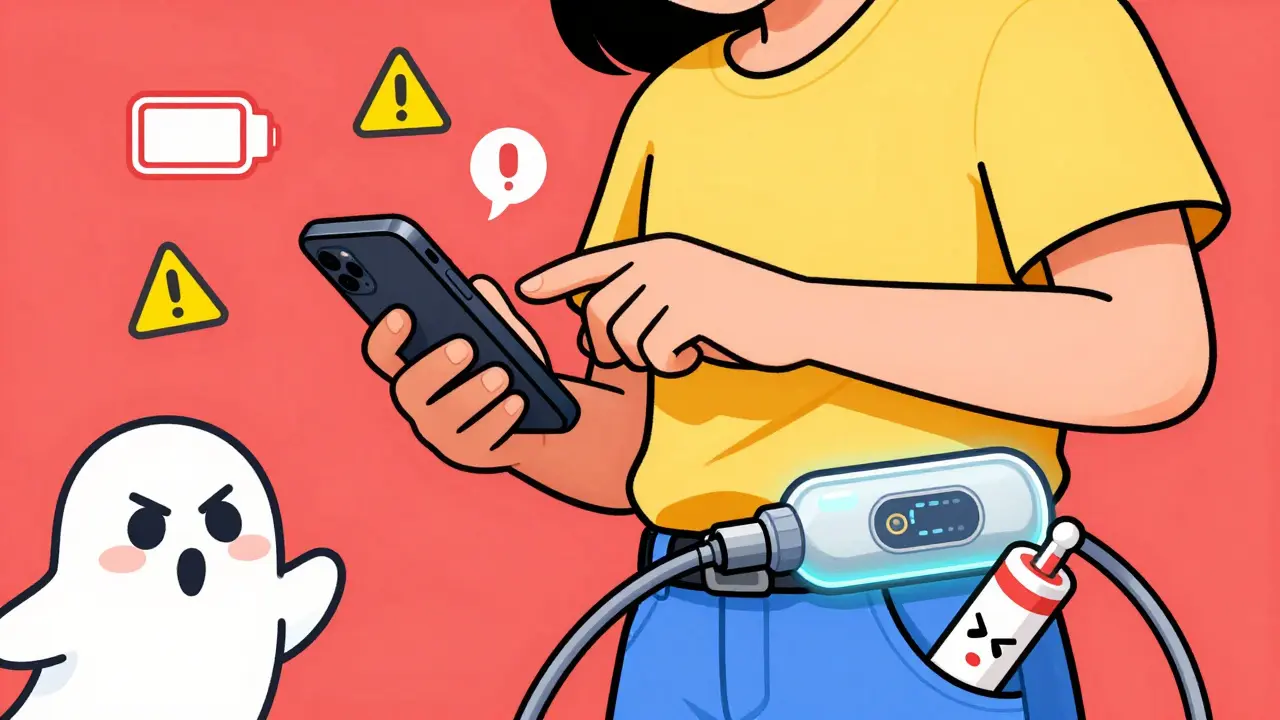
- Alarm fatigue: Pumps beep for low battery, low insulin, high glucose, low glucose - sometimes every hour. Over time, it’s easy to tune them out. That’s dangerous.
- Cost and insurance hurdles: The pump itself costs $5,000-$7,000. Supplies (infusion sets, reservoirs, sensors) run $3,000-$5,000 a year. In the U.S., most people get coverage, but in other countries, it’s a struggle. Even with insurance, out-of-pocket costs can hit $500 a year.
One user on TuDiabetes.org shared: "My Medtronic pump failed during a family vacation. I ended up in the ER with DKA. Now I carry pens everywhere - even to the beach."
Who Is a Good Candidate?
Not everyone needs or should use a pump. Experts from the American Diabetes Association and the Association of Diabetes Care & Education Specialists say pumps are best for people who:
- Have HbA1c above 7.5% despite trying injections
- Have frequent low blood sugar, especially at night
- Have hypoglycemia unawareness (don’t feel when their sugar drops)
- Have high glucose variability - numbers swinging wildly
- Want more flexibility in eating, sleeping, or exercising
It’s also commonly recommended for children. Studies show kids who start on pumps early have better long-term outcomes. The Tandem t:slim X2 is now approved for children as young as 2 years old, and the Omnipod 5 is waterproof up to 3 meters, perfect for kids who swim or sweat.
But if you struggle with anxiety, have trouble using smartphones or small buttons, or avoid checking your glucose regularly, a pump might add more stress than relief. Dr. Anne Peters warns: "Pump therapy requires significant cognitive engagement. It’s not for everyone - especially if you have eating disorders or deep anxiety around technology."
How to Get Started: Step-by-Step
Starting pump therapy isn’t a quick decision. It takes time, education, and planning.
- See your endocrinologist. They’ll review your history, current HbA1c, and how often you get lows. If you’re a good fit, they’ll refer you to a certified diabetes educator (CDE).
- Meet with a diabetes educator. This isn’t a sales pitch. You’ll go through 3-5 sessions over 2-4 weeks. You’ll learn how to calculate insulin-to-carb ratios, how to correct highs, how to troubleshoot alarms, and how to handle pump failures.
- Choose your pump. Your educator will help you compare options. Tube-based pumps (like Medtronic or Tandem) are more common. Tubeless patch pumps (like Omnipod) are popular for active lifestyles. Consider waterproofing, app integration, and whether you want automated delivery.
- Get insurance approval. Most insurers require documentation of HbA1c, hypoglycemia episodes, and failed attempts with injections. This can take 2-6 weeks.
- Start training. You’ll practice inserting the catheter, filling the reservoir, bolusing, and changing settings. Most people need 2-3 weeks to feel confident.
- Go live. Once you’re ready, you’ll switch from injections to the pump. You’ll still need to check your glucose 4-6 times a day - or use a CGM.
Don’t rush. A Cleveland Clinic study found 70% of new users needed 2-3 weeks to get comfortable. Common early mistakes? Placing the catheter on a bony area, forgetting to bolus after snacks, and ignoring low glucose alerts.

What’s Next: The Future of Pump Therapy
The technology is moving fast. In January 2023, the FDA approved the Tandem t:slim X2 for kids as young as 2. The Medtronic MiniMed 880G, expected in late 2024, will extend its safety pause during low blood sugar from 90 to 150 minutes. And the Beta Bionics iLet - a bionic pancreas that delivers both insulin and glucagon - is in final trials and could be available by 2025.
By 2027, experts predict 65% of new type 1 diabetes diagnoses in children will start on automated systems. But even with all this progress, the biggest barrier isn’t tech - it’s access. In the U.S., 22% of patients report insurance denials. In Australia, Medicare covers part of the cost, but out-of-pocket expenses still add up.
Final Thoughts: Is It Worth It?
Insulin pump therapy isn’t magic. It doesn’t make diabetes disappear. But for many, it makes it manageable. It gives back control - not just over blood sugar, but over life. You can sleep later. You can eat pizza at midnight. You can swim without worrying about insulin leaks.
But it demands responsibility. You have to stay engaged. You have to check your numbers. You have to carry backup. You have to learn the tech. If you’re ready for that, it can be life-changing. If you’re not - injections still work. There’s no shame in that.
What matters isn’t the device. It’s whether you can live well with diabetes. And for a growing number of people, that’s exactly what pumps help them do.
Can children use insulin pumps?
Yes. Modern insulin pumps like the Tandem t:slim X2 and Omnipod 5 are FDA-approved for children as young as 2 years old. Many pediatric endocrinologists recommend pumps for kids because they improve HbA1c levels, reduce nighttime lows, and make mealtime and activity easier to manage. Parents typically manage the pump until the child is old enough to handle it themselves - usually around age 10-12, depending on maturity and dexterity.
Do insulin pumps hurt?
The insertion feels like a quick pinch - similar to a finger prick or injection. Most people say it’s less uncomfortable than multiple daily injections. Once the catheter is in, you won’t feel it. The biggest discomfort for many comes from skin irritation or adhesive reactions, not the insertion itself. Changing the site every 2-3 days helps reduce this.
Can I swim or shower with an insulin pump?
It depends on the pump. The Omnipod 5 is waterproof up to 3 meters for 30 minutes, so swimming and showering are fine without removing it. Tube-based pumps like Medtronic and Tandem aren’t waterproof. You’ll need to disconnect them before swimming or bathing. Some users use special cases or adhesive patches to protect the pump during showers, but disconnecting is the safest option.
What happens if the pump stops working?
If your pump stops delivering insulin - whether from a kinked tube, dead battery, or malfunction - your body stops getting insulin within hours. That can lead to high blood sugar and, within 4-6 hours, diabetic ketoacidosis (DKA), which is dangerous. That’s why every pump user must carry fast-acting insulin (in pens or syringes) and know how to use it. Always have a backup plan. If your pump fails, give yourself a basal insulin shot and monitor your glucose closely until you can replace or fix the device.
How long does an insulin pump last?
Most insulin pumps are designed to last 4-7 years before needing replacement. Manufacturers typically offer warranties for 2-4 years. Insurance usually covers a new pump after 4-5 years. However, many people upgrade earlier because of new features - like automated insulin delivery, better CGM integration, or smaller designs. The decision to upgrade often depends on your needs, technology advances, and insurance coverage.


Post A Comment