
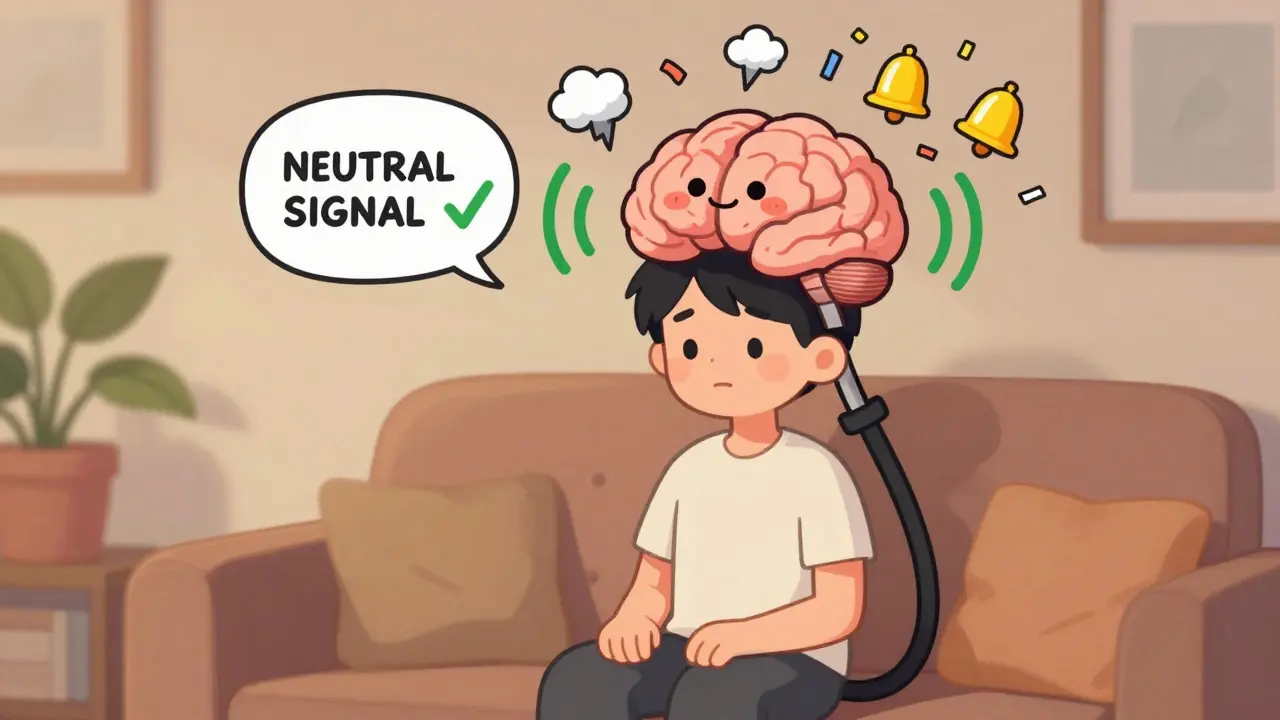
Most people with tinnitus assume the ringing, buzzing, or hissing in their ears will never go away. They try earplugs, white noise machines, or even silence-anything to make it stop. But what if the goal isn’t to eliminate the sound, but to stop reacting to it? That’s the core idea behind Tinnitus Retraining Therapy (TRT), a science-backed method that’s helped over 80% of patients regain peace of mind-not by silencing tinnitus, but by rewiring how the brain responds to it.
Why Trying to Silence Tinnitus Usually Fails
Tinnitus isn’t a disease. It’s a symptom. The sound isn’t coming from your ears like a broken speaker. It’s your brain misinterpreting normal neural noise as dangerous. When you first notice it, your brain sounds an alarm: This is new. This is threatening. Pay attention. That’s normal. But for some people, that alarm never turns off. The limbic system (your brain’s emotional center) and autonomic nervous system (which controls stress responses) get stuck in a loop. Every time you hear the tinnitus, your body tenses up. You scan for it. You dread it. And that reaction makes the sound feel louder and more unbearable-even if the actual noise hasn’t changed. This is why most treatments fail. Earplugs? They make your ears more sensitive. White noise all night? It doesn’t teach your brain to ignore the signal. Medications? They rarely target the root cause. TRT doesn’t try to fix the sound. It fixes your brain’s reaction to it.How TRT Works: Two Keys to Habituation
TRT was developed in the 1990s by Dr. Pawel Jastreboff at the University of Maryland. It’s based on decades of neuroscience and has been validated in multiple clinical studies. The therapy has two non-negotiable parts: specialized counseling and sound therapy. Neither works alone. Together, they trigger habituation-the brain’s natural ability to stop noticing things that aren’t important. Think of it like living near a train track. At first, the noise is unbearable. But after a few weeks, you don’t even notice it anymore. Your brain filters it out. TRT does the same thing-with tinnitus.1. Counseling: Rewriting the Brain’s Alarm System
This is where TRT differs from every other tinnitus treatment. You don’t just get a pamphlet. You get a detailed, personalized lesson on how your hearing system works. Audiologists explain:- How sound travels from the ear to the brain
- Why tinnitus happens (even if your hearing is normal)
- How the amygdala and anterior cingulate cortex turn tinnitus into a threat
- Why your body reacts with stress, anxiety, or sleeplessness
2. Sound Therapy: Lowering the Volume of the Alarm
While counseling changes how you think about tinnitus, sound therapy changes how your brain hears it. This isn’t about blasting white noise. It’s about gentle, constant sound enrichment. Patients wear small, custom-programmed devices (sound generators) that emit low-level broadband noise-like soft static or ocean waves-at just below the level of their tinnitus. The idea? Reduce the contrast between the tinnitus signal and background noise. When the brain doesn’t have to work hard to detect the tinnitus, it stops paying attention. You wear these devices for 6-8 hours a day while awake. You don’t need to wear them while sleeping. The goal isn’t to mask the sound-it’s to train your brain to process it as unimportant. Over time, your brain learns that this noise doesn’t require a stress response. The sound therapy protocol is tailored to your hearing profile:- Group 1: Normal hearing, tinnitus only → Sound generators only
- Group 2: Hearing loss, no tinnitus awareness in quiet → Hearing aids only
- Group 3: Hearing loss + tinnitus → Hearing aids + sound generators
- Group 4: Sensitive to everyday sounds (hyperacusis) → Specialized, gradual exposure
How Long Does TRT Take? Realistic Expectations
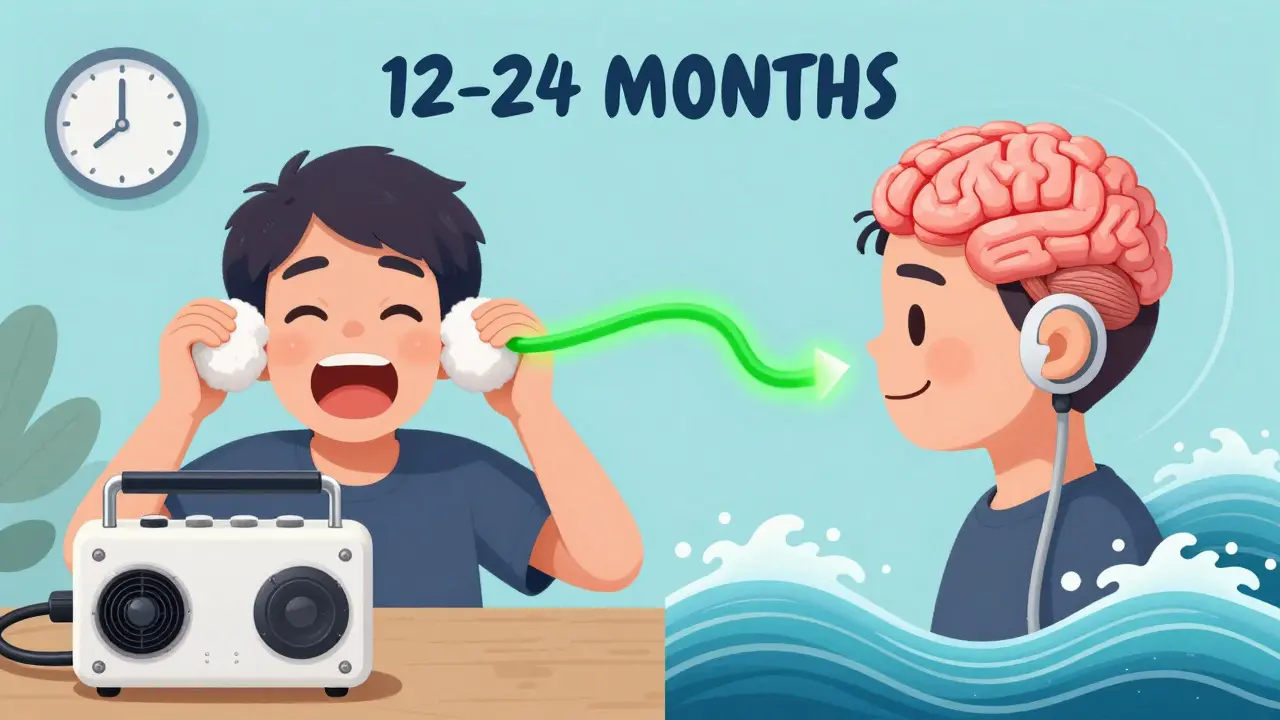
TRT isn’t a quick fix. It’s a long-term brain retraining program. Most people start noticing changes in 3-6 months. Full habituation-where tinnitus is barely noticed-usually takes 12 to 24 months. The first three months involve monthly 60-90 minute counseling sessions. After that, visits drop to every 3-6 months. Sound therapy is done daily, every waking hour. Consistency matters more than intensity. Success isn’t measured by whether the sound disappears. It’s measured by whether you:- Can focus on work without thinking about the ringing
- Sleep through the night without waking up to it
- Feel calm instead of anxious when you hear it
Cost, Accessibility, and Real-World Challenges
TRT isn’t cheap. In the U.S., the full program typically costs $2,500-$4,000. Sound generators range from $500 to $1,200. Insurance rarely covers it. That’s why many people never start-or quit early. Dropout rates are high. About 30-40% of patients stop before the 12-month mark. Why? The daily sound therapy feels tedious. Counseling sessions feel intense. Some find the devices uncomfortable. Reddit forums (r/tinnitus) show mixed reviews: 62% of users reported moderate to major improvement after a year, but 28% said it didn’t help. The biggest factor in success? Finding a certified provider. Only about 500 audiologists in the U.S. are officially trained in TRT. The Jastreboff Foundation requires 40 hours of training plus supervised clinical work. If your audiologist says they “do TRT” but doesn’t use the exact protocols, you’re not getting real TRT.What’s New in TRT? Digital Tools and Future Directions
In 2021, the Jastreboff Foundation launched a telehealth certification program to make TRT more accessible. Now, patients in rural areas or overseas can work with certified providers remotely. Research is also exploring TRT combined with neuromodulation. A 2023 clinical trial (NCT04567891) paired TRT with transcranial magnetic stimulation (TMS). Early results showed 92% of patients improved at 6 months-compared to 78% with TRT alone. That’s promising, but still experimental. Meanwhile, mainstream audiology is slowly adopting TRT principles. A 2022 survey found 65% of major hearing clinics now include some form of counseling or sound enrichment in tinnitus care-even if they don’t call it “TRT.”
TRT vs. Other Treatments
The American Academy of Otolaryngology lists TRT and Cognitive Behavioral Therapy (CBT) as the only two treatments with Level A evidence-meaning strong, consistent clinical support. CBT helps you change how you think about tinnitus. TRT does that too-but adds the physical component of sound therapy to retrain your auditory system. They’re not mutually exclusive. Many patients use both. Other treatments like hearing aids, masking devices, or supplements (e.g., zinc, magnesium) may help some people, but they don’t address the neurological root like TRT does.Who Is TRT Right For?
TRT works best for people who:- Have had tinnitus for more than 6 months
- Are frustrated by standard treatments
- Are willing to commit to daily sound therapy
- Want to understand the science behind their tinnitus
- Are not seeking a quick fix
Final Thoughts: The Power of Noticing Less
Tinnitus doesn’t have to control your life. You don’t need to be silent. You don’t need to be cured. You just need to stop fighting it. TRT doesn’t promise silence. It promises peace. It gives you back the mental space to focus on what matters-your job, your family, your hobbies-without the constant mental chatter of fear and frustration. The sound may still be there. But after TRT, you’ll realize: it’s not the enemy. It’s just noise your brain learned to panic over. And that’s something you can unlearn.Is TRT covered by insurance?
Most insurance plans in the U.S. do not cover TRT because it’s considered a specialized behavioral therapy, not a medical procedure. Some providers offer payment plans or sliding scales. Always check with your audiologist and insurer before starting.
Can TRT work if I have hearing loss?
Yes. In fact, TRT is often more effective for people with hearing loss. If you have hearing loss, your audiologist will combine sound generators with hearing aids to both amplify environmental sounds and provide low-level noise. This dual approach helps the brain focus on real sounds instead of internal ringing.
How do I find a certified TRT provider?
The Jastreboff Foundation maintains a public registry of certified TRT practitioners. You can search by location on their website. Be cautious-many audiologists claim to "use TRT principles," but true TRT requires the full protocol: specific counseling sessions and calibrated sound therapy. Ask if they’re certified by the Jastreboff program.
Do I need to wear the sound generators forever?
No. Once habituation is complete, most people stop using the devices daily. Some keep them for occasional use in noisy environments or during stressful periods. The goal is to retrain your brain so you don’t need them long-term.
Can TRT help with hyperacusis too?
Yes. TRT was originally developed for patients with both tinnitus and sound sensitivity. Group 4 protocols specifically address hyperacusis and misophonia using gradual exposure and desensitization techniques. Many patients with sound sensitivity report significant improvement within 6-12 months.


Post A Comment