
For millions of people around the world, statins are a daily pill that keeps their heart healthy. But for others, that same pill brings aching legs, tired muscles, and sleepless nights wondering if the benefits are worth it. If you’ve been prescribed a statin-or are thinking about it-you’re probably caught between two truths: statins save lives, but they can also make you feel awful.
How Statins Actually Work
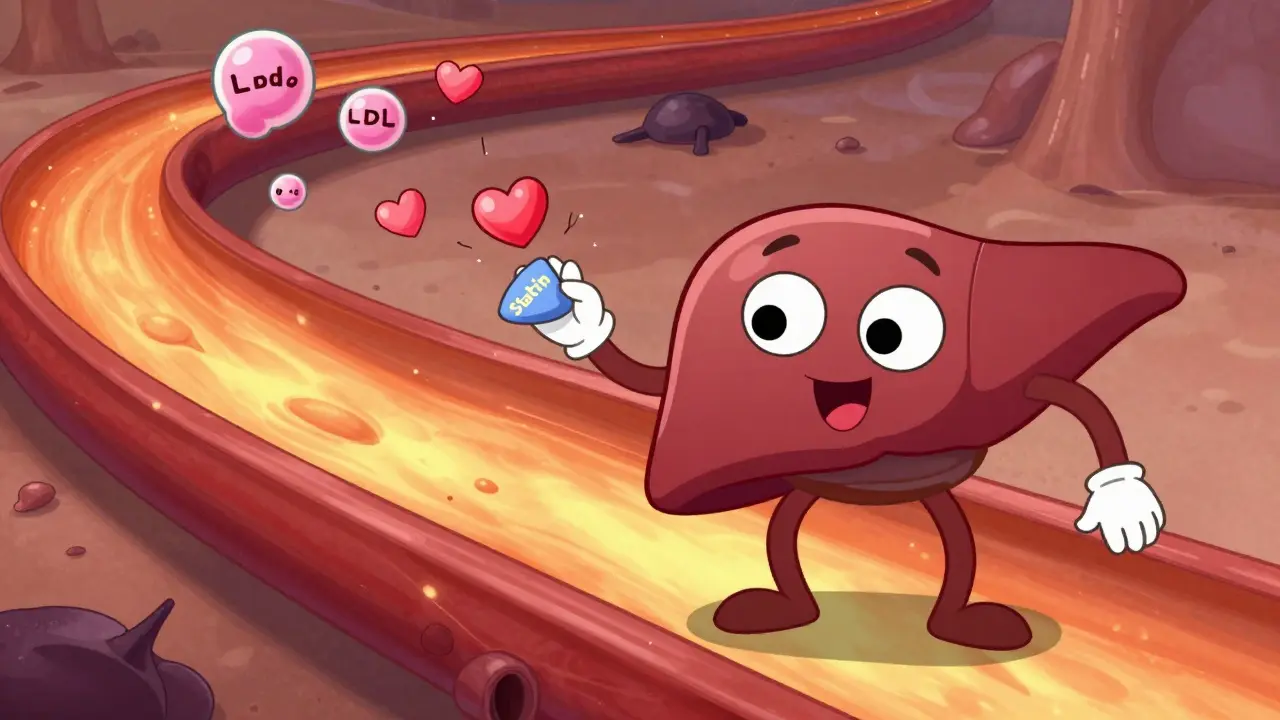
Statins aren’t just cholesterol-lowering pills. They’re targeted drugs that block a specific enzyme in your liver called HMG-CoA reductase. That enzyme is the main factory for making cholesterol. When you take a statin, your liver produces less cholesterol-about 25% to 60% less, depending on the drug and dose. That’s not a small change. It’s the difference between a high-risk heart attack candidate and someone who stays out of the hospital.
But here’s what most people don’t realize: statins don’t just lower LDL (the "bad" cholesterol). They also help stabilize the fatty plaques inside your arteries. These plaques are like bubble gum stuck in a pipe-weak, prone to rupture, and dangerous if they break loose. Statins make those plaques tougher, less likely to burst, and less inflammatory. That’s why even people with normal cholesterol can benefit-especially if they’ve had a heart attack, stroke, or have diabetes.
Studies like the Heart Protection Study and the 4S trial showed that for every 1 mmol/L drop in LDL, your risk of a major heart event drops by about 22%. For someone with high risk, that means a 30% to 40% reduction in heart attacks over five years. That’s not theory. That’s real data from hundreds of thousands of patients.
The Muscle Pain Problem
Now, the other side of the coin: muscle pain. It’s the most common reason people stop taking statins. And yes, it’s real. You don’t just make it up because you don’t like pills.
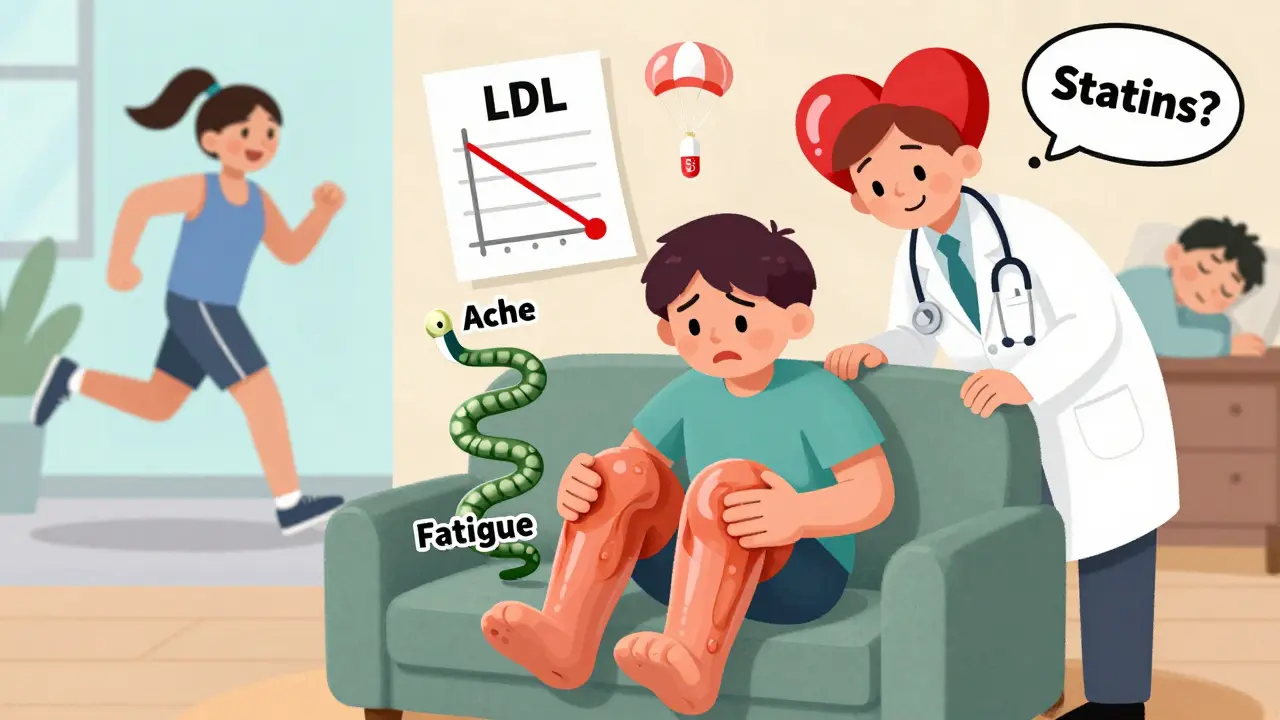
Between 5% and 29% of people on statins report muscle aches, cramps, or weakness. Some feel it in their thighs. Others get sharp pains in their calves after walking. A few can’t climb stairs without stopping. It’s not always the same. For some, it starts after a few weeks. For others, it creeps in after six months. And it’s not just about strength-some say their muscles feel "heavy," like they’ve been running for hours even when they haven’t moved.
The scary version-rhabdomyolysis, where muscle tissue breaks down and can damage kidneys-is extremely rare. Less than 1 in 10,000 people. But the milder version? That’s common enough that doctors should ask about it at every visit.
Why does this happen? Statins interfere with more than just cholesterol. They also reduce levels of coenzyme Q10, which your muscles need for energy. They may affect how muscle cells repair themselves. And some people have a genetic variation (SLCO1B1) that makes it harder for their body to clear certain statins, leading to buildup and more side effects.
Who’s Most at Risk for Muscle Pain?
Not everyone gets muscle pain. But some groups are more likely to:
- People over 65
- Those with kidney or liver problems
- People taking other medications like fibrates, certain antibiotics, or antifungals
- Those who drink grapefruit juice regularly (it interferes with how the body breaks down some statins)
- Women, especially post-menopause
- People with low vitamin D or thyroid issues
And here’s something surprising: the strongest statins aren’t always the best choice. Atorvastatin and rosuvastatin are powerful-they can drop LDL by 50% or more. But they’re also more likely to cause muscle symptoms than pravastatin or fluvastatin. That doesn’t mean you should avoid them. But it does mean your doctor should start low and go slow.
What to Do If You Have Muscle Pain
If you start feeling muscle pain after beginning a statin, don’t just quit. Talk to your doctor. Here’s what usually happens next:
- Check your creatine kinase (CK) levels. This blood test measures muscle damage. Normal levels don’t rule out discomfort, but very high levels mean you need to stop.
- Switch to a different statin. Many people find relief switching from simvastatin to pravastatin or fluvastatin. These are weaker at lowering LDL, but gentler on muscles.
- Lower the dose. Sometimes 10 mg of atorvastatin works just as well as 20 mg for your risk level-and causes fewer side effects.
- Try alternate-day dosing. Some people take their statin every other day and still keep LDL under control.
- Consider coenzyme Q10 supplements. There’s mixed evidence, but some patients report less pain after taking 100-200 mg daily. It’s not a magic fix, but it’s low-risk.
One patient I spoke to in Melbourne switched from rosuvastatin to pravastatin after six months of leg cramps that made her avoid walking. Within two weeks, the pain faded. Her LDL only went up by 0.3 mmol/L-still well below her target. She’s been on pravastatin for three years now, pain-free.
Are Statins Worth It?
This is the question everyone asks. Is the risk of muscle pain worth the chance of avoiding a heart attack?
If you’ve already had a heart attack, stroke, or have diabetes with high cholesterol-the answer is yes. The benefit is huge. You’re not just preventing a future event. You’re extending your life.
If you’re healthy but have high cholesterol? The math changes. For someone with no other risk factors, the absolute benefit is smaller. Maybe you lower your 10-year risk from 10% to 7%. That’s good-but not life-saving. In those cases, lifestyle changes (diet, exercise, weight loss) should come first. Statins aren’t a substitute for healthy habits.
And here’s the truth: most people who stop statins because of muscle pain don’t actually have a true statin-related problem. Studies show that in placebo-controlled trials, up to 70% of people who report muscle pain on statins also report the same pain when taking a sugar pill. That doesn’t mean the pain isn’t real. It means something else-aging, inactivity, vitamin D deficiency, or even anxiety-is playing a role.
That’s why your doctor needs to help you sort it out. Don’t self-diagnose. Don’t quit cold turkey. Work with someone who knows your full history.
What’s Next for Statins?
Science is moving fast. Researchers at Stanford and elsewhere are looking at ways to design statins that protect blood vessels without affecting muscles. Some new drugs in development target only the liver, avoiding muscle tissue entirely. Others are combining statins with compounds that boost muscle energy production.
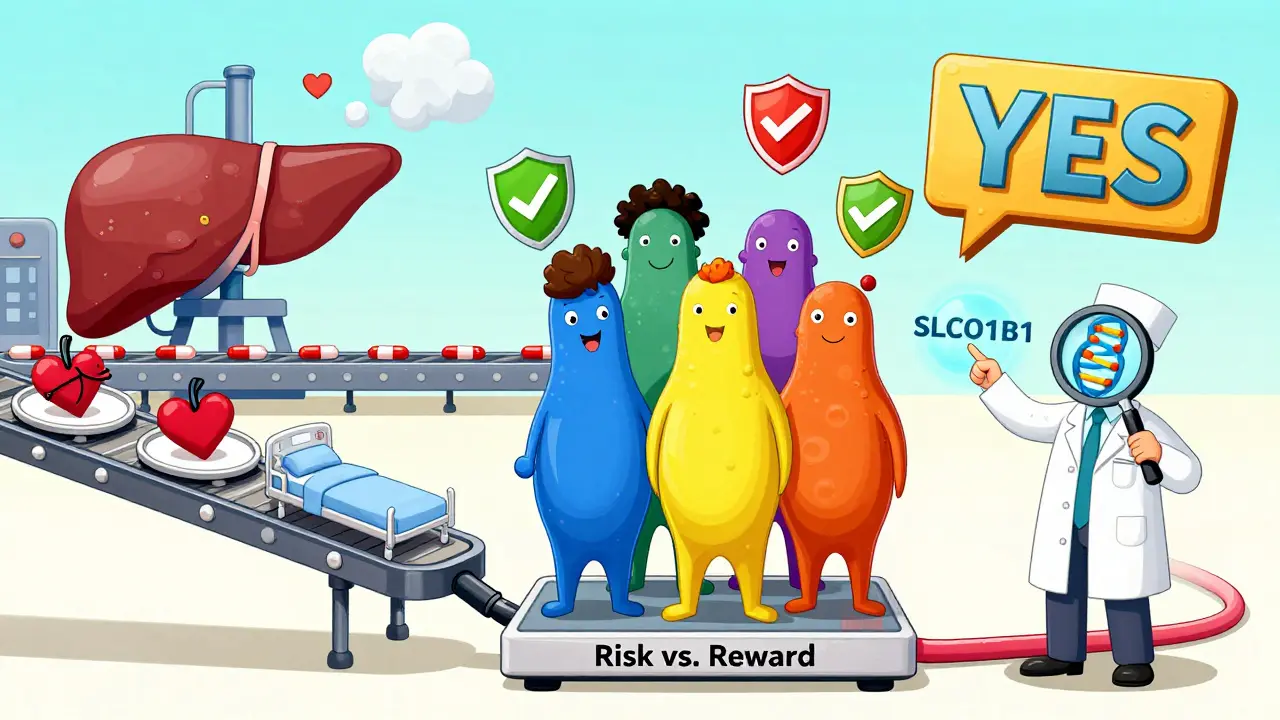
Genetic testing for SLCO1B1 is already available in some countries. If you have the high-risk variant, your doctor might avoid simvastatin altogether and pick something safer. It’s not routine yet-but it’s coming.
For now, the best approach is simple: know your numbers. Know your risk. Know your options. And don’t let fear of side effects stop you from getting the protection you need.
Statins aren’t perfect. But for the right person, they’re one of the most effective tools we have to keep hearts beating.
Do statins cause weight gain?
No, statins are not linked to weight gain. Some people report feeling less energetic after starting statins, which might lead to reduced activity and gradual weight gain-but that’s not a direct effect of the drug. Weight changes are more likely tied to diet, aging, or other medications.
Can I stop taking statins if my cholesterol is normal?
Not without talking to your doctor. Cholesterol levels are just one piece of the puzzle. If you’ve had a heart attack, stroke, or have diabetes, your risk doesn’t disappear just because your numbers improved. Stopping statins can cause your risk to return quickly-often within weeks. Most people need to stay on them long-term.
Are generic statins as good as brand-name ones?
Yes. Generic atorvastatin, simvastatin, and rosuvastatin are chemically identical to their brand-name versions. They’re held to the same FDA and international standards. The only differences are in inactive ingredients, which rarely affect how the drug works. Generic statins cost as little as $4 a month in many places.
Do statins increase the risk of diabetes?
Yes, but the risk is small. For every 255 people treated with a statin for four years, about one extra case of diabetes may occur. But the same group sees 5 fewer heart attacks or strokes. For most people, especially those with high cholesterol or existing heart disease, the heart benefits far outweigh this small diabetes risk.
Is it safe to take coenzyme Q10 with statins?
Yes. Coenzyme Q10 is generally safe and may help reduce muscle pain in some people. It doesn’t interfere with how statins work. Many doctors recommend trying 100-200 mg daily if you’re experiencing muscle discomfort. It’s not a cure, but it’s worth a trial.
Next Steps
If you’re on a statin and feel fine-keep taking it. Don’t change anything without talking to your doctor.
If you’re having muscle pain, write down when it started, where it hurts, how bad it is, and what makes it better or worse. Bring that to your next appointment. Your doctor can help you decide if it’s the statin-or something else.
If you haven’t started yet but are worried, ask your doctor: "What’s my 10-year risk of a heart attack?" and "What’s the benefit for someone like me?" That conversation matters more than any pill.
Statins aren’t for everyone. But for the right person, they’re one of the most powerful tools in modern medicine. Don’t let fear silence your health. Get the facts. Make the choice-with your doctor, not against them.


Post A Comment