
Soy-Levothyroxine Interaction Calculator
Calculate how much soy affects your levothyroxine absorption and determine the safe separation time needed for optimal thyroid medication effectiveness.
Key Facts
- 20g soy protein = 16% absorption reduction
- 40g soy protein = 35%+ absorption reduction
- Recommended separation: 3 hours minimum
- Infants are at highest risk with soy formula
When you’re taking levothyroxine for hypothyroidism, even small changes in your diet can throw off your hormone levels. One of the most common-and often overlooked-interactions involves soy products. If you’ve noticed your TSH levels creeping up despite sticking to your medication schedule, soy might be the hidden culprit.
How Soy Interferes with Levothyroxine
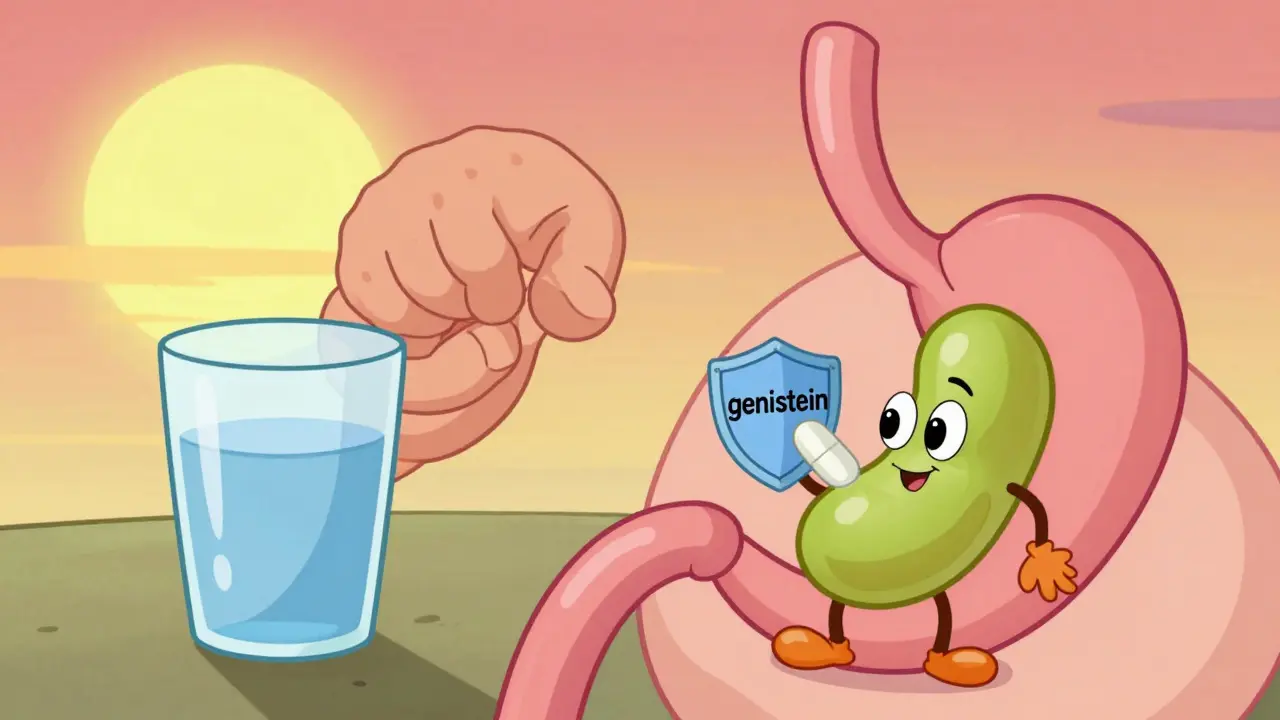
Soy doesn’t stop levothyroxine from working entirely. Instead, it blocks your body from absorbing it properly. The key offenders are isoflavones-specifically genistein and daidzein-found naturally in soybeans and soy-based foods. These compounds bind to levothyroxine in your gut, forming a complex your body can’t absorb. Studies show this reduces absorption by 20% to 40%, depending on how much soy you eat.
It’s not just about eating tofu or drinking soy milk. A single serving of soy can contain 30 to 100 mg of these isoflavones. That’s enough to drop your thyroid hormone levels significantly. In one 2012 study, a baby on levothyroxine became severely hypothyroid after starting soy formula-even though the dose was correct. Another adult patient, taking 112 mcg of levothyroxine daily, still had TSH levels over 200 µIU/mL after drinking soy milk every morning.
The problem isn’t just about timing. Soy interferes with the transporters in your intestines that pull thyroid hormone into your bloodstream. This happens regardless of whether you’re taking a brand-name pill like Synthroid or a generic version. Unlike coffee, which affects some formulations more than others, soy messes with all of them the same way.
How Much Soy Is Too Much?
It’s not about avoiding soy entirely-it’s about managing how and when you consume it. The amount matters. Eating 20 grams of soy protein reduces absorption by about 16%. At 40 grams, that jump to over 35%. That’s the equivalent of:
- 1 cup of soy milk (about 7g protein)
- ½ cup of firm tofu (about 10g protein)
- ¼ cup of roasted soybeans (about 14g protein)
- 1 soy-based protein bar (can be 15-20g protein)
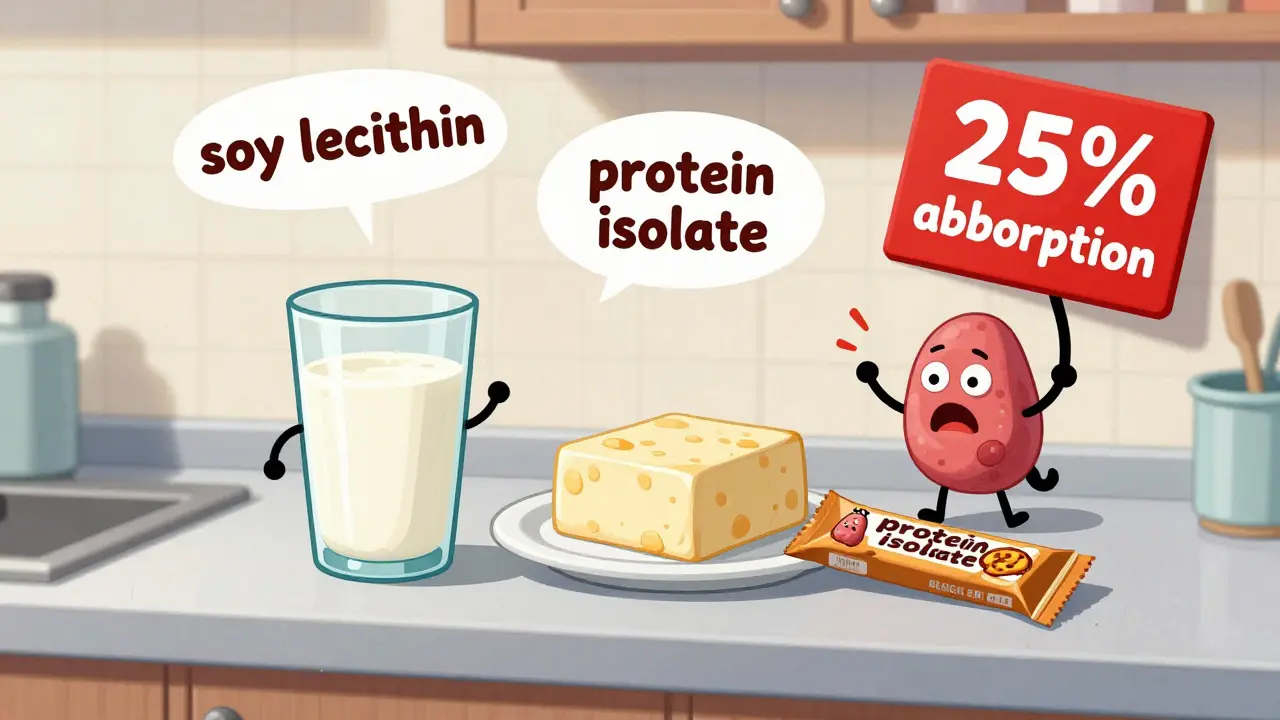
And here’s the tricky part: soy hides everywhere. Soy lecithin is in 70% of packaged foods. Soy protein isolate is in nearly 70% of vegetarian meat alternatives. Even some breads, cereals, and energy bars contain soy. You might be consuming it without realizing it.
Comparing Soy to Other Dietary Interferents
Soy isn’t the worst offender-but it’s up there. Here’s how it stacks up against other common food and supplement interactions:
| Substance | Absorption Reduction | Recommended Separation Time |
|---|---|---|
| Calcium supplements | 35.2% | 4 hours |
| Iron supplements | 32.1% | 4 hours |
| Soy products | 25.3% | 3 hours |
| Coffee | 21.4% | 60 minutes |
| High-fiber foods | 17.8% | 1 hour |
| Tea | 15.3% | 30 minutes |
Notice something? Soy is right behind calcium and iron-two substances doctors always warn about. But unlike those, soy isn’t something you take as a pill. It’s part of your regular meals. That’s why it’s so easy to miss.
Who’s at Highest Risk?
Not everyone who eats soy will have problems. But some groups are far more vulnerable:
- Infants with congenital hypothyroidism: Soy formula is a known risk. The American Academy of Pediatrics says if a baby isn’t responding to levothyroxine, soy formula must be stopped immediately.
- Elderly patients (65+): As we age, stomach acid drops. That makes it harder to absorb levothyroxine even without soy. Add soy into the mix, and your levels can crash.
- Vegetarians and vegans: Over 75% of people on plant-based diets consume soy daily. Many don’t realize it’s affecting their meds.
- Women aged 30-50: This group has the highest soy consumption and is also the most likely to be diagnosed with hypothyroidism.
A 2023 survey of over 3,200 thyroid patients found that 17% of unexplained TSH spikes were linked to soy. That’s second only to calcium supplements.
What Should You Do?
You don’t need to quit soy cold turkey. But you do need to change how you time it.
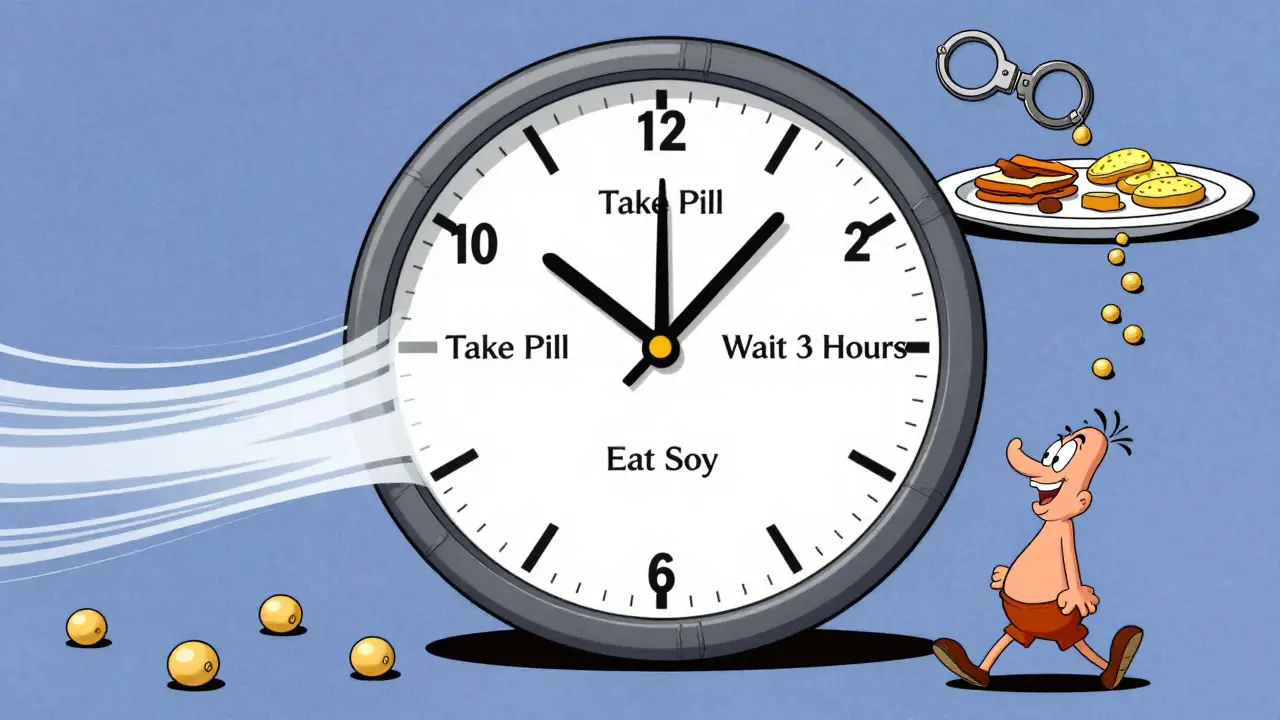
The consensus from the American Thyroid Association, the Endocrine Society, and the Mayo Clinic is clear: Wait at least 3 hours after eating soy before taking levothyroxine. Some experts recommend 4 hours, especially if you’re eating a large soy meal.
Here’s a simple routine to follow:
- Take levothyroxine first thing in the morning on an empty stomach, with a full glass of water.
- Wait at least 30-60 minutes before eating or drinking anything else.
- Avoid soy products for the next 3-4 hours.
- If you eat soy at lunch or dinner, that’s fine-just don’t take your pill within 3 hours after.
For parents of infants: If your baby is on soy formula and levothyroxine, talk to your pediatric endocrinologist. Switching to a non-soy formula often fixes the problem overnight.
What About Soy Alternatives?
If you’re trying to reduce soy, there are other plant-based options:
- Oat milk, almond milk, rice milk (check labels-some are fortified with calcium)
- Pea protein instead of soy protein
- Coconut yogurt or cashew yogurt
Just be careful with almond and oat milk-some brands add calcium carbonate, which can also interfere. Look for unsweetened, unfortified versions if you’re unsure.
New Developments and Hope on the Horizon
Science is catching up. In 2024, the FDA approved a new dosing method called Thyrogen®-assisted titration for patients who consume soy regularly. This lets doctors use a synthetic TSH to fine-tune levothyroxine doses more accurately.
There’s also a new formulation called Levo-Sorb®, a special pill designed to resist soy interference. In a 2023 trial, it maintained 92% absorption even when taken with soy-compared to just 59% for standard pills. It’s not widely available yet, but it’s a promising step.
Researchers are also looking at genetic differences. About 40% of people have a gene variant (CYP1A2*1F) that affects how their body processes soy isoflavones. In the future, a simple DNA test might tell you if you’re at higher risk.
Real Stories, Real Consequences
On Reddit, a user wrote: “My TSH jumped from 2.1 to 8.7 after I started soy milk with breakfast. My doctor had no idea soy could do this.” Another parent shared: “My baby’s development was delayed because we didn’t realize the soy formula was blocking her meds for six months.”
But not everyone has problems. One person said: “I’ve had soy lattes with my Synthroid for seven years. My TSH is always perfect.”
That’s the problem-it’s not the same for everyone. Genetics, gut health, how much soy you eat, and even the time of day all play a role. But if your levels are unstable and you’re eating soy, it’s worth testing the 3-hour rule.
What Your Doctor Should Be Telling You
Despite the evidence, many doctors still don’t bring up soy. A 2023 audit found that only 67% of levothyroxine prescriptions include a warning about soy. And only 89% of pharmacies now counsel patients on it-up from 32% in 2018, but still not universal.
Ask your doctor: “Could soy be affecting my levothyroxine absorption?” If they say no, ask for the latest guidelines from the American Thyroid Association. They’re clear: Separate soy and levothyroxine by at least 3 hours.
You’re not being overly cautious. You’re being smart. Thyroid medication isn’t like a vitamin you can take with breakfast. It needs a clean path to your bloodstream. Soy gets in the way. And if your levels are off, you’re not just feeling tired-you’re risking long-term health.
Final Takeaway
You don’t have to give up soy forever. But you do need to respect the timing. Take your levothyroxine on an empty stomach. Wait at least 3 hours before eating soy. Check labels. Ask questions. And if your TSH keeps climbing for no obvious reason, soy might be the silent culprit.
It’s not about perfection. It’s about control. And with a simple change in routine, you can get your thyroid levels back where they need to be.


Post A Comment