
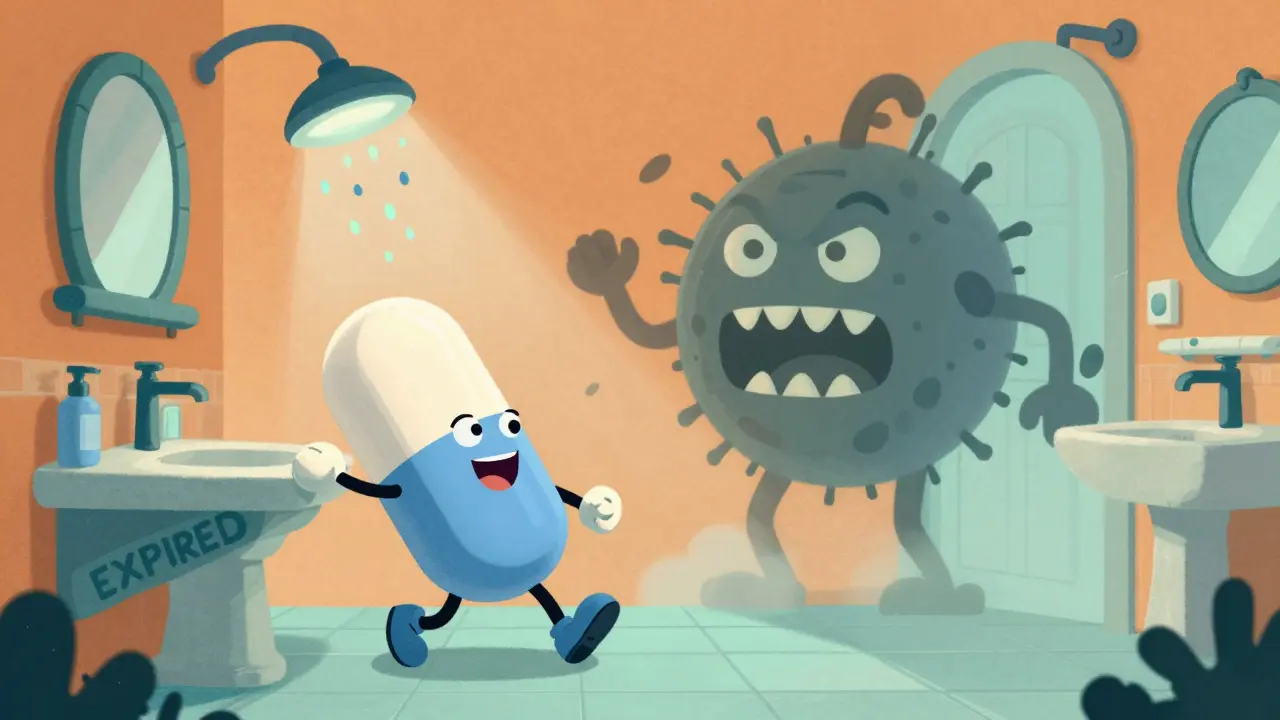
Most people assume that if a pill is past its expiration date, it’s just useless-maybe a little dusty, maybe a little weird-looking, but harmless. But with antibiotics, that assumption can be dangerous. Taking an expired antibiotic isn’t like eating stale cereal. It’s not just about the medicine not working. It’s about risking your life-and the health of everyone around you.
What Does an Expiration Date Actually Mean?
The date on your antibiotic bottle isn’t a "use-by" or "throw-out" date. It’s a guarantee. The manufacturer promises that the drug will be at least 90% as potent as labeled, under proper storage conditions, up to that date. After that? They can’t say for sure. That doesn’t mean it instantly turns toxic. But it does mean you can’t trust how much active ingredient is left. The U.S. government tested over 3,000 lots of drugs-including antibiotics-under the Shelf Life Extension Program. Results showed that about 90% of solid medications, like tablets and capsules, still worked at 90%+ potency up to 15 years past their expiration date… if they were stored perfectly. Think cool, dry, dark places-not a steamy bathroom or a hot car. But here’s the catch: antibiotics aren’t like painkillers or allergy meds. They’re precision tools. Too little, and you don’t kill the bacteria. You just train them to fight back.Not All Antibiotics Are Created Equal
The stability of antibiotics depends heavily on their form. Solid pills-like amoxicillin, cephalexin, or doxycycline-hold up surprisingly well. High-performance lab tests show they often retain 85-92% of their strength even a year past expiration, assuming they’ve been kept dry and cool. Liquid antibiotics? Not even close. Amoxicillin suspension, the kind kids take, starts breaking down within days. If it’s been sitting on your kitchen counter for a month past its date, it could have lost nearly half its potency. Even refrigerated, ceftriaxone injections lose over 30% of their strength within two weeks after expiration. Beta-lactam antibiotics-like penicillin and amoxicillin-are especially fragile. They react with moisture in the air and degrade fast. And here’s the scary part: you won’t know. Most expired antibiotics look fine. No weird smell, no color change, no clumping. But that doesn’t mean they still work. A 2021 study found that 89% of degraded antibiotics showed zero visible signs of spoilage-even when they’d lost 40-75% of their potency.Why Taking Expired Antibiotics Fuels Superbugs
This isn’t just about your own infection. It’s about the next person who gets sick. When you take an antibiotic that’s too weak to kill all the bacteria, the survivors are the toughest ones. They multiply. They pass on their resistance genes. That’s how superbugs like MRSA and drug-resistant E. coli spread. A 2023 analysis of 12,850 patient cases found that when people used expired amoxicillin for urinary tract infections, the bacteria became nearly 7 times more resistant than when the same drug was fresh. Minimum inhibitory concentrations-the amount needed to stop bacterial growth-shot up from 0.5 μg/mL to 256 μg/mL. That’s not a small change. That’s a total failure of treatment. The Infectious Diseases Society of America warns that sub-therapeutic antibiotic levels are one of the biggest drivers of antimicrobial resistance in the community. And it’s not just theoretical. There are documented cases where expired antibiotics led to treatment failure, hospitalization, and even death.What Do Experts Really Say?
The FDA says: don’t use expired drugs. Period. Their official stance is that safety and potency can’t be guaranteed after the date. But some experts are pushing back. Dr. Lee Cantrell from UC San Diego says that in a shortage, properly stored solid antibiotics may still be safe and effective up to 12-24 months past expiration. Johns Hopkins Hospital has a protocol that extends expiration dates for critical antibiotics during shortages-and they’ve treated over 2,300 patients with zero failures linked to potency loss. The European Medicines Agency agrees: solid forms stored right might be okay for 6-12 months past expiration. But they draw the line at liquids, injectables, and drugs for life-threatening infections. So who’s right? The answer is: it depends. On the drug. On the storage. On the infection.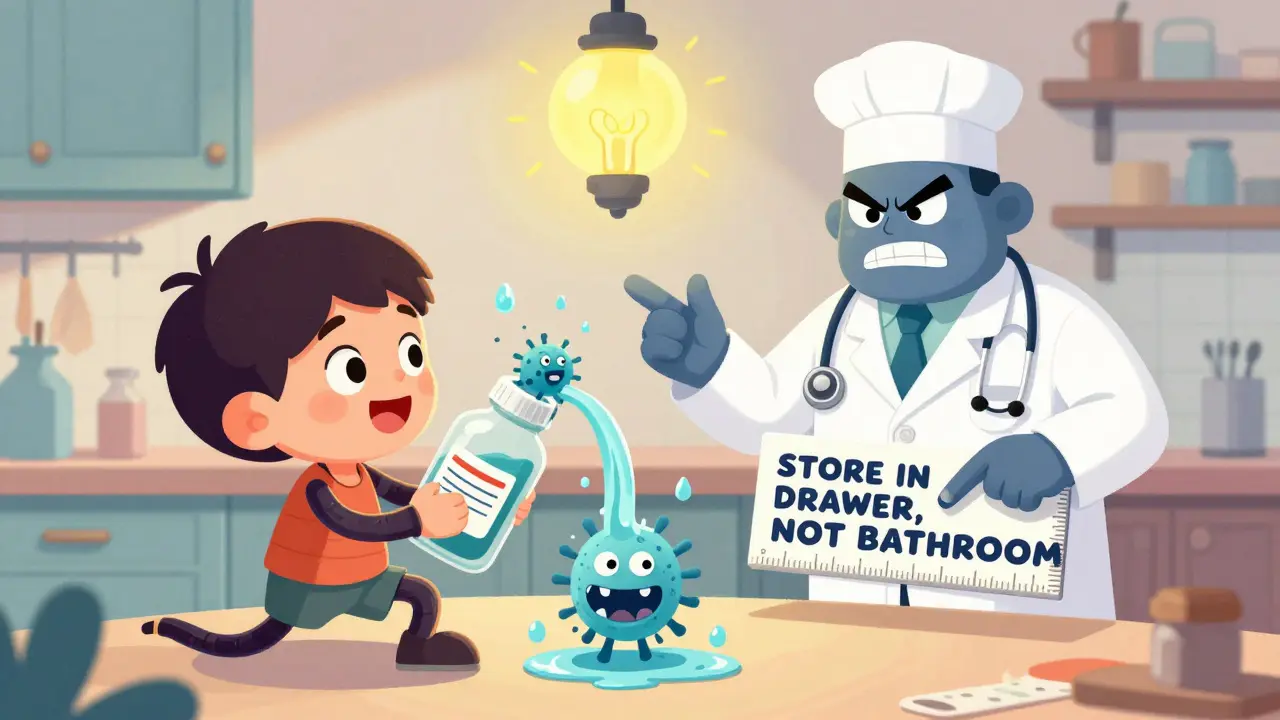
When Might It Be Okay to Use an Expired Antibiotic?
Let’s be clear: the safest answer is always to get a new prescription. But if you’re in a remote area, during a disaster, or facing a shortage with no access to care, here’s what experts suggest as a last resort:- Only consider solid tablets or capsules-never liquids, suspensions, or injections.
- Make sure the bottle was sealed, stored in a cool, dry place (not the bathroom), and never exposed to heat or moisture.
- Check for visible damage: no discoloration, crumbling, or sticking together.
- Only use it for mild, non-life-threatening infections-like a simple sinus infection or mild UTI.
- Never use it for serious infections like pneumonia, meningitis, sepsis, or endocarditis.
- Stop immediately if symptoms don’t improve in 48 hours.
How to Store Antibiotics to Maximize Shelf Life
If you’re keeping antibiotics around-whether for emergencies or just because you hate running out-store them right. - Keep them in their original container with the desiccant packet still inside. That little cotton ball isn’t trash-it’s there to absorb moisture. - Store them in a bedroom drawer, not the bathroom. The average bathroom is 28.7°C and 72% humidity. That’s a degradation factory. - Ideal storage: 15-25°C with 35-45% humidity. A cool, dark cabinet works best. - Never transfer pills to pill organizers for long-term storage. Those expose them to air and light. A 2022 study found that antibiotics stored properly last 37% longer than those kept in the bathroom. That’s months of extra potency.What About Those "Test Strips" People Are Talking About?
Researchers at the University of Illinois have developed paper test strips that can detect if amoxicillin has lost potency. In trials, they were 94.7% accurate. They’re not on the market yet-but they’re coming. Imagine a future where you can dip a strip into a crushed pill, wait a minute, and see if it’s still good. That could change everything. Until then? Don’t guess.
The Bigger Picture: Why We’re Running Out
There are 47 antibiotics on the FDA’s shortage list in 2023-up from 29 in 2020. Supply chains are fragile. Manufacturing is concentrated. And when a factory shuts down, it can take months to restart production. That’s why some hospitals and governments are starting to rethink expiration dates. The President’s Council of Advisors on Science and Technology estimates that extending expiration dates for just a few key antibiotics could save $1.2 billion a year in wasted drugs. But drug companies resist. They’re scared of lawsuits. Regulators are scared of public panic. And patients? They’re stuck in the middle.What You Should Do Right Now
- Don’t stockpile antibiotics. They’re not candy. Don’t hoard them. Don’t take them unless prescribed. - Check your medicine cabinet. Toss out any expired antibiotics-especially liquids. Don’t flush them. Take them to a pharmacy drop-off. - Ask your pharmacist. If you’re unsure about an antibiotic’s safety, ask. Pharmacists have access to stability data. Many don’t know it-but they should. - Don’t pressure your doctor. If they say no to antibiotics, trust them. Most sore throats, colds, and ear infections are viral. Antibiotics won’t help-and they’ll make resistance worse. - Spread the word. Most people think expiration dates mean "dangerous." They don’t. They mean "unreliable." That’s a critical difference.Final Thought: Your Health Isn’t a Gamble
Antibiotics saved millions of lives. But they’re not infinite. Every time you take a weak dose, you’re helping bacteria win. And the next person who gets sick? They might not have a cure left. Expiration dates aren’t arbitrary. They’re science. And when it comes to antibiotics, science isn’t something you should ignore.Are expired antibiotics dangerous to take?
Expired antibiotics aren’t usually toxic, but they can be dangerous. If they’ve lost potency, they won’t kill the infection-just train bacteria to resist future treatment. This increases the risk of antibiotic-resistant infections, which can lead to longer illnesses, hospital stays, or even death.
Can I still use expired amoxicillin tablets?
If the tablets are solid, unopened, stored in a cool dry place, and show no signs of damage, they may still be effective up to 12 months past expiration. But this isn’t guaranteed. Never use them for serious infections. Always consult a doctor before taking any expired medication.
Why do liquid antibiotics expire faster than pills?
Liquid antibiotics, like amoxicillin suspension, are water-based and more prone to chemical breakdown. Bacteria and mold can grow in them, and key ingredients like beta-lactams degrade rapidly when exposed to moisture and warmth-even when refrigerated. Solid tablets are sealed and stable, making them far less likely to lose potency.
Does storing antibiotics in the bathroom ruin them?
Yes. Bathrooms are hot and humid-perfect conditions for degrading medications. Studies show antibiotics stored in bathrooms lose potency up to 37% faster than those kept in a cool, dry drawer. Always store pills away from steam, heat, and direct light.
Can I tell if an antibiotic has gone bad by how it looks or smells?
No. Most degraded antibiotics show no visible changes. A tablet might look perfect but have lost 60% of its potency. A liquid might look clear but be too weak to work. Relying on appearance is unreliable. Only lab testing can confirm potency.
What should I do with expired antibiotics?
Never flush them down the toilet or throw them in the trash. Take them to a pharmacy that offers a drug take-back program. Many pharmacies in Australia and the U.S. have free disposal bins. This prevents contamination of water supplies and accidental ingestion.
Is it legal to use expired antibiotics?
There’s no law against possessing or using expired antibiotics, but it’s not recommended. Pharmacies and doctors are legally required to dispense only unexpired drugs. Using expired medication puts you at risk and contributes to public health threats like antibiotic resistance.
How do I know if I’m at risk of antibiotic resistance?
If you’ve taken antibiotics frequently-especially incomplete courses or expired ones-you’re at higher risk. Signs include infections that don’t improve with standard treatment, recurring infections, or infections requiring stronger or IV antibiotics. Antibiotic resistance doesn’t affect you personally until you get sick, but it affects everyone when treatments stop working.


Post A Comment