

What Is Polypharmacy, and Why Does It Matter for Older Adults?
When someone takes five or more medications at the same time, that’s called polypharmacy. It’s not always wrong-many older adults need multiple drugs to manage conditions like high blood pressure, diabetes, arthritis, or heart disease. But the more pills you take, the higher the risk of something going wrong. By age 70, nearly 4 in 10 older adults in Australia are on five or more medications. In nursing homes, it’s even worse-up to 80% of residents are caught in a web of prescriptions. And it’s not just prescription drugs. Over-the-counter painkillers, herbal supplements, and as-needed meds for sleep or anxiety add up fast, often without anyone tracking them all.
The problem isn’t just the number of pills. It’s what happens when they interact. As we age, our kidneys and liver don’t process drugs the way they used to. That means even normal doses can build up in the body, causing dizziness, confusion, or falls. One study found that the chance of a dangerous drug interaction jumps from 6% with two medications to 50% with five, and nearly 100% with seven or more. And it’s not just physical. Cognitive decline, memory issues, and simple confusion make it hard for older people to keep track of what to take, when, and why.
Why Are So Many Older Adults on So Many Drugs?
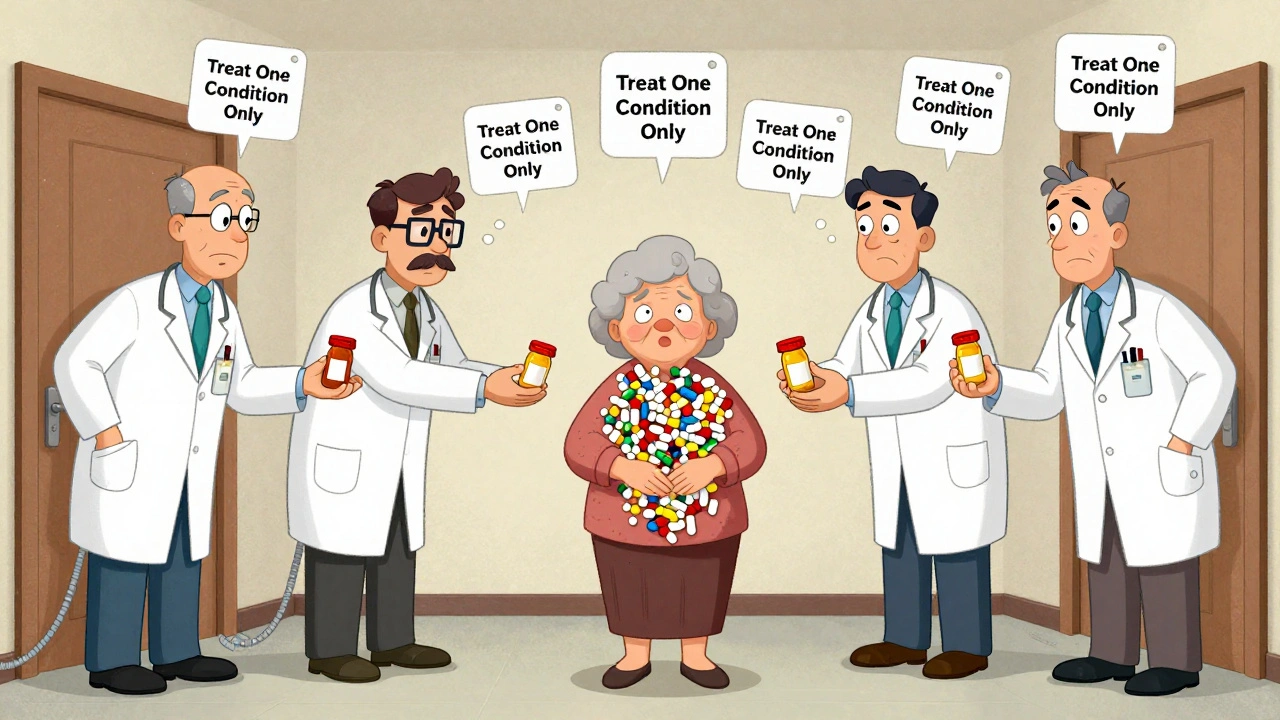
It’s not because doctors are overprescribing-though that happens sometimes. It’s because the system is built for single diseases, not multiple ones. Most guidelines tell doctors how to treat high blood pressure, or diabetes, or osteoporosis. But they don’t tell them how to treat a 78-year-old with all three, plus atrial fibrillation, depression, and chronic pain. So each specialist adds their own meds, often without talking to the others. A patient might see a cardiologist, a neurologist, a rheumatologist, and a psychiatrist-all prescribing their own list. No one steps back and asks: Are all these drugs still helping, or are they making things worse?
This creates what’s called a prescribing cascade. For example, a statin causes muscle pain, so the doctor prescribes a muscle relaxant. That relaxant causes drowsiness, so they add a stimulant. Then the stimulant causes insomnia, so they prescribe a sleeping pill. Each new drug treats the side effect of the last, not the root problem. Before long, someone’s on ten medications, and no one remembers why they started.
And let’s not forget the financial burden. In Australia, a single prescription can cost $7 or more. Ten prescriptions? That’s $70 a month, or $840 a year-just for the co-pay. For seniors on fixed incomes, that’s a real choice: eat, heat the house, or take your meds.
The Hidden Dangers: Falls, Hospitalizations, and Early Death
Polypharmacy doesn’t just make life harder-it makes it riskier. Older adults on five or more medications are twice as likely to fall. And falls aren’t just scary-they’re deadly. A broken hip in someone over 75 has a 20% mortality rate within a year. Many of those deaths are tied to the drugs that made them unsteady in the first place: benzodiazepines for sleep, antipsychotics for agitation, or even common blood pressure pills that drop blood pressure too low.
Medications also cause confusion and memory loss. Anticholinergic drugs-used for overactive bladder, allergies, depression, and Parkinson’s-block a brain chemical called acetylcholine. That’s fine for a 30-year-old. For an 80-year-old? It can look like dementia. In fact, studies show that long-term use of these drugs increases dementia risk by up to 50%. And it’s not rare. One in four older Australians is on at least one anticholinergic.
Hospital admissions due to drug reactions are rising fast. In Australia, nearly 1 in 5 hospital admissions for people over 65 is linked to medication problems. Many of those could have been avoided. The most common culprits? NSAIDs like ibuprofen (which can cause kidney damage and stomach bleeding), opioids (which increase fall risk), and diuretics (which cause electrolyte imbalances). The American Geriatrics Society Beers Criteria lists over 50 medications that should be avoided or used with extreme caution in older adults. Yet, many are still prescribed routinely.
Deprescribing: Taking Pills Away on Purpose
Deprescribing isn’t about stopping meds because they’re cheap or inconvenient. It’s about removing drugs when the risks outweigh the benefits. It’s not easy. Patients often believe their meds are keeping them alive-even if they’ve been on them for 15 years and haven’t seen the prescribing doctor in a decade. They’re scared of withdrawal. They think stopping a pill means their condition will come back.
But evidence shows otherwise. In one study, older adults who stopped taking benzodiazepines for sleep saw a 22% drop in falls. Another trial found that carefully reducing antihypertensive drugs in frail seniors didn’t raise blood pressure-it actually improved their quality of life and reduced dizziness. In nursing homes, deprescribing antipsychotics led to fewer sedated patients, more social interaction, and fewer infections.
Deprescribing works best when it’s done slowly, one drug at a time, with close monitoring. It’s not a one-time event. It’s a conversation. The goal isn’t to be pill-free-it’s to be rightly medicated. If a drug isn’t helping anymore, or if it’s causing more harm than good, it’s time to reconsider.
How to Start the Conversation About Deprescribing
If you or a loved one is on five or more medications, here’s how to begin:
- Make a full list of everything taken-prescriptions, over-the-counter drugs, vitamins, herbs, and even occasional pills like sleeping aids or pain relievers.
- Bring that list to your GP or a pharmacist who specializes in geriatric meds. Don’t go to a specialist-go to the person who sees the whole picture.
- Ask: “Is this medicine still necessary?” “What is it supposed to do?” “What happens if I stop it?”
- Focus on high-risk drugs first: benzodiazepines, anticholinergics, NSAIDs, and opioids.
- Ask for a trial stop. For example: “Can we try going off this sleep pill for two weeks and see how I feel?”
- Track changes: Do you feel more alert? Less dizzy? Better sleep? Worse pain? Write it down.
Pharmacists are your best ally here. In Australia, Medication Management Reviews (MMRs) are covered by Medicare for people on five or more medications. These are 20- to 30-minute sessions with a pharmacist who reviews your entire list, checks for interactions, and gives you a written plan. Use it.
Tools and Guidelines That Help
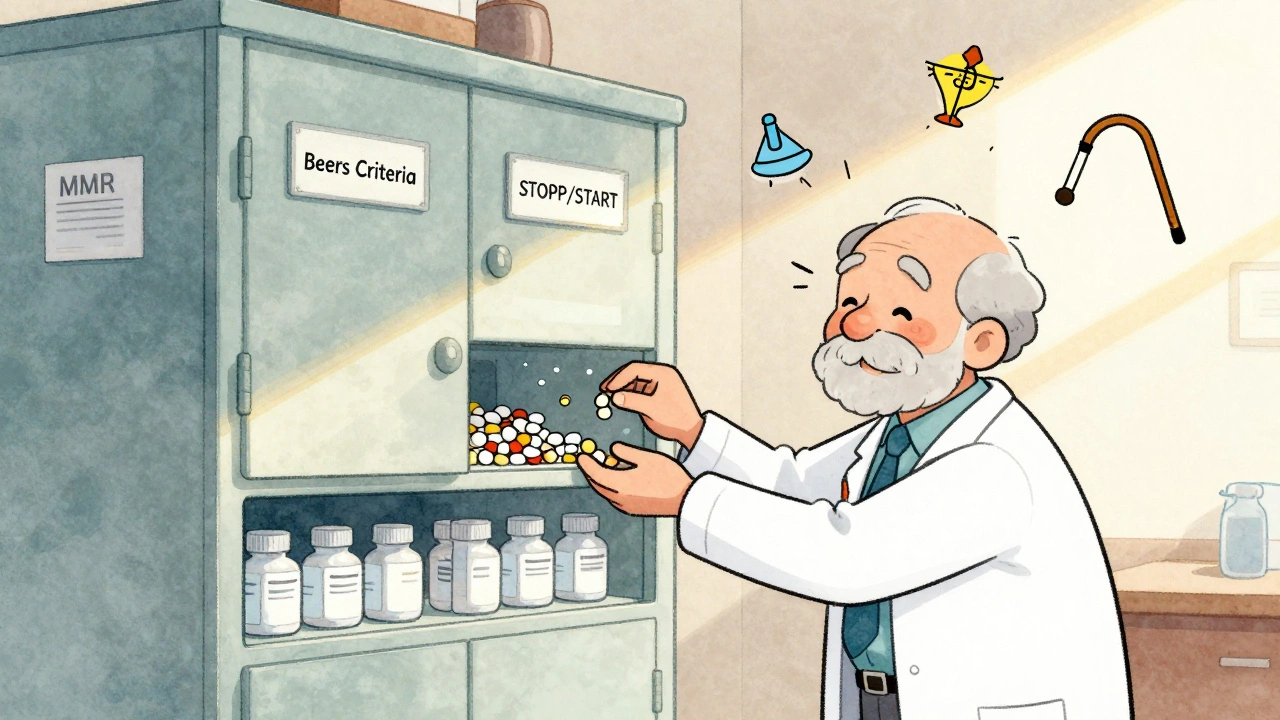
Doctors and pharmacists use two main tools to guide deprescribing:
- Beers Criteria: A list of medications that are risky for older adults. If your doctor prescribes something on this list, ask why.
- STOPP/START: STOPP tells you which drugs to avoid; START tells you which ones might be missing. For example, if you have osteoporosis, you should be on a bone-strengthening drug-but many older adults aren’t.
Some clinics now use electronic alerts in their systems to flag high-risk combinations. But tech alone won’t fix this. You need a human who’s willing to ask the hard questions.
What’s Holding Back Change?
There’s a big gap between what we know and what we do. Why? Three big reasons:
- Time: A typical GP appointment is 10 minutes. Reviewing 10 meds takes 20.
- Training: Most doctors weren’t taught how to stop meds-they were taught how to start them.
- Payment: Doctors get paid for prescribing, not for reviewing. Pharmacists get paid for dispensing, not for deprescribing.
And then there’s the fear. Fear of withdrawal. Fear of worsening symptoms. Fear of being seen as “giving up.” But the truth is, continuing harmful drugs isn’t caring-it’s complacency.
Real Change Is Possible
In Melbourne, a pilot program trained pharmacists to lead medication reviews in aged care homes. Over six months, they reduced the number of high-risk drugs by 35%. Residents were less sedated, had fewer falls, and families reported better moods. The cost? Less than $50 per resident. The benefit? Better lives.
It’s not about cutting pills. It’s about choosing better ones. It’s about listening to the person, not just the chart. It’s about asking: Is this helping, or just adding noise?
As the population ages, polypharmacy will only grow. But we don’t have to accept it as inevitable. With better tools, better training, and better conversations, we can give older adults back their safety, their clarity, and their freedom-from pills that no longer serve them.
Is polypharmacy always dangerous for older adults?
No, not always. Many older adults need multiple medications to manage chronic conditions like heart disease, diabetes, or arthritis. The danger comes when the number of drugs increases without a clear purpose, or when the risks of side effects and interactions outweigh the benefits. It’s not the number of pills alone-it’s whether each one is still necessary and safe.
Can stopping medications make health problems worse?
Sometimes, but not usually the way people fear. Most medications prescribed long-term-like sleep aids, antipsychotics, or painkillers-lose their effectiveness over time. Stopping them slowly under supervision often leads to improved alertness, fewer falls, and better digestion. Withdrawal symptoms are rare with careful tapering. The bigger risk is staying on a drug that’s causing harm.
What are the most dangerous drugs for older adults?
The most dangerous include benzodiazepines (like diazepam) for sleep, anticholinergics (like diphenhydramine) for allergies or bladder issues, NSAIDs (like ibuprofen) for pain, and opioids for chronic pain. These increase risks of falls, confusion, kidney damage, and stomach bleeding. The Beers Criteria lists these as high-risk and recommends alternatives when possible.
How can I get help reviewing my medications?
In Australia, you can request a Medication Management Review (MMR) through Medicare. It’s a free 20-30 minute session with a pharmacist who reviews all your medications-prescription, over-the-counter, and supplements. They’ll check for interactions, unnecessary drugs, and safer alternatives. Ask your GP for a referral, or call a local pharmacy that offers MMRs.
Why don’t doctors talk more about deprescribing?
Most doctors were trained to add medications, not remove them. Time constraints, fear of patient pushback, and lack of payment for medication reviews make it hard. But awareness is growing. More pharmacists, geriatricians, and patient advocates are pushing for deprescribing as a standard part of care. It’s becoming part of clinical guidelines-and patient demand is helping drive change.
Next Steps: What You Can Do Today
Don’t wait for a crisis. If you or someone you care about is on five or more medications:
- Write down every single pill, supplement, and OTC drug taken in the past week.
- Book a Medication Management Review with a pharmacist.
- Ask your GP: “Are any of these drugs no longer needed?”
- Start with one high-risk drug-like a sleep aid or NSAID-and ask about tapering.
- Track how you feel after changes: energy, balance, mood, appetite.
Medications aren’t magic. They’re tools. And like any tool, they can become outdated, broken, or even harmful. The goal isn’t to take fewer pills-it’s to take the right ones. And that’s a conversation worth having.


Post A Comment