
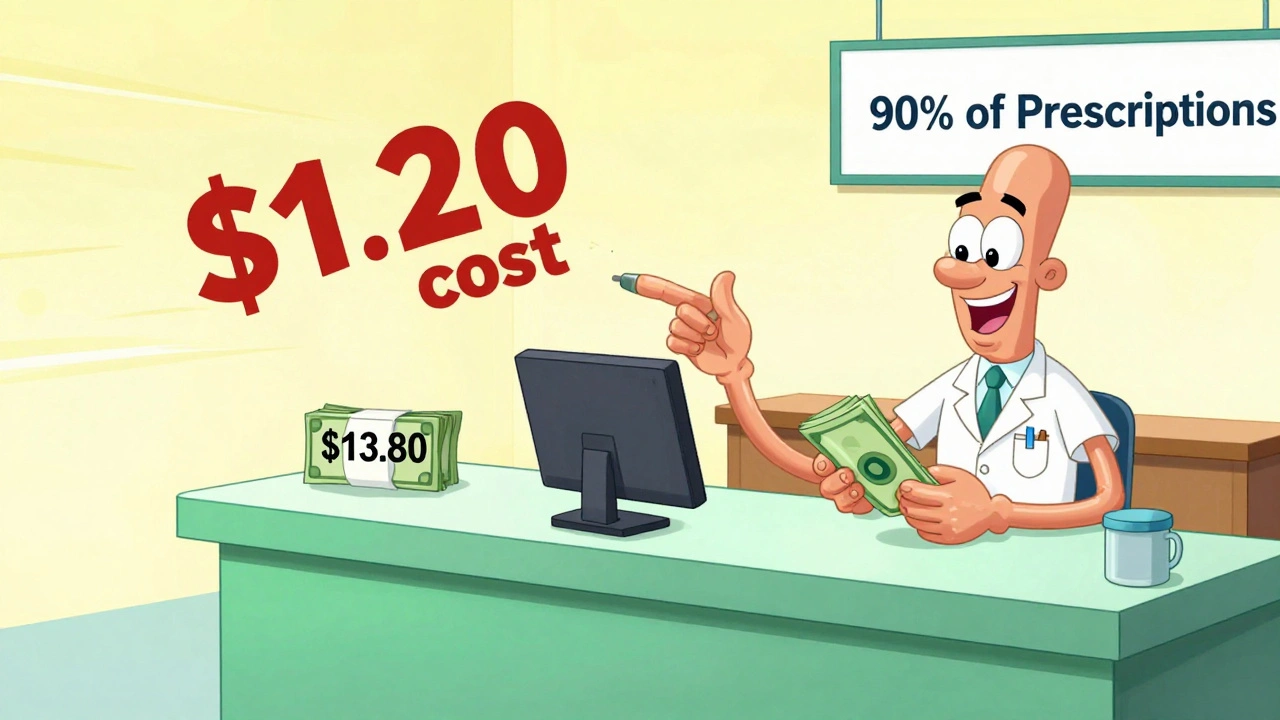
For most people, picking up a prescription feels simple: you hand over your card, get your pills, and walk out. But behind that quiet exchange is a complex financial machine - one where the cheapest drugs make the most money, and the most expensive ones barely move the needle. This is the strange truth of pharmacy margin economics: generics are the real profit engine of the pharmacy business.
Why Generics Are the Hidden Profit Engine
| Drug Type | Percentage of Prescriptions | Gross Margin | Contribution to Pharmacy Profit |
|---|---|---|---|
| Generic Drugs | 90% | 42.7% | 96% |
| Brand-Name Drugs | 10% | 3.5% | 4% |
It sounds backwards, doesn’t it? Brand-name drugs cost hundreds or even thousands of dollars per prescription. Generics? Often under $10. So why do pharmacies make nearly 12 times more profit from generics than from brands? The answer lies in how the system is built.
When a pharmacy fills a brand-name prescription, they’re reimbursed by a pharmacy benefit manager (PBM) based on the drug’s list price - but that price is inflated. The pharmacy gets paid a small percentage above cost, often just 3-5%. The rest? That’s the manufacturer’s profit, the PBM’s spread, and the middleman fees. The pharmacy barely touches it.
But with generics? It’s the opposite. The wholesale cost of a 30-day supply of generic lisinopril might be $1.20. The pharmacy charges the patient or insurer $15. That’s a $13.80 gross profit - a 1,150% markup. And because generics make up 9 out of every 10 prescriptions filled, that’s where the volume adds up.
According to Schaeffer Center data, pharmacies make an average of $32 in gross profit per generic prescription, compared to just $3 per brand-name one. Even though generics only account for 25% of total drug spending, they drive 96% of pharmacy margins. That’s not a fluke. It’s the design.
Who’s Really Making Money - And How
The pharmacy isn’t the only player here. The whole system is layered with middlemen: manufacturers, PBMs, wholesalers, insurers. Each takes a cut. And the cuts are uneven.
Brand-name manufacturers pocket 76% gross profit on their drugs. That’s where the big pharma profits live - the kind you hear about in news headlines. But for generics? Manufacturers only make about 50% gross profit. Why? Because when multiple companies can make the same drug, they compete on price. That drives down the cost at the wholesale level.
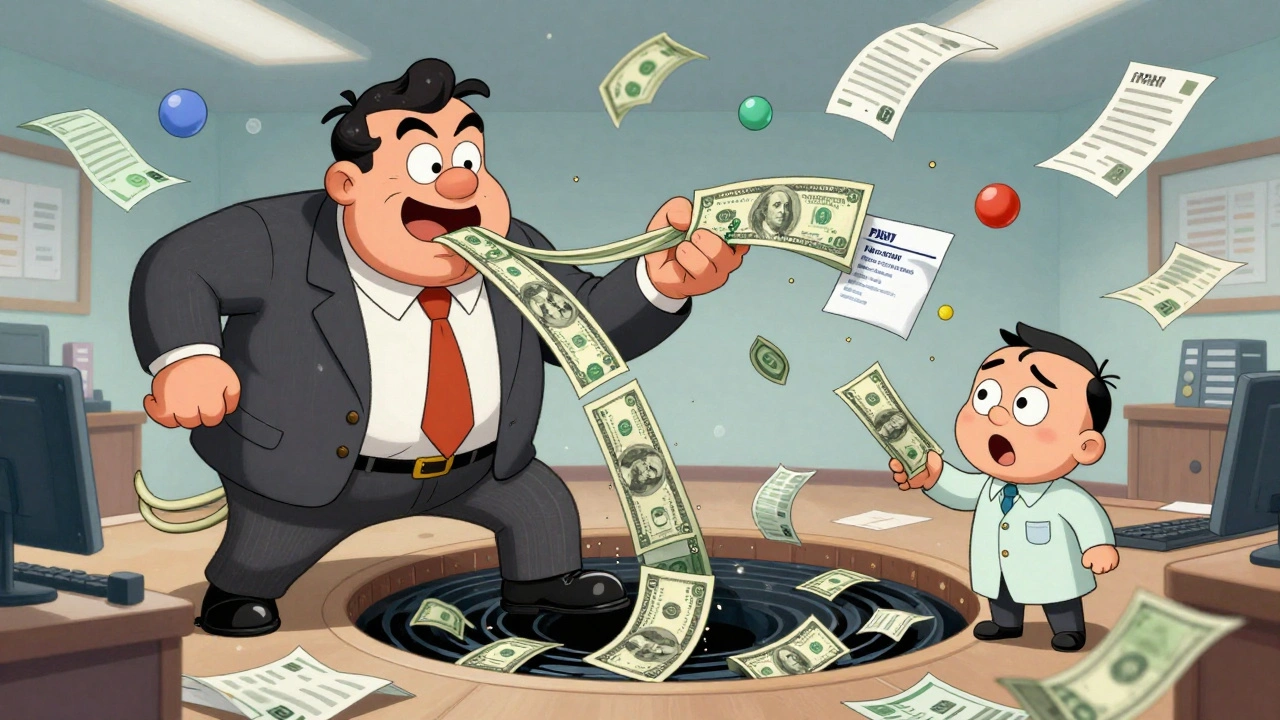
That’s where pharmacies and PBMs step in. While manufacturers fight over pennies on generics, PBMs and pharmacies get to mark up those pennies into dollars. PBMs, who manage drug benefits for insurers, often charge health plans more than they pay pharmacies - keeping the difference. This is called “spread pricing.” A PBM might tell the insurer a generic costs $18, pay the pharmacy $12, and pocket $6. That’s pure profit for the PBM, and the pharmacy gets paid less than they should.
And here’s the kicker: when a pharmacy gets paid $12 for a generic that costs $1.20, they still have to cover rent, staff, utilities, software, insurance, and compliance. After all that, their net profit is often just 2% of the total prescription price. That’s not much to run a business on.
The Independent Pharmacy Crisis
If you’ve ever walked into a small-town pharmacy, you’ve seen the human side of this math. Independent pharmacies are being squeezed out. Between 2018 and 2023, over 3,000 closed across the U.S. Why? Because their margins keep shrinking.
Five years ago, many independents made 8-10% net profit on generics. Now, it’s down to 2%. Meanwhile, rent, wages, and compliance costs have gone up 30-35%. The National Community Pharmacists Association found that 68% of independent owners list declining generic reimbursement as their biggest threat.
It’s not just about price. It’s about control. PBMs use opaque formulas to set reimbursement rates. They can claw back money after the fact - paying you $15 for a prescription, then demanding $3 back a week later because “the pricing changed.” They can force you to use their mail-order service, or threaten to drop you from their network if you don’t agree to their terms.
And when a generic drug has only one manufacturer left - because all the others went out of business or got bought up - prices can spike. Some generics now cost more than their brand-name versions. That’s not competition. That’s monopoly.
How Pharmacies Are Fighting Back
Some pharmacies aren’t just surviving - they’re adapting.
- Direct contracting: Some pharmacies skip PBMs entirely and bill employers or patients directly. This gives them control over pricing and eliminates clawbacks.
- Medication Therapy Management (MTM): Pharmacists now offer consultations on drug interactions, side effects, and adherence. These services are reimbursed separately - and they’re more profitable than selling pills.
- Specialty pharmacy focus: High-cost drugs for conditions like cancer or MS come with higher reimbursement rates and fewer competitors. Some pharmacies are shifting away from the generic grind to focus on these.
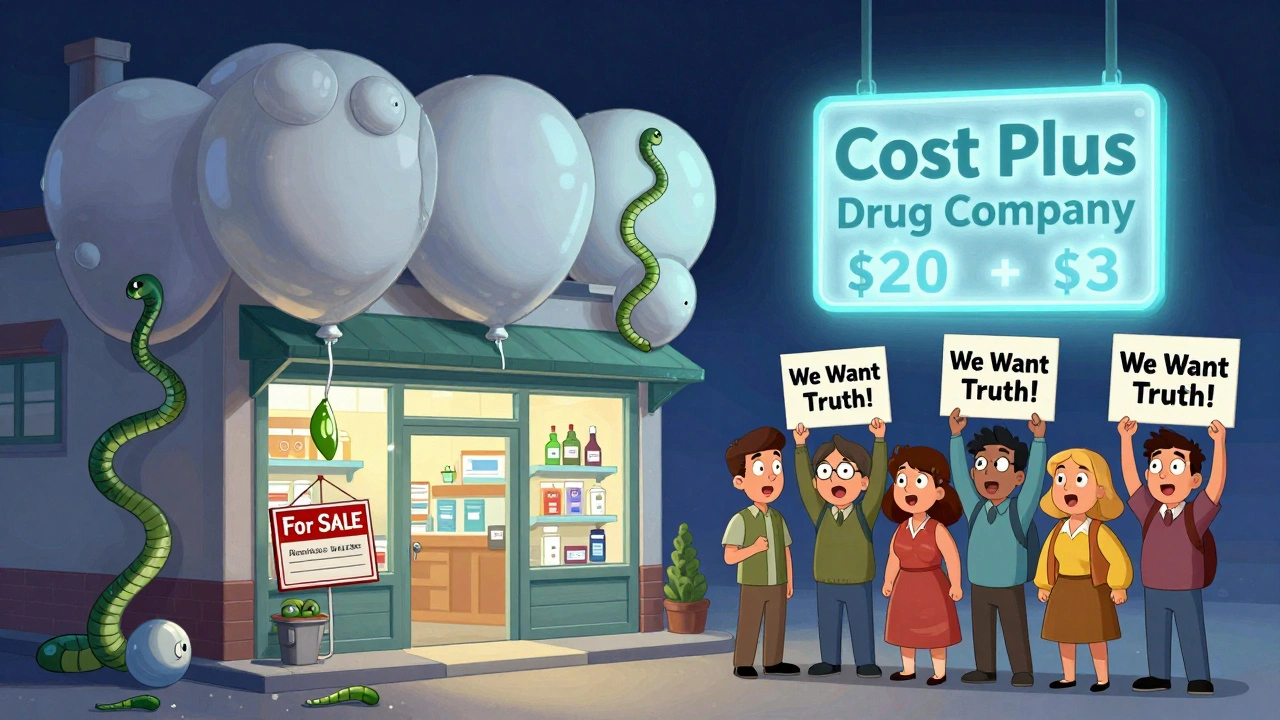
- Cash-pay generics: A few pharmacies now offer $5 or $10 generic lists - no insurance needed. Mark Cuban’s Cost Plus Drug Company does this transparently: $20 for the drug, $3 dispensing fee. No spreads. No secrets.
These aren’t just feel-good ideas. They’re survival tactics. Pharmacies using these models report net margins of 4-6%, compared to the industry average of 2%. That’s the difference between staying open and shutting down.
What’s Next? Regulation, Transparency, and Change
The system is under pressure. The Federal Trade Commission has launched investigations into PBM practices. States like California, Texas, and Illinois passed laws in 2022-2023 requiring PBMs to disclose their reimbursement formulas. The Inflation Reduction Act, starting in 2026, will let Medicare negotiate drug prices - which could ripple down to generic pricing.
But the biggest change might come from consumers. When people see that a $15 generic is actually made for $1.20, they start asking questions. Amazon Pharmacy, Cost Plus Drug Company, and others are proving that transparent pricing works. People will pay more for honesty.
Meanwhile, generic manufacturers are consolidating. The top five now control 45% of the market, up from 32% in 2015. That reduces competition - and could mean higher prices down the line. The FDA approved over 2,400 new generics between 2018 and 2020, saving $161 billion. But if those markets become monopolies, those savings vanish.
The future of pharmacy economics won’t be decided by pharmacists alone. It’ll be shaped by regulators, insurers, manufacturers, and patients who demand fair pricing. Right now, the system rewards opacity. But transparency is coming. And when it does, the pharmacy that survives won’t be the one selling the cheapest pills - it’ll be the one trusted to explain why they cost what they do.
Why do pharmacies make more profit on cheap generic drugs than expensive brand-name ones?
Pharmacies make more profit on generics because the wholesale cost is extremely low, but the reimbursement rate is set higher to cover operational costs. Even a small markup on a $1 drug can yield a $10-15 profit. Brand-name drugs, while expensive, have low pharmacy margins because reimbursement rates are tightly controlled by PBMs and insurers, often just a few percentage points above cost. The volume of generics filled - 90% of all prescriptions - multiplies those small margins into the majority of pharmacy profits.
What role do pharmacy benefit managers (PBMs) play in generic drug pricing?
PBMs act as middlemen between pharmacies, insurers, and drug manufacturers. They negotiate reimbursement rates but often use “spread pricing” - charging insurers more than they pay the pharmacy - and keep the difference as profit. They also set complex reimbursement formulas that can change after a prescription is filled, leading to “clawbacks” where pharmacies are forced to return money. This reduces pharmacy profits on generics, even when the drug cost is low.
Why are independent pharmacies closing at a high rate?
Independent pharmacies face shrinking net margins on generics - often down to just 2% after expenses - while costs for rent, staff, and compliance continue to rise. PBMs have consolidated power, giving them leverage to set unfair reimbursement terms. Many independents can’t compete with chain pharmacies that have their own PBMs or access to bulk pricing. Between 2018 and 2023, over 3,000 independent pharmacies closed in the U.S. due to these financial pressures.
Can pharmacies make more money by selling brand-name drugs?
No, not really. Even though brand-name drugs cost more, pharmacies typically earn only 3-5% gross margin on them. The bulk of the profit goes to the manufacturer and the PBM. For example, a $500 brand-name prescription might only give the pharmacy $15-25 in profit. In contrast, a $15 generic can yield $10-12 in gross profit. Volume and markup, not list price, determine pharmacy profitability.
What are some new models improving pharmacy profitability?
Some pharmacies are bypassing PBMs by contracting directly with employers or offering cash-pay generics at transparent prices (like $5 for common medications). Others focus on Medication Therapy Management (MTM) services, which are reimbursed separately and offer higher margins. Specialty pharmacy services for complex conditions also provide more stable income. Companies like Cost Plus Drug Company and Amazon Pharmacy are proving that transparency and direct pricing can be both ethical and profitable.
Final Thoughts: It’s Not About the Pill - It’s About the System
Pharmacies aren’t greedy. Most owners entered this business to help people. But the system they work in is broken. It rewards volume over value, opacity over trust, and consolidation over competition. Generics were supposed to save money. Instead, they became the backbone of a profit engine that doesn’t always benefit the people paying for it.
The fix won’t come from one law or one company. It’ll come from pressure - from patients asking questions, from pharmacists demanding fair pay, from regulators closing loopholes. The pharmacy that thrives in the next five years won’t be the one with the lowest prices. It’ll be the one with the clearest story.


Post A Comment