
Why You Can’t Just Toss Expired EpiPens or Inhalers in the Trash
Throwing an expired EpiPen, inhaler, or medicated patch in the regular trash isn’t just careless-it’s dangerous. These aren’t ordinary household items. EpiPens have sharp needles that can poke through trash bags and injure sanitation workers. Inhalers are pressurized cans that can explode in compactors or incinerators. Patches still contain potent drugs on their sticky surface, which kids or pets might find and stick to their skin. The FDA says 12% of accidental poisonings in children come from improperly thrown-away meds. That’s not a small risk. It’s a preventable one.
How to Dispose of an Expired EpiPen
EpiPens are classified as medical sharps because of their built-in needle. That means they need the same handling as syringes or lancets. Never try to remove the needle or break it apart. You don’t have the tools, and you risk exposure to the drug inside.
Here’s what to do:
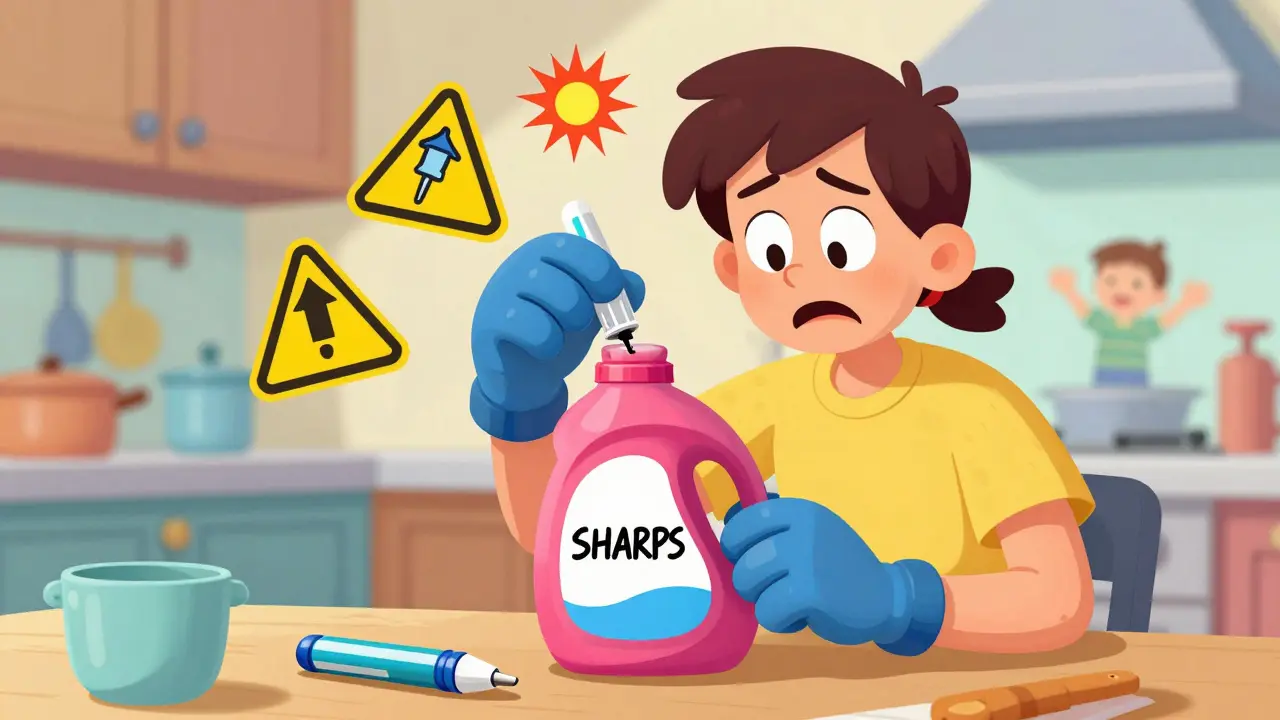
- Put the expired or used EpiPen in a rigid, puncture-proof container-a clean, empty plastic laundry detergent bottle works. Make sure the lid screws on tight.
- Label it clearly: "SHARPS," "BIOHAZARD," and "DO NOT RECYCLE." Use permanent marker.
- Take it to a drop-off location. Your doctor’s office is the easiest option. Many allergists keep sharps bins for patients. If they don’t, ask if they can direct you to a nearby hospital or pharmacy with a take-back program.
Not all pharmacies accept EpiPens. A 2023 Reddit survey found 68% of people had trouble finding a place that took them. CVS, Walgreens, and other chains often only take pills. Call ahead. Use the DEA’s National Take Back Locator to find authorized collectors near you. In Australia, check with your local pharmacy or council for sharps disposal bins.
California and some other states require you to use mail-back programs or designated collection centers. Texas allows disposal in household trash if properly contained and labeled. Know your local rules.
What to Do with Old Inhalers
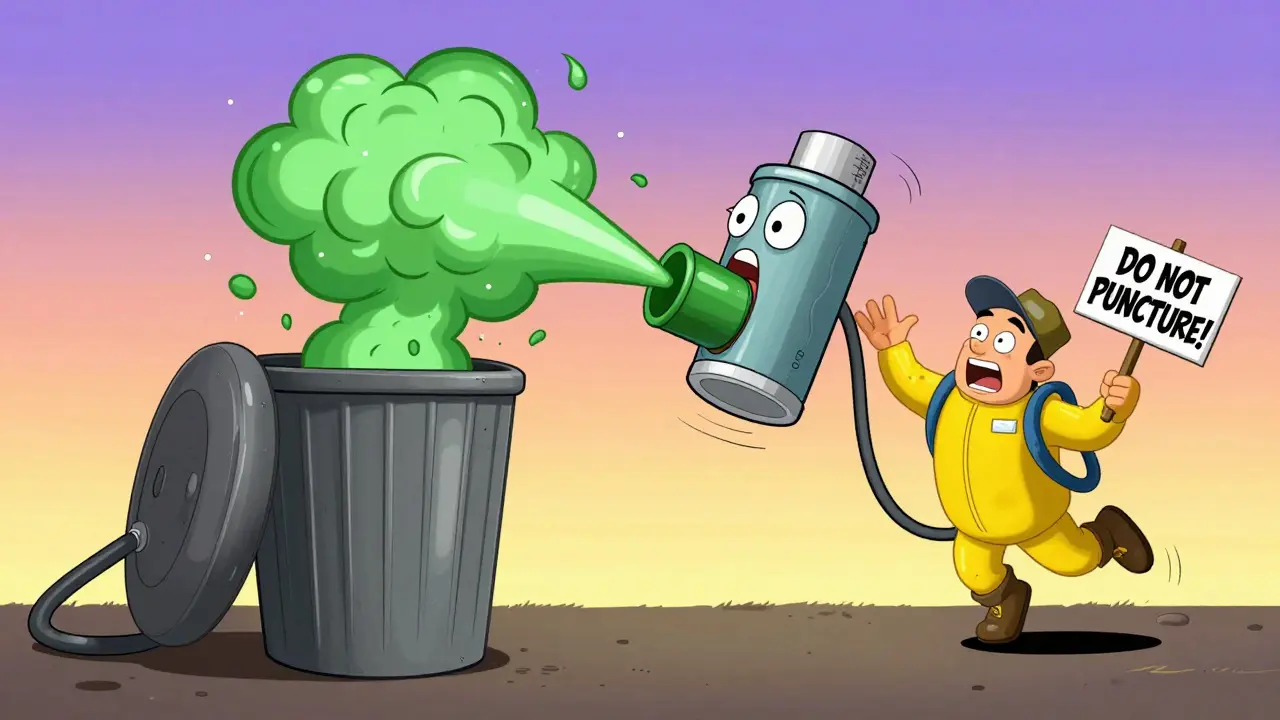
Inhalers-especially metered-dose ones-contain propellants like HFA that are greenhouse gases. If punctured or burned, they can explode. Even empty ones should never go in recycling bins. The plastic casing isn’t recyclable because of the metal canister inside.
Here’s how to handle them:
- Check the label. Some inhalers say "Do not puncture or incinerate." That’s your first clue.
- Don’t flush. Don’t throw in the trash. Don’t put in recycling.
- Call your local waste management department. Ask if they have an aerosol collection program. Cities like New York and Seattle run special drop-off sites for household hazardous waste.
- Some pharmacies, like Walgreens, accept inhalers at select locations-but only about half of them do. Call before you go.
- If no drop-off is available, remove the metal canister (if it’s detachable) and dispose of it separately as hazardous waste. The plastic mouthpiece can go in regular trash. If you can’t remove it, treat the whole unit as hazardous.
Pro tip: Keep an old inhaler in a sealed plastic bag until you can drop it off. That prevents accidental discharge.
Disposing of Medicated Patches
Patches like fentanyl, nicotine, or testosterone are tricky. Even after use, they still hold enough medicine to cause overdose if someone else touches or sticks them on their skin. The FDA has a flush list of drugs that should be flushed immediately to prevent harm. Fentanyl patches are on that list. So are some opioid patches.
For patches on the flush list:
- Remove the patch from your skin.
- Fold it in half so the sticky sides stick together.
- Flush it down the toilet right away.
For patches not on the flush list (like most nicotine patches):
- Fold the patch in half, sticky side in.
- Place it in a sealed plastic bag.
- Mix it with something unappetizing-used coffee grounds, cat litter, or dirt.
- Throw the bag in your household trash.
Never leave a patch on the counter or in the bathroom where a child could find it. Even a used patch can deliver a dangerous dose.
Use Take-Back Programs When You Can
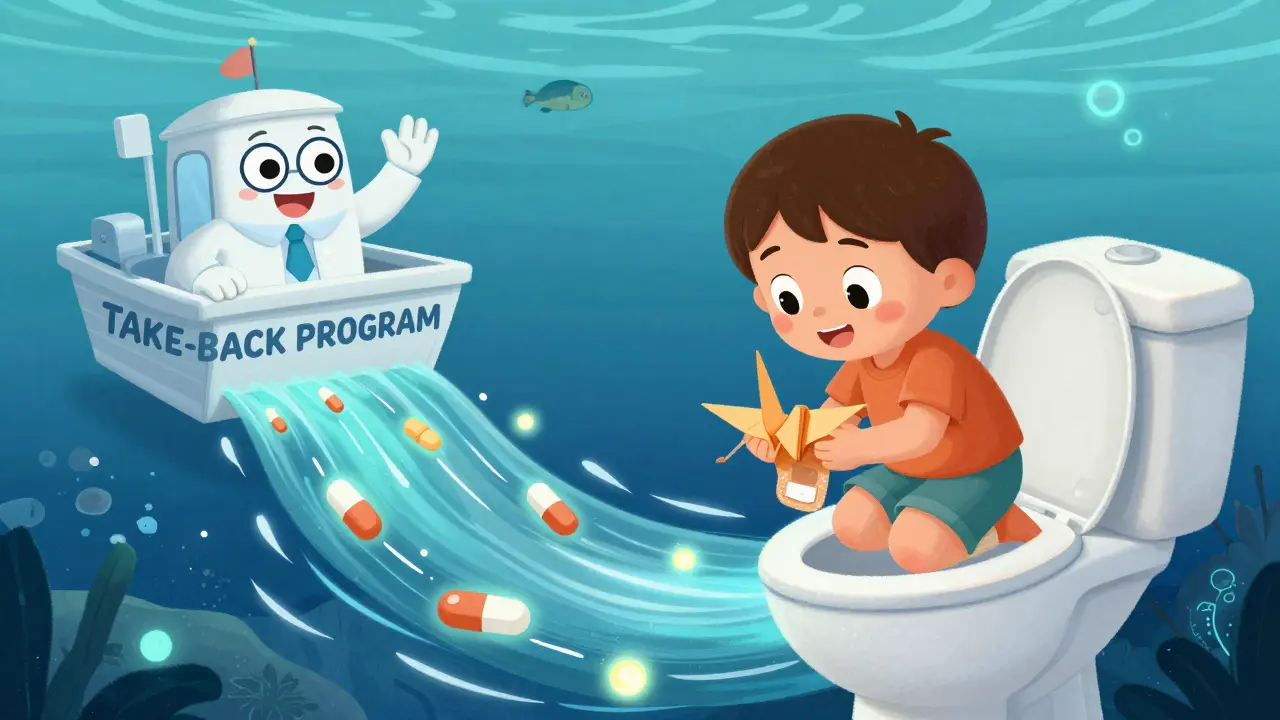
The safest, cleanest way to dispose of any expired medication is through a take-back program. The DEA runs National Prescription Drug Take Back Days twice a year-in April and October. In October 2022, over 985,000 pounds of meds were collected at 5,800 locations across the U.S. That’s not just pills. They take EpiPens, inhalers, and patches.
Many police stations, hospitals, and pharmacies now have permanent drop boxes. You don’t need to be a patient. You don’t need ID. Just walk in with your expired meds. In Australia, pharmacies like Chemist Warehouse and Priceline offer free disposal bins. Check with your local council for locations.
These programs prevent drugs from ending up in waterways. The USGS found pharmaceuticals in 80% of tested rivers and streams. Fish and frogs are showing hormonal changes because of this pollution. Proper disposal isn’t just about safety-it’s about protecting the environment.
What Not to Do
Don’t flush unless the label says so. Only medications on the FDA’s flush list should go down the toilet. Flushing nicotine patches or asthma inhalers can contaminate water.
Don’t burn them. Don’t put them in the fireplace or incinerator. The heat can cause canisters to explode.
Don’t give them to someone else. Even if the person has similar symptoms, dosing is personal. What works for you could kill someone else.
Don’t rely on recycling bins. No recycling facility is equipped to handle medical devices or drug residues.
How to Stay Prepared
Check your medicine cabinet every month. Mark your calendar to review expiration dates. EpiPens expire after 12-18 months. Inhalers often last 1 year after opening. Patches usually expire in 2-3 years.
Keep a small sharps container in your home. They cost $5-$15 at pharmacies. Use it for all used needles, auto-injectors, and lancets. Label it. Store it out of reach of kids and pets.
If you’re unsure how to dispose of something, call your pharmacist. They’re trained for this. They’ve seen it all.
What’s Changing in 2026
More states are passing laws that make drug manufacturers pay for disposal programs. California’s SB 212, which started in January 2024, requires companies like Mylan (maker of EpiPen) to fund collection systems. Expect more take-back bins in pharmacies soon.
Some new EpiPens now come with QR codes on the packaging that link directly to local disposal instructions. It’s a small step-but it means less guesswork for users.
Proper disposal isn’t complicated. It just takes a little awareness. A few minutes now can prevent a tragedy later. Keep your family safe. Protect your community. And don’t assume someone else will handle it.


Post A Comment