
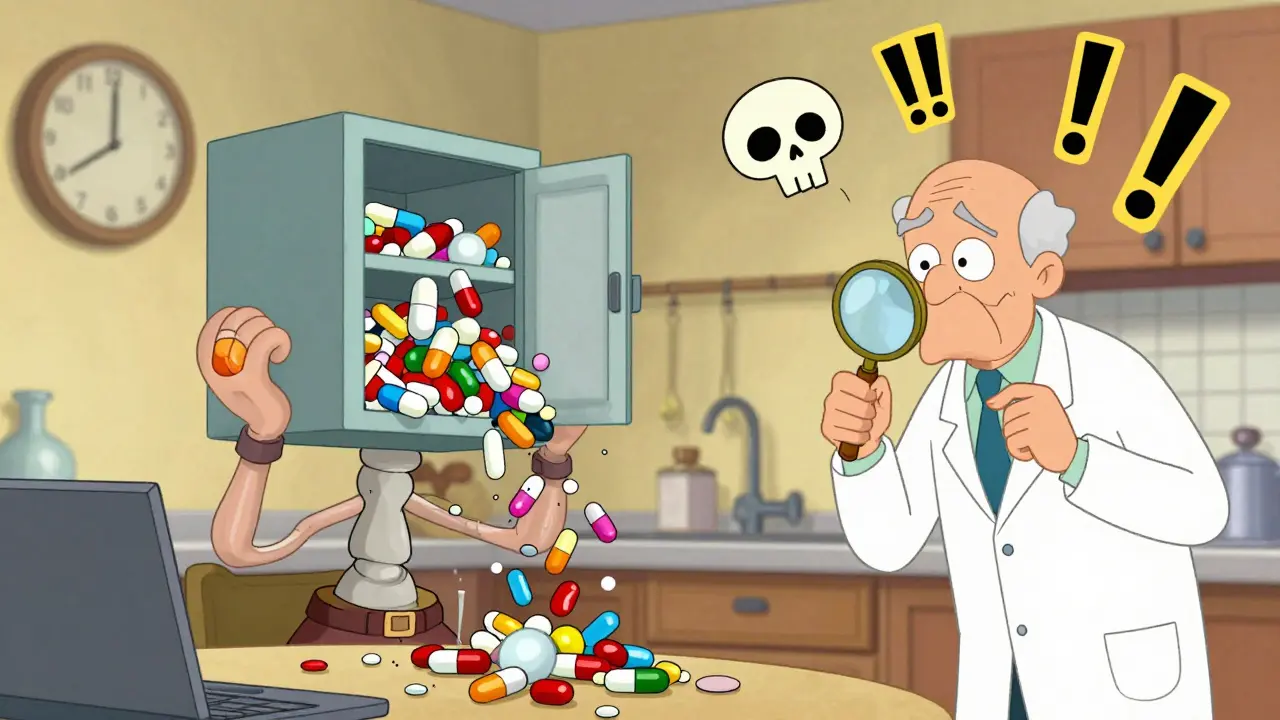
Every year, thousands of older adults end up in the hospital because their medications started working against each other. It’s not a rare mistake. It’s common. And it’s often preventable. In Australia, the U.S., and everywhere else, seniors are taking more pills than ever - sometimes six, eight, even twelve a day. With age comes more chronic conditions: high blood pressure, diabetes, arthritis, heart disease. Each one brings its own prescription. But what no one talks about enough is how these pills can clash - not just side by side, but inside the body. That’s where drug-drug interactions (DDIs) become dangerous.
Why Older Adults Are at Higher Risk
Your body changes as you age. It doesn’t just slow down - it reorganizes. The liver doesn’t break down drugs like it used to. Kidneys don’t flush them out as efficiently. Body fat increases, muscle mass drops, and water content falls. These shifts mean medications stick around longer, build up in the system, and hit harder. A dose that was fine at 50 can become toxic at 75.
On top of that, about 75% of all prescription drugs are processed by a group of liver enzymes called CYP450. When two or more drugs rely on the same enzyme, they compete. One can block the other, making it useless. Or it can overload the system, causing dangerous buildup. For example, statins for cholesterol and certain antibiotics can both use the same pathway. Together, they raise the risk of muscle damage - something older adults rarely recover from.
And then there’s polypharmacy. That’s the fancy word for taking five or more medications daily. In the U.S., 40% of seniors fall into this category. In Australia, it’s similar. And here’s the kicker: most of these prescriptions come from different doctors. One sees you for arthritis, another for heart issues, a third for sleep. No one has the full picture. Pharmacies don’t talk to each other. Records don’t sync. Pills pile up - and so do the risks.
Most Dangerous Interactions in Seniors
Not all interactions are equal. Some are mild. Others can kill. The most dangerous ones involve drugs that affect the heart and brain.
Cardiovascular drugs make up nearly 39% of serious DDIs in older adults. Think blood thinners like warfarin or rivaroxaban mixed with NSAIDs like ibuprofen. The combination can cause internal bleeding - often without warning. Or consider beta-blockers paired with calcium channel blockers. Both lower heart rate. Together, they can slow it too much, leading to dizziness, fainting, or worse.
Central nervous system drugs are next on the list. About 29% of serious DDIs involve these. Benzodiazepines for anxiety, antipsychotics for dementia, sleep aids like zolpidem - all can make seniors groggy, unsteady, prone to falls. When you add an opioid painkiller or an antihistamine from an OTC cold medicine, the sedation multiplies. Falls are the leading cause of injury-related death in people over 65. Many of those falls start with a bad pill combo.
And don’t forget over-the-counter meds. Seniors often don’t think of aspirin, antacids, or herbal supplements as "medications." But they are. Ginkgo biloba, St. John’s wort, garlic pills - they all interact. One 2023 study found that 68% of older adults didn’t tell their doctor about their supplements. Why? They didn’t think it mattered. They were wrong.
The Tools That Work
There are two main screening tools doctors use to catch risky prescriptions before they start. Both are backed by years of research.
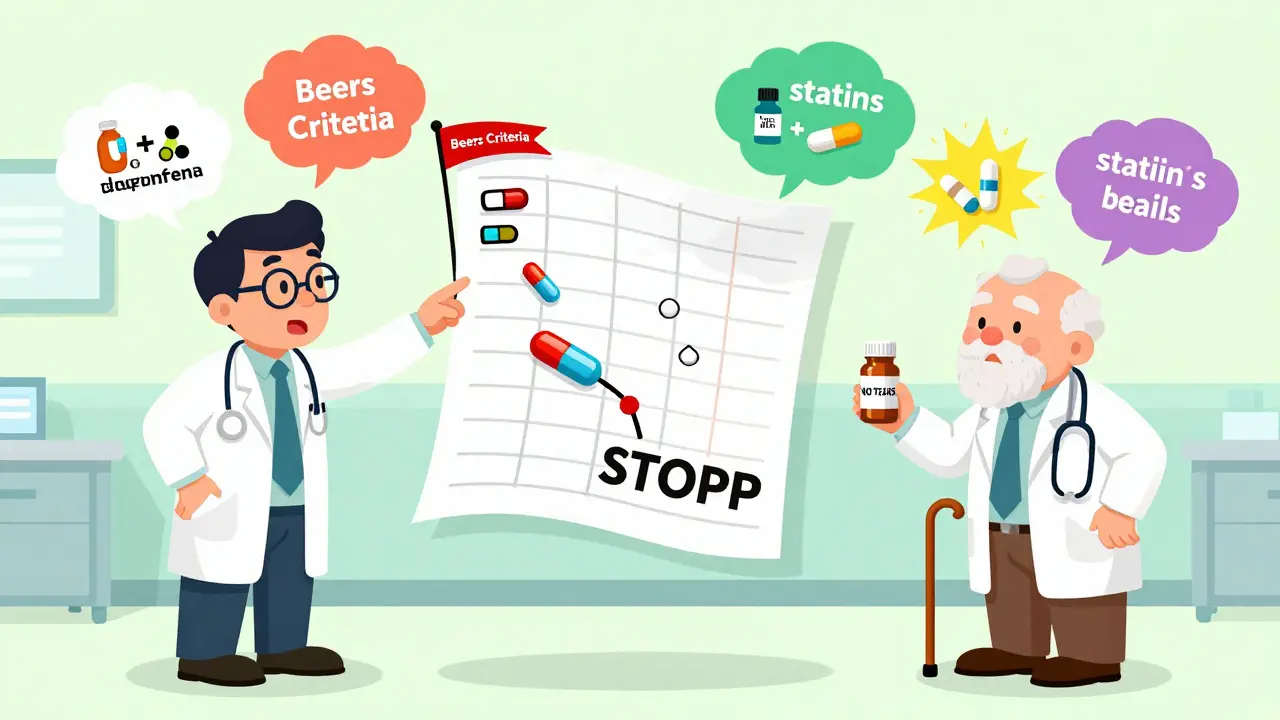
The Beers Criteria, updated in 2023 by the American Geriatrics Society, lists 30 medications that should be avoided in seniors - and 40 others that need dose adjustments because of kidney function. Examples? Amitriptyline (an old antidepressant) - too sedating. Dipyridamole (used with aspirin) - increases bleeding risk. Prochlorperazine (for nausea) - raises fall risk. Hospitals that use Beers during discharge saw 17.3% fewer readmissions.
The STOPP criteria (Screening Tool of Older Persons’ Potentially Inappropriate Prescriptions) goes further. It has 114 specific red flags across 22 drug categories. One example: prescribing a proton pump inhibitor (PPI) for more than 8 weeks without a clear reason. Long-term PPI use increases risk of bone fractures, kidney damage, and infections. Another: giving two anticholinergic drugs together - like oxybutynin for bladder control and diphenhydramine for allergies. Together, they can cause confusion, memory loss, even delirium.
When STOPP was used during hospital discharge planning, one 2021 study found a 34.7% drop in inappropriate prescriptions and a 22.1% drop in readmissions. These aren’t guesses. They’re proven.
How to Review Medications the Right Way
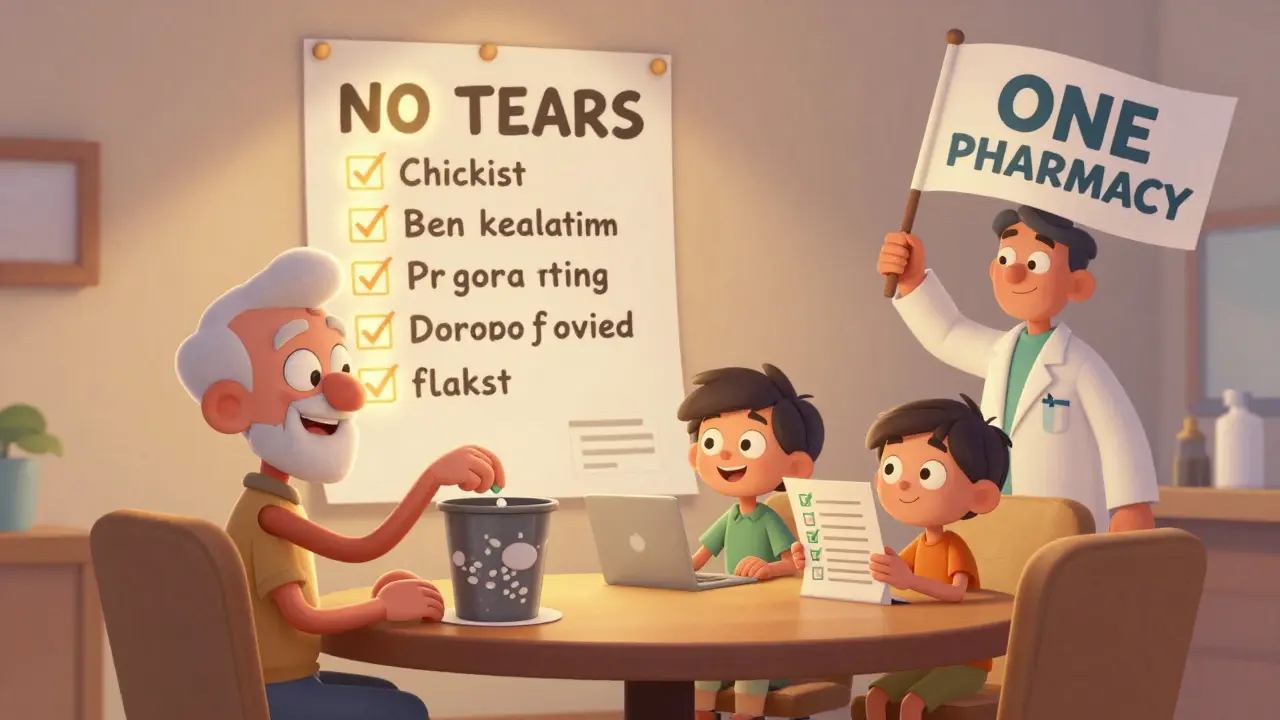
There’s a simple checklist clinicians are starting to use - called NO TEARS. It’s not fancy, but it works.
- Need: Is this drug still necessary? Maybe the condition improved. Maybe it was only meant for short-term use.
- Optimization: Is the dose right? Many seniors need lower doses due to kidney or liver changes.
- Trade-offs: Do the benefits outweigh the risks? A drug that lowers blood pressure might also cause dizziness. Is the trade-off worth it?
- Economics: Can the patient afford it? Skipping doses because of cost is a hidden DDI risk.
- Administration: Can the patient actually take it? Swallowing pills? Remembering a 5-pill routine? Complex regimens fail.
- Reduction: Can we stop one? Always ask: "What if we took one away?"
- Self-management: Does the patient understand? If they can’t explain why they’re taking each pill, the system has failed.
This isn’t just for doctors. Pharmacists, nurses, and even family caregivers can use NO TEARS. It turns a confusing list of pills into a clear conversation.
What You Can Do
If you or a loved one is taking multiple medications, here’s what to do:
- Bring every pill - including supplements - to every appointment. Don’t rely on memory. Put them all in a bag. Even the aspirin you take once a week.
- Ask: "Is this still needed?" Especially if it was prescribed years ago. Conditions change. So should meds.
- Ask: "What happens if we stop one?" Many seniors can safely reduce or eliminate one or two drugs. No one ever asks.
- Use one pharmacy. It sounds simple, but it’s critical. One pharmacy can flag interactions across all prescriptions.
- Know the signs of a bad interaction. New confusion, unexplained bruising, dizziness, nausea, or sudden fatigue? Call your doctor. Don’t wait.
And if you’re a caregiver: write down the name, purpose, dose, and time for each pill. Use a simple chart. Update it every month. You’re not just helping - you’re preventing a hospital stay.
The Bigger Picture
Here’s the hard truth: most clinical trials for new drugs exclude people over 75. Less than 5% of participants in phase 3 trials are seniors - even though they take 40% of all prescriptions. That means we’re prescribing based on data from 30-year-olds. It’s like fitting adult shoes on a child’s feet.
The FDA is trying to fix this. Their 2022 guidance asks drug makers to test medications in older adults. But only 18% of new drugs between 2018 and 2022 included this data. And only 28% of drug labels have clear DDI info for seniors.
Meanwhile, AI-powered tools are starting to help. Hospitals that use clinical decision support systems now flag dangerous combinations in real time. Adoption jumped from 22% in 2020 to 47% in 2023. But these tools only work if they’re fed accurate data - and if doctors listen.
Education is still lacking. Only 38% of U.S. medical schools have a dedicated geriatric pharmacology course. That number is rising - to 65% by 2026 - but it’s too slow. Seniors aren’t getting the care they need because the system wasn’t built for them.
Final Thought
Medication isn’t the enemy. It’s often lifesaving. But when it’s not managed carefully, it becomes a silent threat. Preventing drug-drug interactions in older adults isn’t about cutting pills. It’s about thinking smarter. It’s about asking the right questions. It’s about seeing the whole person - not just the list of diagnoses.
Every pill has a reason. But not every reason still applies. The goal isn’t to take fewer drugs. It’s to take the right ones - at the right dose - for the right reason. And to never stop checking.
What are the most common drug interactions in elderly patients?
The most dangerous interactions involve drugs that affect the heart and brain. Blood thinners (like warfarin) combined with NSAIDs (like ibuprofen) increase bleeding risk. Sedatives (like benzodiazepines) mixed with opioids or antihistamines can cause extreme drowsiness and falls. Anticholinergic drugs (like oxybutynin and diphenhydramine) taken together can trigger confusion or delirium. Statins with certain antibiotics can cause severe muscle damage. Over-the-counter supplements like St. John’s wort or ginkgo biloba also interact with prescription drugs - often without the patient knowing.
How many medications is too many for an elderly person?
Taking five or more medications daily is called polypharmacy, and it’s common - affecting about 40% of seniors. But "too many" isn’t about the number - it’s about necessity and risk. If a medication no longer treats an active condition, or if its risks outweigh its benefits, it’s too many. The goal isn’t to hit a number; it’s to reduce unnecessary drugs. Studies show that simplifying regimens reduces hospitalizations and improves quality of life.
Can over-the-counter medicines cause drug interactions?
Absolutely. Many seniors don’t realize OTC drugs are medications. Antihistamines (like Benadryl) can cause confusion and urinary retention. Pain relievers like ibuprofen can increase bleeding risk when taken with blood thinners. Stomach remedies like antacids can interfere with absorption of antibiotics or thyroid meds. Herbal supplements like St. John’s wort can reduce the effectiveness of antidepressants, birth control, and even heart medications. Always tell your doctor what you’re taking - even if it’s "just a supplement."
What is the Beers Criteria and how does it help?
The Beers Criteria is a list of medications that should be avoided or used with extreme caution in adults aged 65 and older. Updated every two years by the American Geriatrics Society, it identifies 30 drugs to avoid entirely (like diphenhydramine and meperidine) and 40 that need dose adjustments due to kidney or liver changes. It’s not a rulebook - it’s a guide. Hospitals and clinics that use it during medication reviews have seen up to a 17.3% drop in hospital readmissions. It helps doctors spot high-risk prescriptions before they cause harm.
How can I help my aging parent avoid dangerous drug interactions?
Start by gathering every pill, capsule, and supplement they take - including vitamins and OTC drugs. Bring them to every doctor visit. Ask the doctor: "Is each of these still necessary?" and "Could any be stopped?" Use one pharmacy so all prescriptions are tracked together. Watch for new symptoms like confusion, dizziness, bruising, or fatigue - they may signal a bad interaction. Consider using the NO TEARS checklist: Need, Optimization, Trade-offs, Economics, Administration, Reduction, Self-management. It turns medication reviews into clear, practical conversations.
Preventing drug-drug interactions in elderly patients isn’t about perfection. It’s about awareness. It’s about asking questions. And it’s about refusing to accept that "this is just part of aging." It’s not. With better tools, better communication, and better care, we can keep older adults safer - and healthier - at home.


Post A Comment