
Statin-Grapefruit Interaction Risk Calculator
Calculate Your Risk
Why Grapefruit Can Turn Your Statin Into a Hidden Danger
It’s a healthy habit: start your morning with a juicy grapefruit. But if you’re on a statin, that citrusy bite could be doing more than just boosting your vitamin C. For some people, even a single glass of grapefruit juice can push statin levels into dangerous territory-raising the risk of muscle damage, kidney failure, or worse. This isn’t a myth. It’s a well-documented, life-threatening interaction that’s been studied since the 1990s.
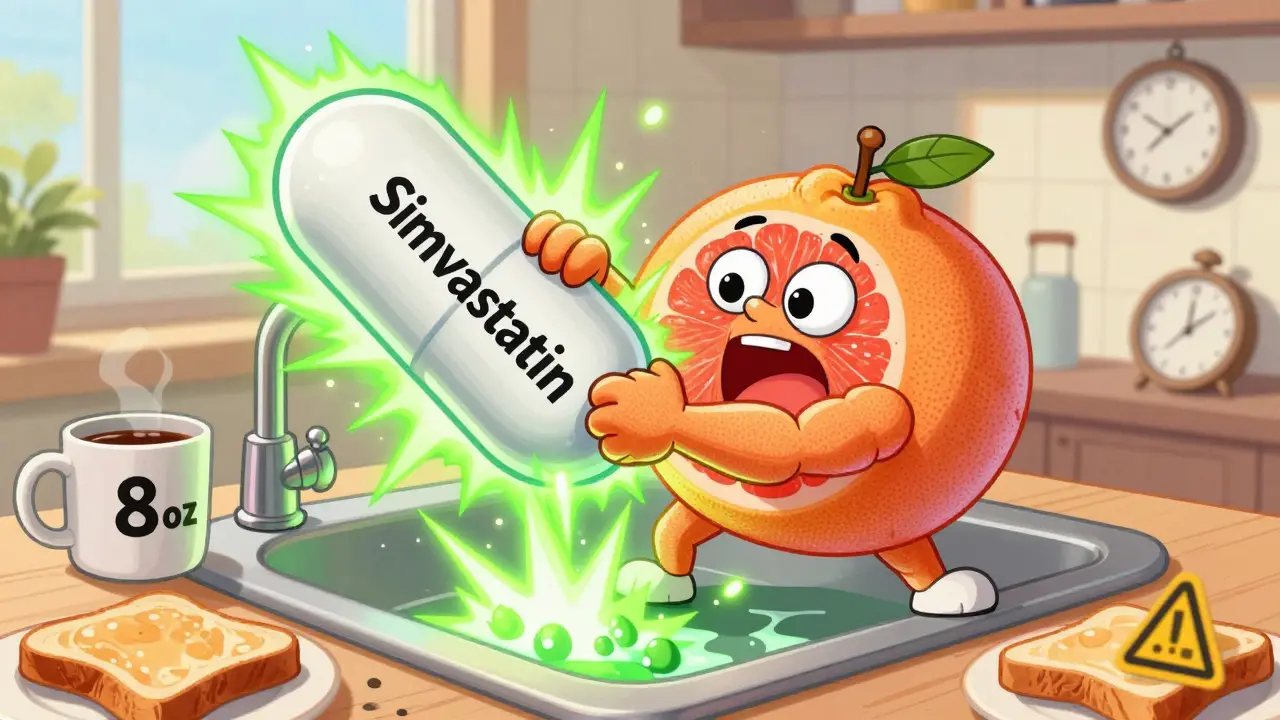
The problem isn’t the statin itself. It’s what grapefruit does to your body’s ability to break it down. Grapefruit contains chemicals called furanocoumarins, natural compounds that permanently disable an enzyme called CYP3A4 in your gut. That enzyme normally helps filter out certain statins before they enter your bloodstream. When it’s shut down, your body absorbs way more of the drug than intended. The result? Blood levels of the statin can spike by 3 to 8 times.
Which Statins Are at Risk?
Not all statins react the same way. Some are safe. Others? Not even a half-grapefruit is worth the gamble.
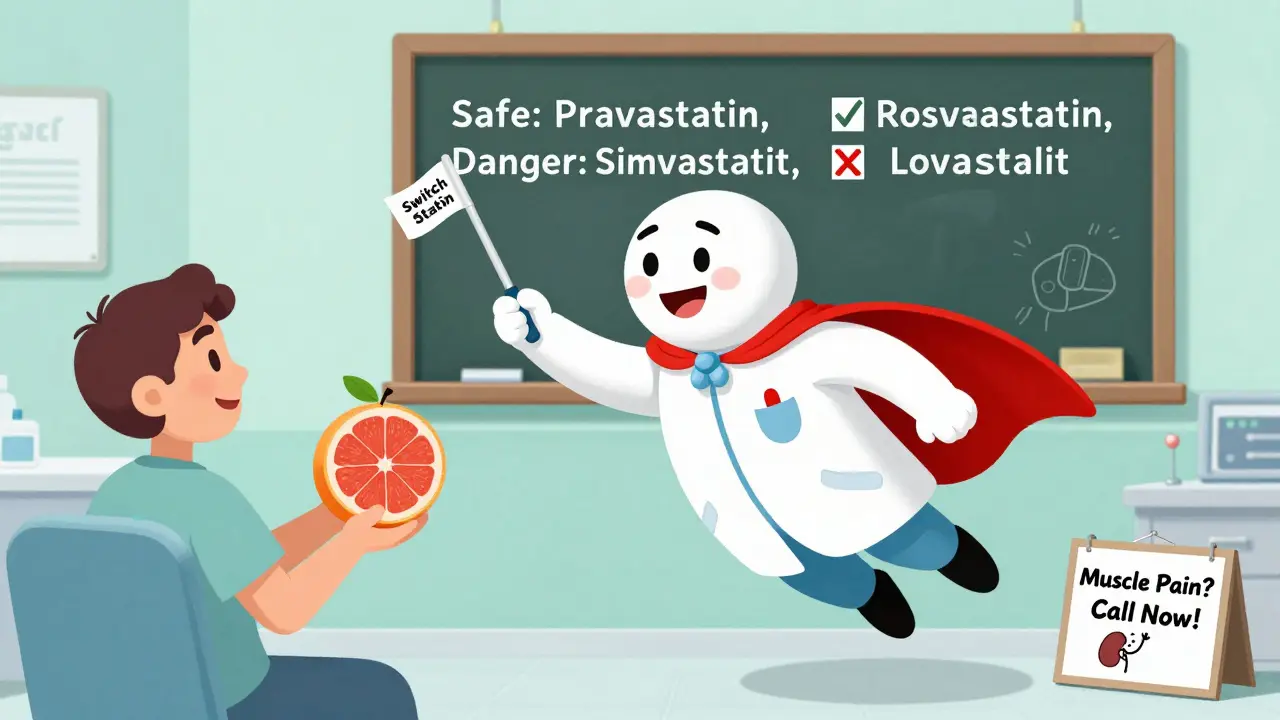
- High risk: Simvastatin (Zocor, FloLipid), Lovastatin (Mevacor), and Atorvastatin (Lipitor) are metabolized almost entirely by CYP3A4. Even small amounts of grapefruit can cause dangerous spikes.
- Low to no risk: Pravastatin (Pravachol), Rosuvastatin (Crestor), Fluvastatin (Lescol), and Pitavastatin (Livalo) use different metabolic pathways. Grapefruit barely touches them.
That’s why switching statins is often the smartest move if you love grapefruit. A 2023 American College of Cardiology guideline explicitly recommends choosing a safer statin over strict avoidance-especially for long-term users.
How Much Grapefruit Is Too Much?
The FDA says 200-250 ml (about 8 oz) of grapefruit juice is the threshold where risk becomes real. But here’s the catch: that’s not a hard line. Some people see no change. Others get hit hard-even with half that amount.
A 2006 study in the British Journal of Clinical Pharmacology found that just 200 ml of grapefruit juice daily tripled the concentration of simvastatin in the blood. Peak levels jumped nearly fourfold. Another study showed that 400 ml of juice, taken three times a day, sent simvastatin levels soaring 700% above normal.
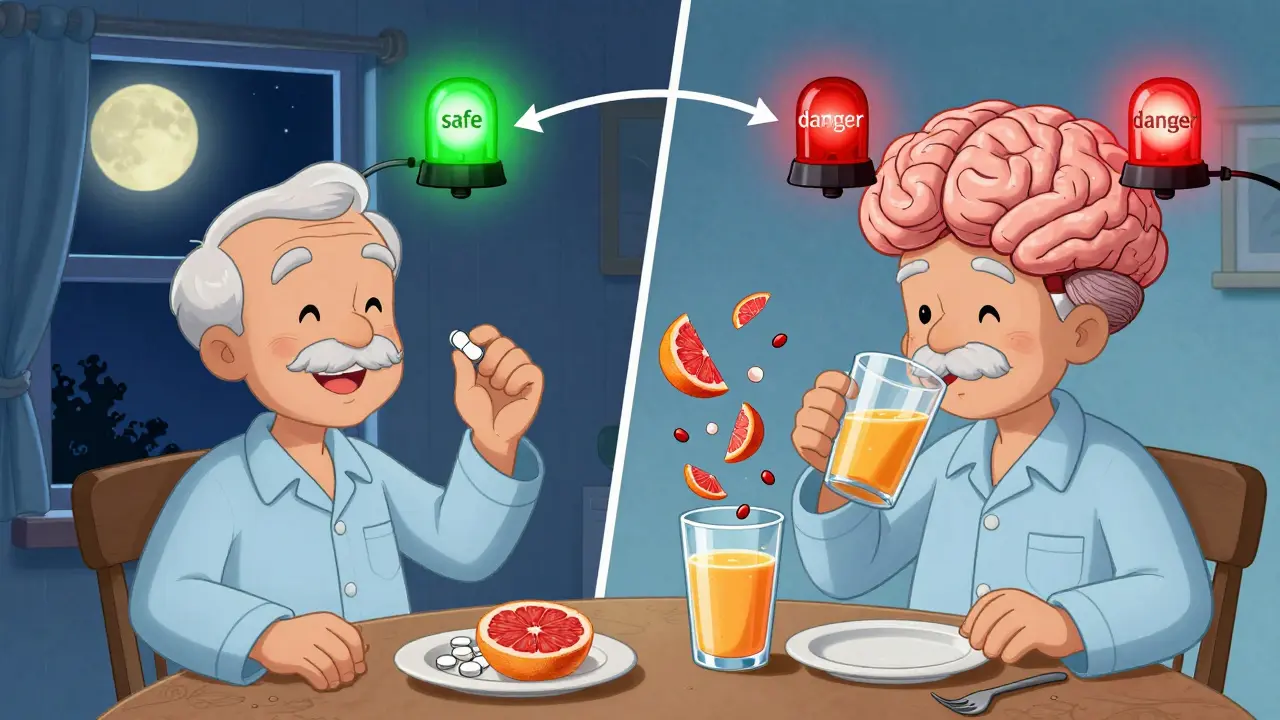
But here’s what most people don’t realize: timing matters. If you take your statin at night and drink grapefruit juice in the morning, the interaction is weaker. Why? The enzyme inhibition is local to the gut, and the body starts repairing it over time. So if your statin is taken at bedtime, and you drink juice at breakfast, you’re giving your gut a 12-hour window to recover.
Still, the safest advice from the Cleveland Clinic and the American Academy of Family Physicians? Stick to one 8-ounce glass per day-and only if you’re on a low or moderate dose of a high-risk statin. Anything more? Not worth the risk.
What About Whole Fruit?
Does eating half a grapefruit have the same effect as drinking juice? Yes. The furanocoumarins are in the flesh and peel. Juice just concentrates them. One whole grapefruit contains roughly the same amount of active compounds as 8-12 oz of juice. So if you’re avoiding grapefruit juice, avoid the fruit too.
And don’t assume “light” or “no sugar added” juice is safer. The problem isn’t sugar-it’s the furanocoumarins. They’re still there.
Who’s Most at Risk?
This isn’t a one-size-fits-all danger. Some people barely absorb extra statin after grapefruit. Others? Their blood levels skyrocket.
Why? Genetics. Some people naturally have more CYP3A4 enzymes in their gut. When grapefruit knocks those out, the drop in metabolism is brutal. Older adults are also more vulnerable. Their livers and kidneys don’t clear drugs as efficiently. And if you’re taking other meds-like blood pressure pills, antidepressants, or immunosuppressants-that also rely on CYP3A4, you’re stacking risks.
Dr. David Bailey, the scientist who first discovered this interaction in 1991, found that after one 250 ml serving of grapefruit juice, some people saw their simvastatin levels increase by 8 times. Others? Zero change. That variability is why blanket warnings can be misleading.
What Happens When Things Go Wrong?
The worst-case scenario is rhabdomyolysis-a rare but deadly breakdown of muscle tissue. It can cause kidney failure, heart rhythm problems, and even death.
Between 1990 and 2021, the FDA recorded only 17 cases of rhabdomyolysis linked to grapefruit and statins. That’s rare. But rare doesn’t mean impossible. And when it happens, it’s often in people who didn’t know they were at risk.
Early warning signs? Muscle pain, weakness, or tenderness-especially in the shoulders, thighs, or lower back. Dark, tea-colored urine. Fatigue. Fever. If you notice any of these after starting grapefruit with your statin, stop the fruit and call your doctor immediately.
What Should You Do?
Here’s a clear, practical plan:
- Check your statin name. If it’s simvastatin, lovastatin, or atorvastatin, you need to be careful.
- Ask your doctor about switching. If you love grapefruit, switching to pravastatin or rosuvastatin removes the risk entirely. Both are just as effective at lowering cholesterol.
- If you stick with a high-risk statin: Limit grapefruit to one 8-ounce glass per day, preferably in the morning. Take your statin at night.
- Avoid if you’re on high doses. If you’re taking 80 mg of simvastatin or 40 mg of atorvastatin, skip grapefruit completely. The European Medicines Agency warns this combination is unsafe.
- Watch for symptoms. Muscle pain or dark urine? Don’t wait. Get checked.
And if you’re unsure? Don’t guess. Ask your pharmacist. They have access to drug interaction databases that flag these risks in seconds.
Bottom Line: It’s Not About Fear-It’s About Control
You don’t have to give up grapefruit forever. But you do need to know your statin, your dose, and your habits. For most people on low-dose simvastatin or lovastatin, one glass of juice a day is manageable-if you’re smart about timing. For others, especially those on high doses or older adults, the risk isn’t worth it.
The best approach? Talk to your doctor. Get your statin checked. Consider a safer alternative. And if you choose to keep eating grapefruit? Be precise. Be aware. Be ready to act if something feels off.
Health isn’t about perfection. It’s about making informed choices. And when it comes to grapefruit and statins, that choice could save your muscles-and your life.


Post A Comment