
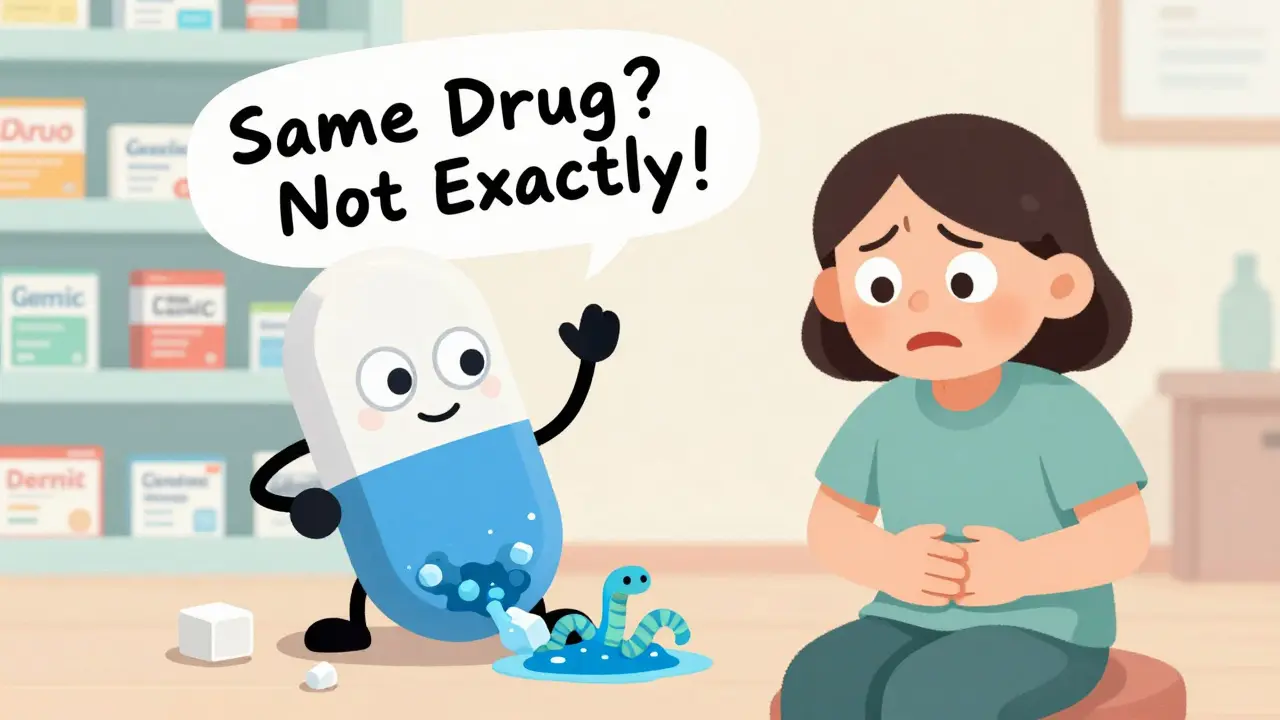
Most people assume that if two pills have the same active ingredient, they work the same way. But what if the problem isn’t the drug itself - it’s what’s around the drug? In generic medications, the so-called "inactive" ingredients - called excipients - can be the real reason some people feel sick, bloated, or worse after switching from a brand-name pill to a cheaper version.
What Are Excipients, Really?
Excipients are the non-active parts of a pill. They don’t treat your condition. But they do everything else: hold the tablet together, help it dissolve in your stomach, make it taste better, keep it from going bad, or even make it easier to swallow. Common ones include lactose (a milk sugar), corn starch, magnesium stearate, FD&C food dyes, and preservatives like parabens.
Here’s the catch: while the FDA requires generics to match the brand-name drug’s active ingredient in strength and absorption, they don’t have to match the excipients. That means two versions of the same medicine - say, levothyroxine - can have completely different fillers, binders, or coatings. And for some people, those differences cause real problems.
Why "Inactive" Is a Misleading Term
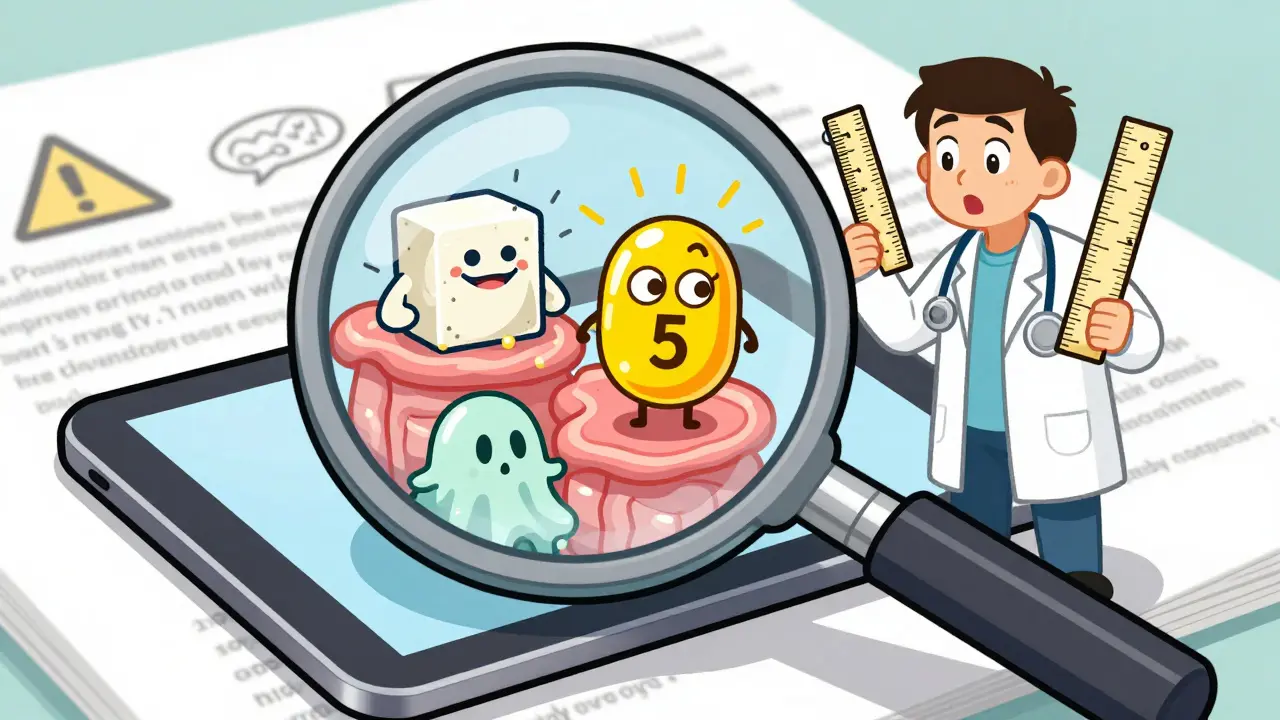
The word "inactive" makes people think these ingredients are harmless. But that’s not true. A 2019 study from Brigham and Women’s Hospital and MIT looked at over 42,000 oral medications and found that 90.2% of them contained at least one ingredient known to trigger allergies or intolerances. On average, each pill had nearly nine excipients. Some of the most common ones linked to reactions include:
- Lactose - found in 40-60% of oral tablets
- FD&C Blue #2 and Yellow #5 - artificial colors linked to digestive upset and hyperactivity in sensitive individuals
- Parabens - preservatives that can irritate the gut or skin
- Gluten - sometimes used as a filler in tablets, even if not listed on the label
- Polysorbate 80 and polyethylene glycol - used in liquid and extended-release forms, known to cause reactions in some
Dr. Giovanni Traverso, lead author of that study, put it plainly: "The assumption that inactive ingredients are universally inert is fundamentally flawed."
When Switching Generics Causes Problems
Imagine you’ve been taking Synthroid for years. You feel fine. Then your pharmacy switches you to a generic version because it’s cheaper. Within days, you start having stomach cramps, bloating, and diarrhea. You think it’s food. Or stress. But it’s not. The generic version contains lactose. You’re lactose intolerant - not severely, but enough that even 1-2 grams of lactose (found in a single tablet) triggers symptoms.
This isn’t rare. A 2021 survey of pharmacists found that 73.5% had patients report side effects they believed were tied to excipient changes after switching between brand and generic or between different generic manufacturers. One Reddit user, u/MedicCheck, described switching from brand Synthroid to a generic and suddenly developing severe GI distress. After checking the ingredients, they found FD&C Blue #2 - a dye they were sensitive to.
These aren’t just anecdotes. The FDA has logged cases of "dose dumping" - where a wrong excipient causes the drug to release too fast, leading to dangerous spikes in blood levels. Others report reduced absorption because the new tablet doesn’t dissolve the same way, making the medicine less effective.
Who’s Most at Risk?
Not everyone reacts. But some groups are far more vulnerable:
- Lactose-intolerant people: Symptoms can start with as little as 1-2 grams of lactose. That’s in one tablet. Many generics contain 5-20 grams per dose.
- Children and elderly: Their bodies process substances differently. A dye or preservative that’s fine for a healthy adult can irritate a child’s gut or an older person’s kidneys.
- People with autoimmune conditions or IBD: Their gut lining is already inflamed. Extra chemicals can make things worse.
- Those with multiple allergies: If you’re allergic to nuts, shellfish, or latex, you’re more likely to react to hidden excipients.
One study showed that 65-70% of people with confirmed lactose intolerance experience symptoms after consuming more than 12 grams of lactose daily - but a subset of highly sensitive individuals react to just 1-2 grams. That’s why two people taking the same generic pill can have totally different experiences.
How to Find Out What’s in Your Pill
Brand-name drugs usually list all ingredients on the package. Generics? Not always. The FDA’s Inactive Ingredient Database (IID) is the most reliable source, but it’s not easy to use. Here’s how to get the info you need:
- Check the pill’s imprint code (letters/numbers on the tablet) and search it on Pillbox, a free tool from the National Library of Medicine.
- Look up the manufacturer’s name on the FDA’s IID - it lists approved excipients for each drug and route of administration.
- Call the pharmacy or manufacturer directly. Many won’t volunteer the info unless you ask.
- Ask your doctor or pharmacist to check the excipient profile before switching.
Pharmacists spend an average of 7.2 minutes per patient just tracking down this info. It’s not fast. But it’s worth it if you’re reacting.
What to Do If You Suspect an Excipient Reaction
If you notice new symptoms after switching medications - especially GI issues, rashes, headaches, or fatigue - here’s what to do:
- Don’t stop the medication without talking to your doctor. Some reactions are mild. Others need urgent care.
- Write down when the symptoms started, what you were taking, and what changed.
- Ask your pharmacist for the full ingredient list of your new generic.
- If you suspect a specific excipient (like lactose or dye), ask your doctor to switch you to a version without it - even if it’s the brand-name version.
- Document your intolerance in your medical record. Say: "Patient has documented intolerance to lactose in oral medications."
A 2022 survey found that only 22.7% of providers consistently document excipient intolerances. That means the next time you switch doctors or pharmacies, you might have to start from scratch. Don’t let that happen.
The Bigger Picture: Why This Matters
Generics make healthcare affordable. In the U.S., they make up 90% of prescriptions. But cost shouldn’t come at the price of safety. The global market for specialty excipients - lactose-free, dye-free, gluten-free formulations - hit $18.7 billion in 2022 and is growing fast. Companies are starting to listen. Some now maintain internal databases of excipient sensitivities. Hospitals have protocols to handle these reactions.
The FDA’s 2023 "Excipient Safety Modernization Initiative" is finally starting to collect patient-reported data to update safety thresholds. In 2025, they plan to require full excipient disclosure in electronic prescriptions. That’s progress.
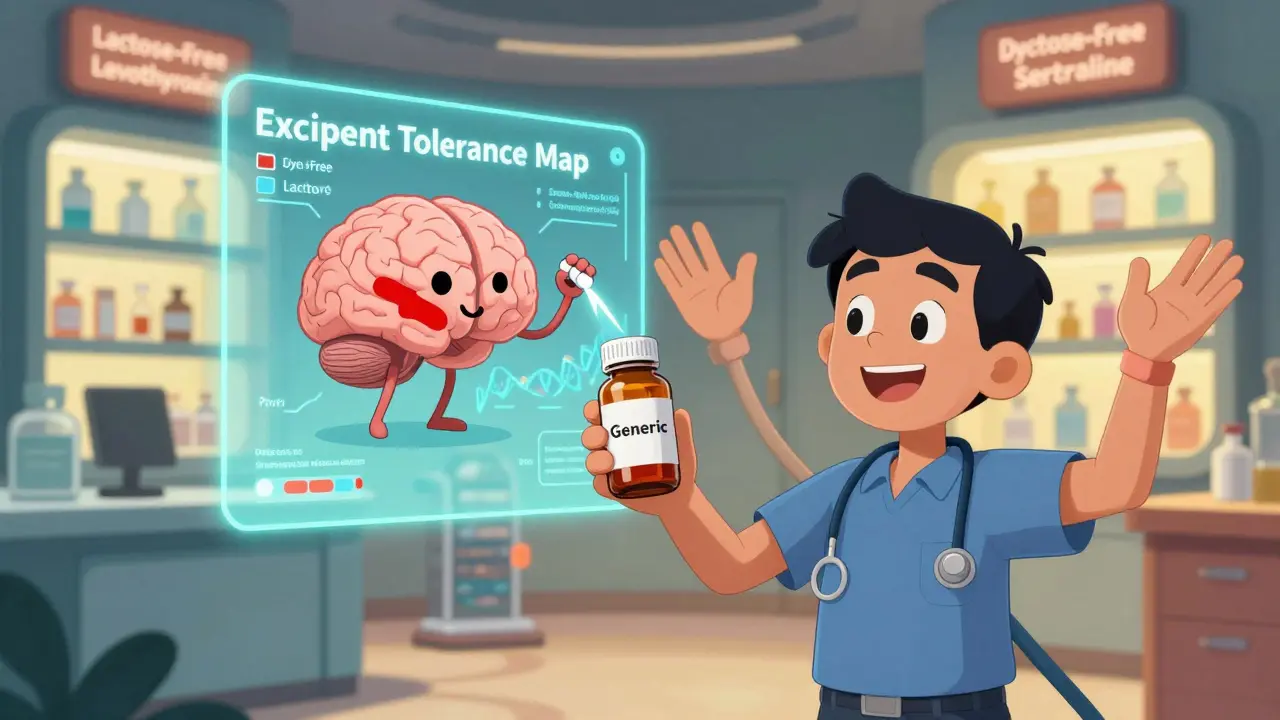
Meanwhile, researchers at MIT have built an AI tool that predicts your personal tolerance to excipients based on your genetics. It’s still experimental, but it points to a future where your medication isn’t just chosen by disease - but by your biology.
Bottom Line: Know Your Pills
Generic drugs save money. That’s great. But they’re not always identical in how they affect your body. The difference isn’t in the active ingredient - it’s in the filler. If you’ve ever felt worse after switching to a cheaper pill, you’re not imagining it. You’re not crazy. You’re just sensitive to something in the pill that shouldn’t be there.
Don’t accept side effects as normal. Ask for the ingredient list. Talk to your pharmacist. Demand clarity. Your body isn’t just reacting to the drug. It’s reacting to the whole package - and you deserve to know what’s in it.
Can excipients in generic drugs cause real side effects?
Yes. While excipients are labeled "inactive," many can trigger allergic reactions, digestive issues, or other intolerances - especially in sensitive individuals. Lactose, artificial dyes, parabens, and gluten are common culprits. A 2019 study found that over 90% of oral medications contain at least one ingredient linked to adverse reactions.
Why do generic drugs have different excipients than brand-name ones?
The FDA only requires generics to match the active ingredient in strength, purity, and absorption rate. They don’t require matching excipients. Manufacturers choose different fillers, binders, or coatings to cut costs, improve stability, or simplify production. This leads to variation between brands and between generic versions of the same drug.
How do I know if my medication contains lactose or other allergens?
Check the Pillbox database (pillbox.nlm.nih.gov) using your pill’s imprint code. You can also ask your pharmacist for the manufacturer’s full ingredient list or search the FDA’s Inactive Ingredient Database. Brand-name drugs list ingredients on the box; generics often don’t - so you have to ask.
What should I do if I think an excipient is making me sick?
Don’t stop your medication without talking to your doctor. Write down your symptoms and when they started. Ask your pharmacist to identify the excipients in your current pill. If you suspect a specific ingredient - like lactose or dye - request a version without it. Even if it’s the brand-name drug, it may be worth the cost for your health. Document your intolerance in your medical record.
Are there generic drugs without lactose or artificial dyes?
Yes. Many manufacturers now offer lactose-free, dye-free, or gluten-free versions of common medications. These are often labeled as "specialty" or "sensitive formula" generics. They may cost a bit more, but they’re available for drugs like levothyroxine, metformin, and sertraline. Ask your pharmacist or check the FDA’s database for alternatives.
Is this problem getting better?
Yes. The FDA launched its Excipient Safety Modernization Initiative in 2023 to update safety data using patient reports. By 2025, full excipient disclosure will be required in electronic prescriptions. Companies are also investing in personalized formulations. While the system is still imperfect, awareness and regulation are moving in the right direction.


Post A Comment