
Medication Titration Calculator
Select Your Medication
Why Dose Titration Matters for Your Medication Safety
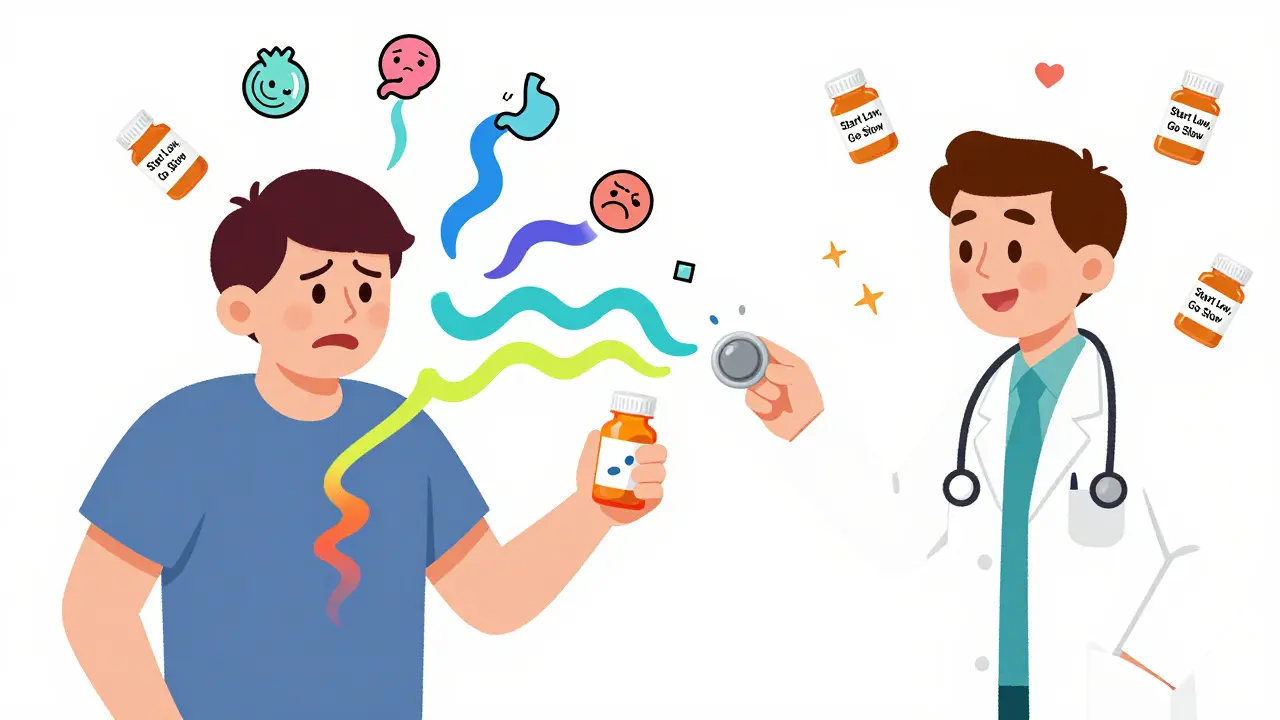
Imagine starting a new medication and feeling dizzy, nauseous, or anxious within days. You might think the drug isn’t right for you-but what if the problem isn’t the drug, but the dose? Many people quit their meds not because they don’t work, but because they were started too fast. That’s where dose titration comes in. It’s not just a medical buzzword-it’s a proven way to make medications safer, more tolerable, and actually effective.
Titration means slowly adjusting your dose over time instead of jumping straight to the full amount. It’s like turning up a dimmer switch instead of flipping a light switch. This approach gives your body time to adapt. For drugs with a narrow therapeutic index-where the difference between a helpful dose and a harmful one is small-titration isn’t optional. It’s essential. The FDA now requires titration schedules for 92% of new central nervous system drugs approved since 2018. And it’s not just for psychiatry. Heart failure patients on beta-blockers, epilepsy patients on perampanel, and even cancer patients on venetoclax all rely on carefully planned titration to avoid life-threatening side effects.
How Titration Works: Up-Titration and Down-Titration Explained
Dose titration isn’t one-size-fits-all. There are two main directions: up-titration and down-titration. Up-titration means slowly increasing the dose until you hit the sweet spot-enough to help without causing trouble. Down-titration means reducing the dose when side effects become too much or when your condition improves.
For stimulant ADHD meds like Adderall or Vyvanse, doctors typically start at 25-50% of the target dose. You might begin with 5mg instead of 10mg or 20mg. Then, you wait 3-7 days before increasing by another 5-10mg. This gives your body time to adjust. Non-stimulants like atomoxetine take longer-often 8-12 weeks to reach full dose-because they work more slowly. In contrast, drugs like lamotrigine for epilepsy require a 5-week ramp-up just to prevent a rare but deadly skin reaction called Stevens-Johnson syndrome.
Some medications have rigid, step-by-step schedules. Venetoclax, used for chronic lymphocytic leukemia, follows a strict 5-week plan: 20mg in week one, then 50mg, 100mg, 200mg, and finally 400mg. Skip a step, and you risk tumor lysis syndrome-a dangerous drop in electrolytes that can shut down your kidneys. Warfarin, an older blood thinner, needs weekly blood tests to check INR levels because its therapeutic window is so narrow. Newer anticoagulants like apixaban don’t need this level of monitoring because they’re more forgiving.
Real-Life Examples: What Works and What Doesn’t
People who follow titration protocols report dramatically better outcomes. In a 2022 survey of 1,200 ADHD patients, 74% who titrated slowly said their side effects were manageable. Only 41% of those who started at full dose felt the same. On Reddit’s r/ADHD community, users shared stories like: “Starting at 5mg Adderall instead of 10mg saved me from crushing anxiety.” Another said: “My doctor skipped titration and started me at 20mg. I quit meds for two years because I felt like I was losing my mind.”
On the flip side, skipping titration can be dangerous. One patient on lamotrigine jumped from 25mg to 100mg in a week. Within days, she developed a rash that turned into Stevens-Johnson syndrome. She spent weeks in the hospital. That’s why doctors now insist on slow ramps-even if it feels frustrating.
For heart failure patients, titration isn’t just about comfort-it’s about survival. The American Heart Association found that gradual up-titration of beta-blockers cut the rate of patients quitting due to side effects from 45% down to 18%. That’s a huge win. But it takes patience. You might feel worse before you feel better as your body adjusts to lower heart rates and blood pressure. That’s normal. Your doctor needs to know how you’re feeling each week.

Tracking Side Effects: The Secret Weapon
Titration doesn’t work if you can’t tell your doctor what’s happening. That’s why keeping a side effect journal is one of the most powerful tools you have. Use a simple 1-10 scale to rate symptoms like dizziness, nausea, fatigue, or brain fog. Note the time of day, what you ate, and whether you took your med with food. This isn’t busywork-it’s data.
Seventy-eight percent of patients who used symptom logs on Healthgrades reported that it helped their doctor make better decisions. One man with depression noticed his insomnia spiked every time he took his SSRI after 3 p.m. He switched to morning dosing and his sleep improved overnight. Another woman with bipolar disorder tracked mood swings and realized her irritability only happened when her lithium level dipped below 0.6. Her doctor adjusted her dose before she had a full episode.
Waiting 1-2 weeks between dose changes is critical. Side effects can mimic other things-stress, sleep loss, even a cold. If you increase your dose too fast, you won’t know if the problem is the drug or something else. Give your body time to settle. And don’t guess. If you feel worse, tell your provider immediately. Don’t wait for your next appointment.
What You Need to Know Before Starting
Before you begin titration, get clear answers. Ask your doctor: What’s the target dose? What’s the schedule? What side effects should I watch for? How often do I need to come in? Some meds, like warfarin or lithium, need blood tests. Others, like ADHD meds, rely on your feedback.
Timing matters too. Take your med at the same time every day-within 30-60 minutes. If you’re on a twice-daily dose, space them out evenly. Skipping doses or taking them late can throw off your body’s rhythm and make side effects worse. If you miss a dose, don’t double up. Call your provider. They’ll tell you whether to skip or adjust.
Also, know your meds. Newer branded drugs like Vyvanse come with 12-page titration guides. Older generics like methylphenidate? Often, nothing. That doesn’t mean you shouldn’t titrate-it means you need to be more proactive. Bring printed schedules to your appointments. Print out the FDA-approved titration plan from the drugmaker’s website. Be your own advocate.
When Titration Isn’t the Answer
Titration is powerful-but not always appropriate. In emergencies, you need speed. If someone’s having a seizure, you don’t titrate perampanel-you give a loading dose. If someone’s having anaphylaxis, you don’t slowly increase epinephrine-you give it all at once. Same with pain relief after surgery or antibiotics for sepsis. Titration is for chronic, stable conditions where safety matters more than speed.
Also, if you’re severely depressed or suicidal, waiting 8 weeks to reach a therapeutic dose can be risky. Some psychiatrists will start higher and monitor closely, especially if you’ve tried meds before without side effects. It’s a balance. Your doctor should explain why they’re choosing one approach over another.
And in low-resource areas, titration is often impossible. The WHO reports only 22% of low-income countries have formal titration protocols for essential meds. If you’re in a region with limited access to labs or frequent check-ups, ask about alternatives. Some newer drugs have wider safety margins and don’t need slow ramps. Ask: “Is there a medication that works similarly but doesn’t require weekly visits?”
The Future of Personalized Titration
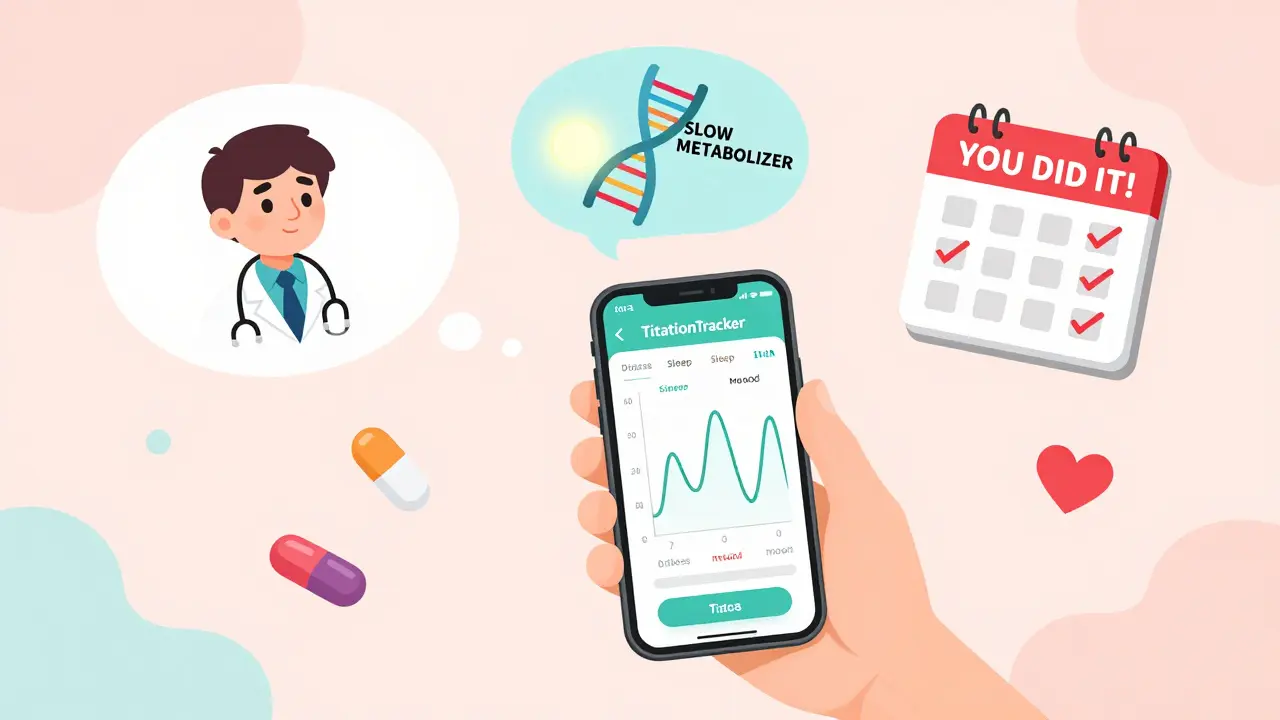
The future of titration is getting smarter. In January 2023, the FDA cleared the first AI-powered titration app, TitrationTracker. It asks you daily questions about your symptoms, sleep, and energy. Then it uses algorithms to predict the best next dose. In a 2023 trial with 1,200 patients, those using the app had 32% fewer side effects than those doing it the old way.
Even more exciting? Pharmacogenetic testing. Your genes can tell doctors how fast you metabolize certain drugs. Right now, 28 medications-including antidepressants, painkillers, and blood thinners-have FDA-endorsed genetic guidelines. By 2025, that number will grow to 40. Imagine starting your first antidepressant with a simple cheek swab that tells your doctor: “You’re a slow metabolizer. Start at 25% of the usual dose.” That’s not science fiction-it’s already happening in clinics across the U.S.
By 2030, the American College of Clinical Pharmacology predicts 75% of high-risk medications will use genetic data to guide starting doses. That means fewer trial-and-error cycles. Fewer side effects. Fewer people quitting their meds.
What to Do Next
If you’re starting a new medication with known side effects, ask your doctor: “Can we use a titration schedule?” Don’t assume they’ll offer it. Many still start at full dose out of habit. If they say no, ask why. If it’s a high-risk drug like lamotrigine, lithium, or venetoclax, insist on a plan.
Get a notebook. Or use a free app like TitrationTracker or Medisafe. Track your symptoms daily. Take your meds on time. Don’t skip appointments. And if you feel worse-don’t ignore it. Call your provider. A 10-minute call could prevent a hospital visit.
Dose titration isn’t about waiting longer to feel better. It’s about feeling better without feeling awful. It’s the difference between quitting your med and sticking with it for life. And that’s worth the wait.
What does it mean to titrate a medication?
Titration means gradually adjusting the dose of a medication over time to find the lowest effective dose that controls symptoms without causing serious side effects. Instead of starting at the full prescribed amount, you begin lower and increase slowly-usually in small increments every few days or weeks-based on how your body responds.
How long does dose titration usually take?
It varies by medication. Stimulants like Adderall often take 4-6 weeks to fully titrate. Non-stimulants like atomoxetine or antidepressants can take 8-12 weeks. Some drugs, like lamotrigine or venetoclax, follow fixed weekly schedules that last 5-6 weeks. The goal isn’t speed-it’s safety. Rushing increases the risk of severe side effects.
Can I adjust my dose on my own during titration?
No. Never change your dose without talking to your doctor. Even small changes can cause serious reactions. For example, increasing lamotrigine too fast can trigger a life-threatening skin rash. If you’re having side effects, document them and call your provider. They may delay the next increase, lower the dose, or switch medications-but only they can make those decisions safely.
Which medications require titration?
Medications with a narrow therapeutic index need titration. These include antidepressants (SSRIs, SNRIs), antiseizure drugs (lamotrigine, perampanel), mood stabilizers (lithium, valproate), stimulants (Adderall, Vyvanse), blood thinners (warfarin), heart failure drugs (beta-blockers), and some cancer drugs (venetoclax). If your prescription label says “titrate slowly” or includes a step-by-step schedule, follow it.
Why do some doctors skip titration?
Some doctors skip titration due to time pressure, lack of awareness, or outdated habits. Others assume patients will tolerate the full dose. But research shows 78% of ADHD patients who skipped titration had to stop their medication due to side effects. Titration reduces dropout rates and improves outcomes. If your doctor doesn’t offer a plan, ask for one-it’s your right.
Are there apps or tools to help with titration?
Yes. The FDA-cleared TitrationTracker app uses AI to analyze your daily symptom reports and suggests optimal dose changes. Other tools like Medisafe and MyTherapy let you log side effects, set reminders, and share reports with your doctor. Even a simple notebook with a 1-10 symptom scale works if you’re consistent. Tracking your experience helps your doctor make smarter decisions.


Post A Comment