
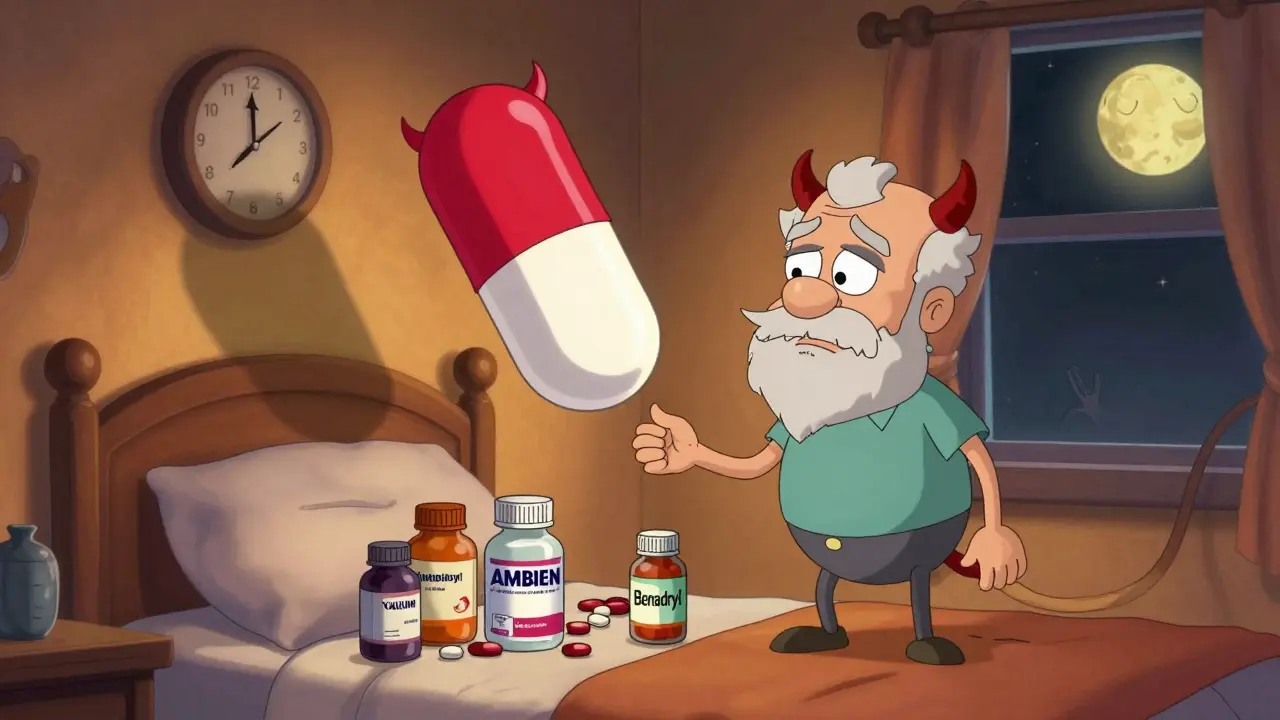
By age 65, nearly half of all seniors struggle with sleep. Some nights, it’s just trouble falling asleep. Other nights, they wake up three times and can’t get back down. And for many, the go-to solution has been a pill - Ambien, Lunesta, Valium, or even a low-dose antidepressant like trazodone. But here’s the hard truth: sleep medications for seniors aren’t just risky - they’re often the wrong first step.
Why Sleep Pills Are Dangerous for Older Adults
The body changes as we age. The liver slows down. Kidneys filter less. Fat increases, muscle mass drops. All of this means drugs stick around longer, build up in the system, and hit harder. A dose that’s fine for a 40-year-old can leave a 75-year-old dizzy, confused, or on the floor. Benzodiazepines like diazepam (Valium) and triazolam (Halcion) are especially dangerous. They don’t just help you sleep - they dull your reflexes, blur your vision, and mess with your balance. A 2012 study found that seniors on long-acting benzodiazepines had a 50% higher chance of falling. And falls aren’t just bruises. They’re broken hips, hospital stays, and lost independence. Then there’s the brain. A landmark 2014 study in the BMJ showed that seniors who took benzodiazepines for more than six months had an 84% higher risk of developing Alzheimer’s disease. Even Z-drugs like zolpidem (Ambien), once thought to be safer, carry a 30% increased risk of falls in older adults, according to an FDA safety alert from 2017. And it’s not just physical. Many seniors report next-day grogginess, memory lapses, and confusion - symptoms that get mistaken for dementia.The Beers Criteria: What Doctors Are Told to Avoid
In 1991, the American Geriatrics Society created the Beers Criteria - a list of medications that are risky for seniors. It’s updated every few years, and the 2019 version is clear: avoid benzodiazepines and other sedative-hypnotics as first-line treatment for insomnia. The list includes:- Benzodiazepines: diazepam, lorazepam, flurazepam, triazolam
- Z-drugs: zolpidem, eszopiclone, zaleplon
- Antihistamines: diphenhydramine (Benadryl), doxylamine (Unisom)
- Anticholinergics: hydroxyzine, cyproheptadine
What Actually Works: CBT-I for Seniors
The real game-changer isn’t a new pill. It’s a therapy called Cognitive Behavioral Therapy for Insomnia, or CBT-I. It’s not talk therapy. It’s structured, practical, and backed by decades of research. CBT-I works by fixing the habits and thoughts that keep you awake:- Sleep restriction: You only spend in bed the amount of time you actually sleep. No more lying there for hours. Gradually, your brain learns that bed = sleep.
- Stimulus control: No TV in bed. No reading in bed. If you can’t sleep in 20 minutes, get up. Only return when sleepy.
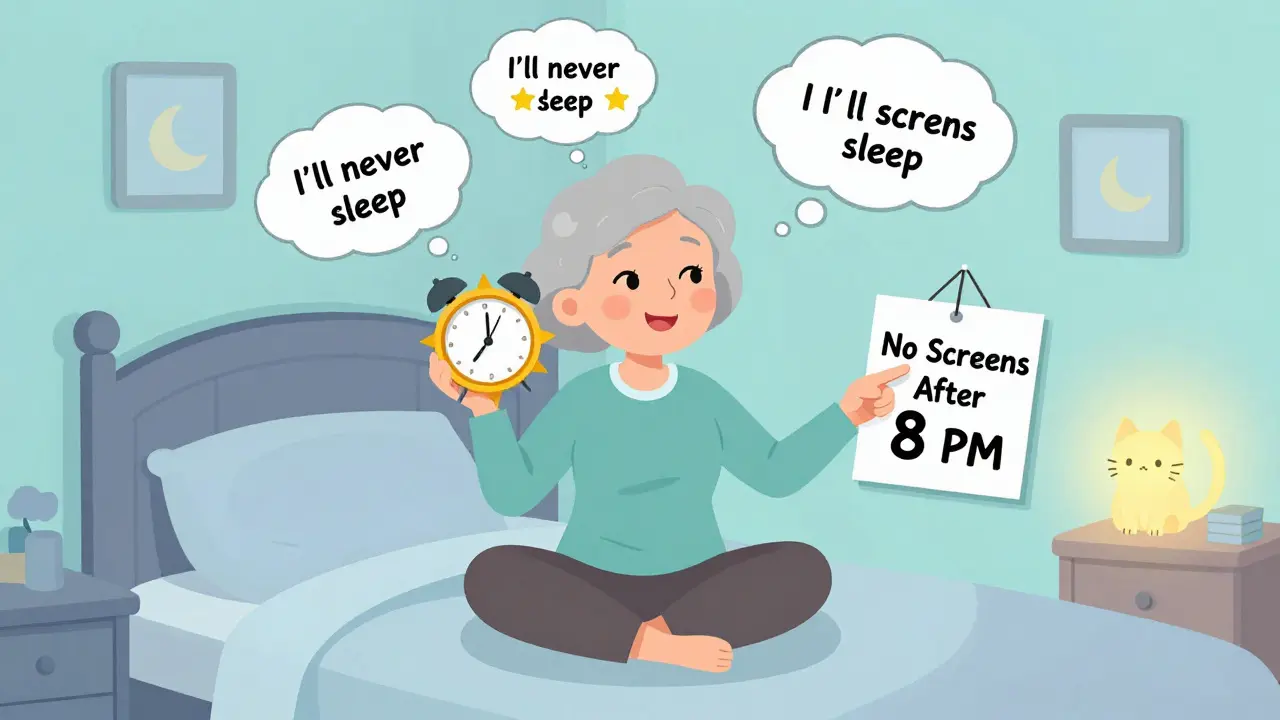
- Cognitive restructuring: You challenge thoughts like “I’ll never sleep” or “If I don’t sleep 8 hours, I’ll collapse tomorrow.”
- Sleep hygiene: Not just “avoid caffeine.” It’s about consistent wake times, morning light exposure, and reducing evening screen time.
Safer Medications - When You Really Need Them
Sometimes, CBT-I isn’t enough. Maybe the person is in severe distress. Maybe they’re recovering from surgery. Maybe they’re too frail to commit to weekly sessions. In those cases, there are safer options - but only if you start low and go slow. Here are the best choices for seniors, backed by evidence:- Low-dose doxepin (Silenor): 3-6 mg nightly. This is a very old antidepressant, but at this tiny dose, it’s not for depression - it’s for sleep. It works on histamine receptors, not GABA. No dizziness. No next-day fog. A 2010 study showed it added 29 minutes of sleep and improved sleep efficiency by over 5%. Cost? Around $400 a month without insurance.
- Ramelteon (Rozerem): 8 mg nightly. It mimics melatonin, helping you fall asleep faster by targeting your body’s natural clock. No risk of dependence. No rebound insomnia. A 2013 review found it increased total sleep time by 21 minutes. Side effects? About the same as placebo.
- Lemborexant (Dayvigo): 5 mg nightly. This is the newest option. It blocks orexin, the brain’s “wake-up” signal. A 2021 JAMA Internal Medicine study found it caused less postural instability than zolpidem in seniors. Half-life is 17 hours - long enough to help you stay asleep, but not so long that you feel drugged the next day.
- Melatonin: 2-5 mg, taken 1-2 hours before bed. Not a sedative. It’s a timing signal. Works best for seniors with delayed sleep phase (falling asleep too late). Helps reset the internal clock. No serious side effects reported.
Deprescribing: How to Stop Sleeping Pills Safely
If you’ve been on a sleep med for months or years, quitting cold turkey can backfire. Rebound insomnia, anxiety, even seizures can happen. The STOPP/START criteria - used by geriatricians worldwide - recommend a slow taper:- Work with your doctor. Never stop on your own.
- Reduce dose by 25% every 1-2 weeks.
- Switch from daily to every-other-night use.
- Replace with CBT-I or a safer alternative like ramelteon.
- Monitor for withdrawal symptoms: anxiety, restlessness, nightmares.
- Give it at least 4-8 weeks. Patience is key.

The Cost Factor: What’s Affordable?
Let’s be real. CBT-I is great - but it’s not free. A full course can cost $800-$1,200. Insurance doesn’t always cover it. And while generic zolpidem costs $15 a month, low-dose doxepin can hit $400 without insurance. Here’s the truth: cheaper isn’t always better. A $15 pill that causes a fall and a $20,000 hospital bill isn’t a bargain. Some options:- Ask your doctor about generic ramelteon - it’s often cheaper than brand-name.
- Check patient assistance programs. Manufacturers like Pfizer and Sun Pharma offer discounts for seniors.
- Look into telehealth CBT-I platforms like Sleepio or CBT-i Coach. They cost $50-$150 for a full program - and many are covered by Medicare Advantage plans.
What Seniors and Families Should Do Now
If you or a loved one is on a sleep medication:- Ask your doctor: “Is this still necessary? What are the risks?”
- Request a review of all medications - many seniors take 5-10 pills a day. Sleep meds are often just one part of a dangerous cocktail.
- Ask for a referral to a sleep specialist or CBT-I provider. They exist - and they’re covered by Medicare.
- Try non-drug fixes first: morning sunlight, evening walks, no screens after 8 p.m., a cool, dark room.
- If you’re on a benzodiazepine or Z-drug, ask about a taper plan. Don’t wait for a fall to happen.
What’s Changing in 2026
The tide is turning. In 2024, the American Geriatrics Society is updating the Beers Criteria again - this time with stronger language on deprescribing. The NIH has funded $15 million for the Seniors Sleep Safety Initiative. Digital CBT-I platforms are now covered by Medicare in many states. And more doctors are finally listening. The future of sleep for seniors isn’t more pills. It’s smarter, safer, and more personal. It’s about matching the treatment to the person - not the other way around.Are over-the-counter sleep aids safe for seniors?
No. Common OTC sleep aids like diphenhydramine (Benadryl) and doxylamine (Unisom) are anticholinergics. They block a brain chemical called acetylcholine, which is already lower in older adults. This leads to confusion, memory loss, dry mouth, constipation, and urinary retention. Studies show these drugs increase dementia risk by up to 50% in seniors who use them regularly. They’re not safe - even if the label says “natural” or “gentle.”
Can melatonin help seniors sleep better?
Yes - but not as a sedative. Melatonin helps regulate your internal clock, not induce sleep. Seniors often produce less melatonin naturally, so a low dose (2-5 mg) taken 1-2 hours before bed can help shift sleep timing. It’s most effective for people who fall asleep too late or wake up too early. It doesn’t help with staying asleep all night. Side effects are rare, but high doses (10 mg+) can cause dizziness or grogginess.
Is trazodone a good sleep aid for seniors?
It’s commonly prescribed, but not recommended. Trazodone is an antidepressant used off-label for sleep. While it’s not a benzodiazepine, it still causes dizziness, low blood pressure, and next-day grogginess. In nursing homes, it’s linked to increased nighttime wandering and confusion. It’s not on the Beers Criteria list, but experts agree it’s not a first-line choice. Safer alternatives like ramelteon or low-dose doxepin exist.
How long does it take for CBT-I to work for seniors?
Most seniors see improvement in 4-6 weeks. The full course usually takes 6-8 weekly sessions. Unlike pills, which work immediately, CBT-I rewires habits - and that takes time. But the results last. A 2023 study found that 72% of seniors who completed CBT-I still slept well two years later, even without medication.
Can sleep medications cause dementia in seniors?
Yes - especially benzodiazepines and long-term use of Z-drugs. A 2014 BMJ study found a 51% increased risk of Alzheimer’s with any benzodiazepine use, jumping to 84% with long-term use (over 6 months). A 2022 UCSF study showed seniors using sleep meds 5-15 times a month had a 79% higher dementia risk. This doesn’t mean every user gets dementia - but the risk is real, measurable, and preventable.
What should I do if my parent is on a sleep med and keeps falling?
Act immediately. Schedule a medication review with their doctor or pharmacist. Ask specifically: “Is this sleep medication contributing to their falls?” Request a taper plan to stop it safely. Start non-drug strategies right away: install nightlights, remove throw rugs, get a bed rail, and begin morning walks for balance. Contact a geriatric specialist or sleep clinic - many offer free consultations through Medicare.
Are newer sleep drugs like Dayvigo safe for seniors?
Lemborexant (Dayvigo) is one of the safest options currently available for seniors. Compared to zolpidem, it causes less postural instability and has fewer next-day effects. A 2021 JAMA study showed seniors on lemborexant performed better on cognitive tests. But it’s still a sedative. It should only be used after trying CBT-I, and only at the lowest effective dose (5 mg). It’s not a cure - it’s a bridge.


Post A Comment