
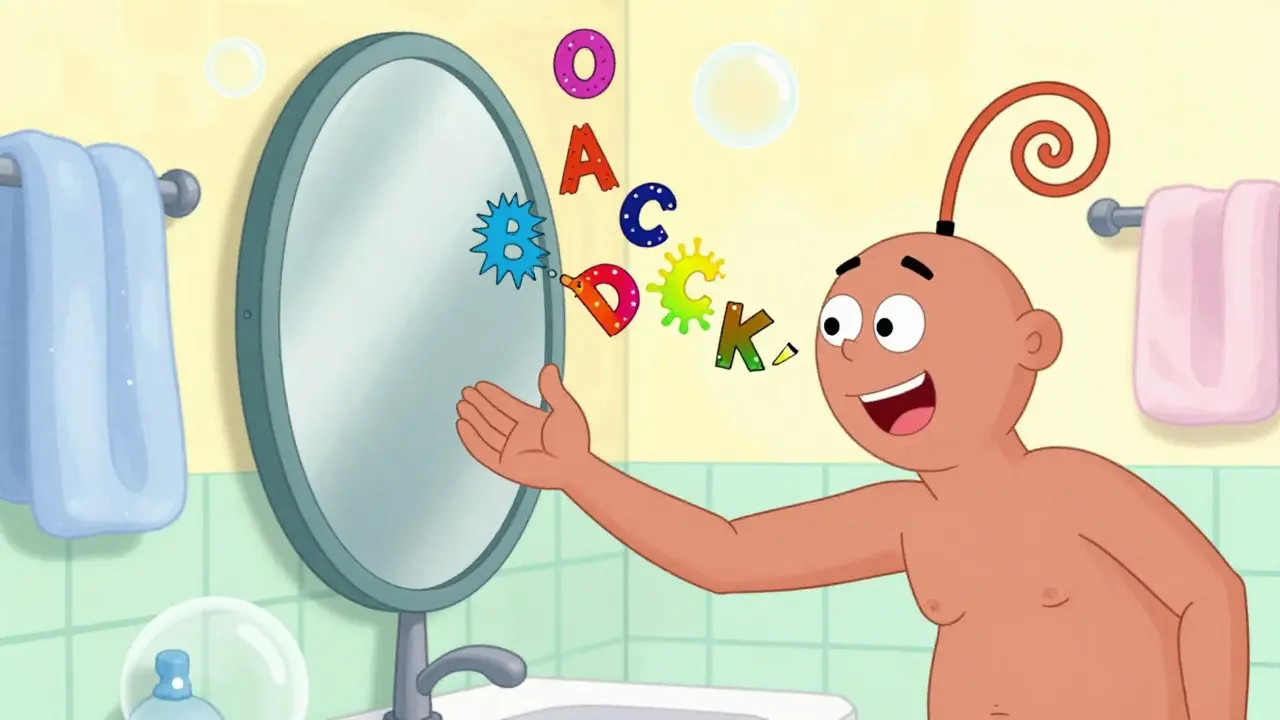
When it comes to skin cancer, melanoma is the one you can’t afford to ignore. It makes up less than 2% of all skin cancers, but it causes more than 80% of skin cancer deaths. The difference between life and death often comes down to one thing: when it’s found. If caught early, the 5-year survival rate is over 99%. If it spreads, that number drops to just 32.1%. That’s not a statistic-it’s a reality for thousands of people every year.
Why Timing Matters More Than You Think
Melanoma doesn’t wait. It can go from a harmless-looking mole to a life-threatening tumor in months. That’s why checking your skin regularly isn’t just good advice-it’s essential. Most melanomas start as new spots or changes in existing moles. Look for the ABCDEs: Asymmetry, irregular Borders, uneven Color, Diameter larger than a pencil eraser, and Evolving size, shape, or texture. These aren’t just memory tricks-they’re backed by decades of clinical data. But here’s the problem: most people don’t catch it themselves. A 2025 study found that primary care doctors miss nearly 40% of melanomas during routine checkups. Even trained dermatologists can struggle with ambiguous lesions. That’s why new tools are stepping in-not to replace doctors, but to give them better eyes.AI Is Changing the Game in Detection
In 2025, artificial intelligence isn’t science fiction anymore-it’s in clinics across Australia, the U.S., and Europe. Tools like Northeastern University’s SegFusion system use deep learning to analyze skin images with 99% accuracy. It doesn’t just guess-it segments the mole, isolates the abnormal tissue, then classifies it. The result? A clear yes or no on whether it’s melanoma. Other systems like the iToBoS full-body scanner can map your entire skin in six minutes. It spots every suspicious spot, flags the highest-risk ones, and explains its reasoning using explainable AI (XAI). No black boxes. No guesswork. Just data-driven insights doctors can trust. Then there’s DermaSensor, an FDA-approved handheld device that shines near-infrared light on a mole and measures how the tissue scatters it. It’s not perfect-its specificity is only 26-40%, meaning it can flag too many benign spots-but it’s helped primary care providers increase their confidence by 87%. For someone who’s never seen a melanoma before, that’s huge. But these tools aren’t flawless. They struggle with darker skin tones. A 2025 JAMA Dermatology study showed AI models perform 12-15% worse on skin types IV-VI. That’s not just a technical gap-it’s a health equity issue. Developers are working on it, but until then, if you have darker skin, don’t rely on apps or scanners alone. Get a professional check.The Wearable That Could Change Everything
At Wake Forest University, researchers developed a battery-free, wireless patch you stick on a mole. It measures bioimpedance-the way tissue conducts electricity. Cancerous cells behave differently than healthy ones. The patch picks up on that difference and sends data to a small reader. Early tests on 10 volunteers showed statistically significant results (p<0.05). Imagine being able to monitor a suspicious spot from home, every day, without a clinic visit. The team is already improving the design-switching to conductive hydrogel electrodes for better contact. This isn’t a cure. But it’s a way to catch changes before they become dangerous. For people with dozens of moles, or a family history of melanoma, this could be a game-changer.
What Happens After Diagnosis?
If a biopsy confirms melanoma, the next step depends on how deep it went. Thin melanomas (under 1mm) are usually removed with a small margin of healthy skin and that’s it. No chemo. No radiation. Just close monitoring. But if it’s thicker or has spread to lymph nodes? That’s where immunotherapy comes in. Before 2011, metastatic melanoma meant months to live. Now? Many patients live for years. The breakthrough? Drugs that unlock your immune system. Your body already knows how to fight cancer. It just needs a nudge. Two main classes of drugs do this: PD-1 inhibitors (like pembrolizumab and nivolumab) and CTLA-4 inhibitors (like ipilimumab). When used together, they boost response rates to over 60%. Some patients see their tumors shrink completely-and stay gone for years. That’s called a durable response. It’s not a cure for everyone, but for a disease that used to be a death sentence, it’s revolutionary. Newer drugs are coming fast. Regeneron’s combination of fianlimab (a LAG-3 blocker) with a PD-1 drug is showing even higher response rates in early trials. And IMA203 PRAME cell therapy-still in Phase 3 trials-is targeting a specific protein found in melanoma cells. In one trial, 56% of patients had complete tumor regression. These aren’t just lab miracles. They’re real treatments people are using right now. In Melbourne, Sydney, and Brisbane, oncology centers are offering these therapies as standard care. Insurance covers them. Hospitals have protocols. The science is solid.The Catch: Overdiagnosis and False Alarms
There’s a dark side to better detection. The more sensitive the tool, the more benign moles it flags. DermaSensor’s low specificity means for every true melanoma it finds, it might trigger two or three unnecessary biopsies. That’s stressful. It’s expensive. And it can leave scars. Some experts warn we’re heading toward overdiagnosis-finding cancers that would never have harmed someone. A 2025 paper in Taylor & Francis noted that early detection can lead to “excess morbidity with little survival benefit.” That’s not a reason to avoid screening. It’s a reason to be smart about it. Use AI tools as assistants, not arbiters. If a scanner says “high risk,” get a dermatologist’s opinion. If your doctor says “watch it,” don’t panic-but don’t ignore it either. Keep photos. Track changes. Be your own advocate.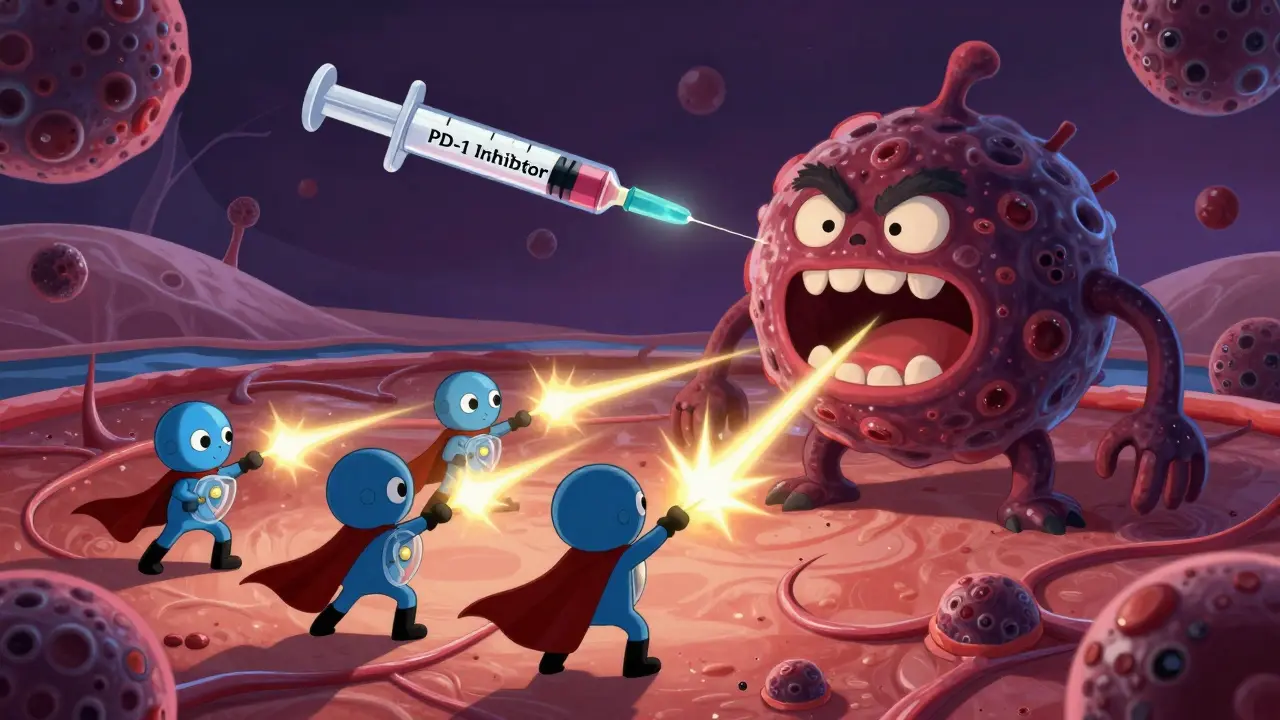
What’s Next? The Future Is Integrated
The next big leap won’t be one device. It’ll be a system. Imagine a future where your wearable patch, a dermoscopy image, your genetic profile, and your blood biomarkers all feed into one AI model. That model doesn’t just say “cancer”-it says “this mole has a 78% chance of spreading in the next 6 months, based on your HLA type and past sun exposure.” That’s not fantasy. It’s already being built. The Fraunhofer Institute is integrating genetic risk data into iToBoS. Mayo Clinic is linking AI alerts directly to EHRs. Researchers are training models on real-world data-not just perfect lab images. By 2030, AI-assisted melanoma detection could become standard in every clinic. But the human element won’t disappear. Doctors will still make the final call. Nurses will still teach patients how to check their skin. Families will still be the first to notice a change.What You Can Do Right Now
You don’t need a scanner or a patch to save your life. You just need to act.- Check your skin every month. Use a mirror. Take photos of new or changing moles.
- See a dermatologist if something looks odd-even if it’s small.
- Don’t wait for a “skin cancer check” appointment. If you’re worried, book one.
- If you’ve had melanoma before, get checked every 3-6 months.
- Wear sunscreen daily. UV damage adds up, even on cloudy days.
Can melanoma be cured if caught early?
Yes. When melanoma is found before it spreads beyond the top layer of skin, surgical removal alone can cure it in over 99% of cases. Early detection is the single most effective way to survive melanoma.
How accurate are AI skin cancer apps?
Some AI tools, like SegFusion and iToBoS, have accuracy rates above 95% in controlled settings. But real-world performance varies. Apps on your phone are not FDA-approved and often perform poorly on darker skin tones. Use them for awareness-not diagnosis.
Is immunotherapy better than chemotherapy for melanoma?
For advanced melanoma, immunotherapy is now the first-line treatment because it’s more effective and has fewer side effects than chemo. It doesn’t kill cancer cells directly-it trains your immune system to do it. Many patients live for years, not months.
Do I need a full-body scan to check for melanoma?
No. Most people don’t need a full-body scanner. A thorough skin exam by a dermatologist, combined with monthly self-checks, is enough for most. Full-body scanners are used in high-risk cases or research settings.
Can melanoma come back after treatment?
Yes. Even after successful treatment, melanoma can return. That’s why lifelong follow-ups are critical. Patients who’ve had melanoma should see a dermatologist every 6-12 months, even if they feel fine.
Are new immunotherapy drugs available in Australia?
Yes. All major immunotherapies for melanoma-including pembrolizumab, nivolumab, and ipilimumab-are approved and covered under Australia’s PBS (Pharmaceutical Benefits Scheme). Newer drugs like fianlimab are in clinical trials here and expected to be available by 2026.


Post A Comment