
Hydroxyzine QT Risk Assessment Tool
This tool helps you understand your risk of QT prolongation from hydroxyzine based on key factors discussed in the article. Enter your information below to assess your risk level and get personalized recommendations.
Risk Factors Assessment
Hydroxyzine has been used for over 60 years to treat anxiety, itching, and nausea. It’s cheap, effective, and often prescribed when other options don’t work. But in the last decade, something changed. Doctors started seeing rare, but deadly, heart rhythm problems linked to this old drug. The risk isn’t common-but when it happens, it can be fatal. If you’re taking hydroxyzine-or your doctor just prescribed it-you need to know the real cardiac risk, who’s most vulnerable, and how to stay safe.
What Is Hydroxyzine, Really?
Hydroxyzine is a first-generation antihistamine. That means it blocks histamine, the chemical that causes allergies and itching. But unlike newer antihistamines like cetirizine or loratadine, it also crosses into the brain and causes drowsiness. That’s why it’s used for anxiety, insomnia, and pre-surgery sedation. Brand names like Atarax and Vistaril are still common in clinics and pharmacies.
It works fast-within 15 to 60 minutes-and lasts 4 to 6 hours. For many people, it’s a go-to when they need quick relief. But that speed and sedation come with a hidden cost: it interferes with your heart’s electrical system. Specifically, it blocks a key ion channel called hERG. This channel helps your heart reset after each beat. When it’s blocked, the heart takes longer to recover, which shows up on an ECG as a prolonged QT interval.
QT Prolongation: The Silent Heart Danger
QT prolongation isn’t a disease. It’s a warning sign on an ECG. A normal QT interval is under 450 milliseconds for men and under 470 for women. When it stretches beyond that, your heart’s rhythm becomes unstable. In rare cases, it can spiral into Torsade de Pointes-a chaotic, life-threatening arrhythmia that looks like a twisting pattern on the monitor. Without quick treatment, it leads to sudden cardiac arrest.
Hydroxyzine doesn’t cause this in everyone. But it can trigger it in people who already have risk factors. The European Medicines Agency confirmed this in 2015 after reviewing 59 cases worldwide. Most happened in people over 65, those with low potassium or magnesium, or those taking other drugs that also prolong the QT interval.
One case from 2022 involved a 68-year-old woman with no heart history. She took 50 mg of hydroxyzine for anxiety and developed Torsade de Pointes within 12 hours. She was also on amiodarone, a heart medication known to cause QT prolongation. The combination was deadly. Another case: a 45-year-old man with undiagnosed long QT syndrome took 25 mg for itching and collapsed 15 minutes later.
Who’s at Real Risk?
The biggest myth about hydroxyzine is that it’s “safe for most people.” That’s outdated. The real issue isn’t the drug itself-it’s the combination of risk factors. Here’s who should avoid it or use extreme caution:
- People over 65 years old
- Those with a history of heart disease, heart failure, or bradycardia (slow heart rate)
- Patients with low potassium (under 4.0 mmol/L) or low magnesium (under 1.8 mg/dL)
- Anyone taking other QT-prolonging drugs: certain antibiotics (like azithromycin), antidepressants (like citalopram), antifungals, or antiarrhythmics
- People with genetic long QT syndrome (even if undiagnosed)
- Patients on dialysis (common electrolyte imbalances)
- Those taking more than 100 mg per day
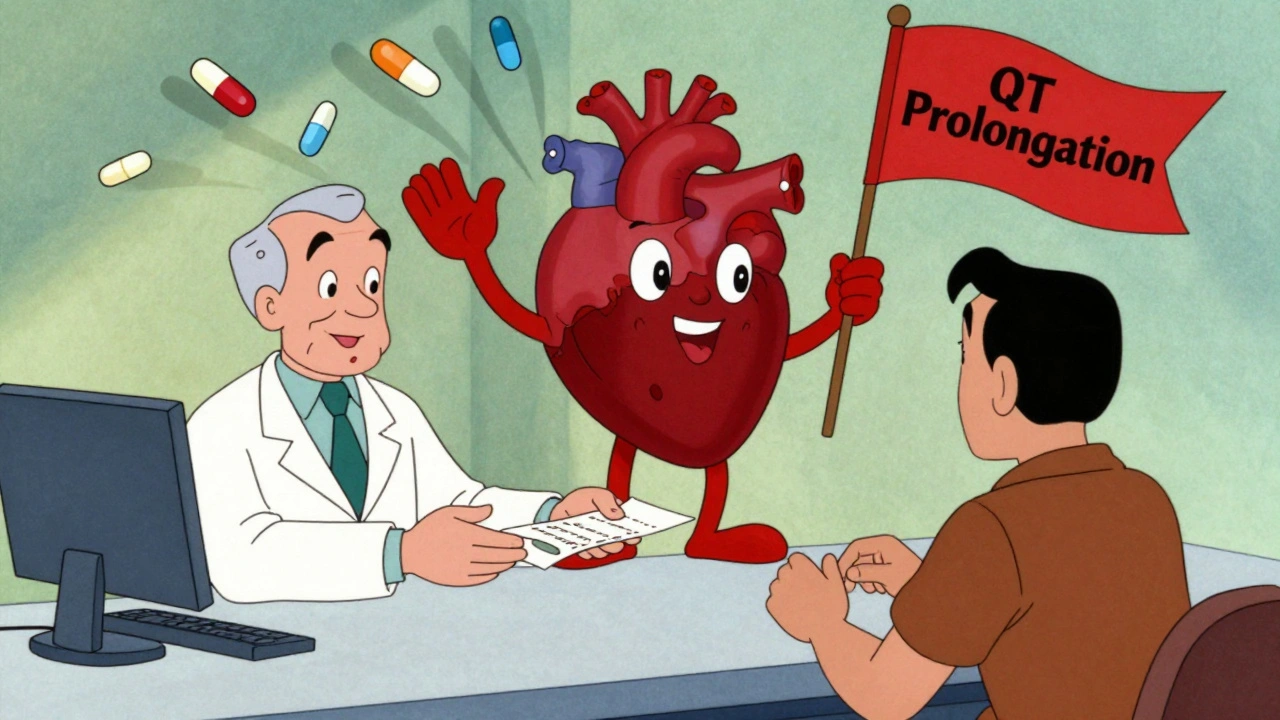
Here’s the hard truth: if you have two or more of these risk factors, hydroxyzine should be avoided entirely. The 2015 EMA review found that 80% of reported Torsade cases involved at least two risk factors. Yet a 2021 survey of 127 hospital pharmacists showed that 63% had seen hydroxyzine prescribed to patients with two or more red flags.
Dosing: Less Is Safer
Before 2015, doctors often prescribed up to 150 mg or even 200 mg per day for anxiety or severe itching. That’s no longer safe. The current maximum daily dose is:
- 100 mg for adults under 65
- 50 mg for adults 65 and older
- 2 mg per kg of body weight for children (max 40 kg)
Even 50 mg can be dangerous if taken with other risk factors. A 2023 case report documented Torsade after just 25 mg in someone with mild electrolyte imbalance. The drug’s half-life is 14 to 25 hours-meaning it builds up in older adults or those with liver problems. Daily use increases risk. That’s why it’s now recommended only for short-term use.
For chronic conditions like eczema or long-term anxiety, alternatives like gabapentin, mirtazapine, or low-dose SSRIs are safer and often just as effective.
Comparing Hydroxyzine to Other Antihistamines
Not all antihistamines are created equal. Here’s how hydroxyzine stacks up:
| Drug | Generation | QT Prolongation Risk | hERG Inhibition | Typical Max Daily Dose |
|---|---|---|---|---|
| Hydroxyzine | First | Known Risk (CredibleMeds) | High | 100 mg |
| Diphenhydramine | First | Possible Risk | Moderate | 300 mg |
| Cetirizine | Second | Minimal Risk | Very Low | 10 mg |
| Loratadine | Second | Minimal Risk | Very Low | 10 mg |
| Fexofenadine | Second | Very Low Risk | Negligible | 180 mg |
Second-generation antihistamines like cetirizine and loratadine are far safer for the heart. They don’t cross the blood-brain barrier much, so they’re less sedating-but they also don’t block hERG channels. If you need an antihistamine for itching or allergies and you have heart concerns, these are better choices.
What Should You Do If You’re Taking Hydroxyzine?
Don’t stop suddenly. But do this:
- Check your current dose. Are you taking more than 50 mg daily if you’re over 65? More than 100 mg if you’re younger? Talk to your doctor about reducing it.
- Review all your medications. Use the CredibleMeds website (or ask your pharmacist) to check if anything you’re taking also prolongs QT. Common offenders: azithromycin, fluoxetine, amiodarone, methadone.
- Ask for a simple ECG. A 12-lead ECG takes 5 minutes and can show if your QT interval is too long. If it’s over 450 ms (men) or 470 ms (women), hydroxyzine is risky.
- Get your potassium and magnesium levels checked. Low levels are easy to fix with supplements or diet-but they make hydroxyzine far more dangerous.
- Watch for symptoms: dizziness, palpitations, fainting, or sudden fatigue. If you feel any of these within hours of taking hydroxyzine, seek medical help immediately.
Many patients don’t realize their symptoms are drug-related. They think it’s stress, aging, or dehydration. But sudden dizziness after taking hydroxyzine? That’s not normal. It could be your heart.
Why Is This Still Happening?
Despite the warnings, hydroxyzine is still prescribed over 12 million times a year in the U.S. Why? Because it’s cheap, easy to get, and many doctors still think it’s “just an antihistamine.” But the evidence is clear: it’s not harmless.
Since the 2015 EMA review, prescriptions for elderly patients dropped by 37%. But in primary care, it’s still used as a default for anxiety or itching. A 2022 JAMA study found that only 78% of clinics now document cardiac risk assessments before prescribing it. That means 1 in 5 patients are still being exposed without proper screening.
The American Geriatrics Society now lists hydroxyzine as a “Potentially Inappropriate Medication” for older adults. Yet it’s still in the American Academy of Dermatology’s guidelines for pruritus-with a footnote about ECG screening. That’s the problem: guidelines are split, and many prescribers don’t know the latest data.
The Future: Safer Alternatives and Genetic Testing
Research is moving fast. A 2023 study found that people with a CYP2D6 poor metabolizer gene variant are over three times more likely to develop QT prolongation on hydroxyzine. That means your genes could make you more vulnerable-even if you’re young and healthy.
There’s also a new drug in early trials called VH-01. It’s designed to keep hydroxyzine’s antihistamine effects but remove the hERG block. Early results show 87% less cardiac risk. If it works, it could replace hydroxyzine entirely.
For now, the safest approach is simple: use hydroxyzine only when necessary, at the lowest effective dose, for the shortest time possible-and never without checking for heart risks first.
What’s the Bottom Line?
Hydroxyzine isn’t banned. It’s not the most dangerous drug out there. But it’s no longer considered safe for everyone. It’s a medication that demands respect-like blood thinners or heart rhythm drugs. The era of prescribing it casually is over.
If you’re taking it for anxiety, itching, or sleep, ask yourself: Is this the safest option? Have I been checked for heart risks? Am I on other drugs that could make this dangerous? If you can’t answer yes to those questions, talk to your doctor. There are better, safer alternatives.
The goal isn’t to scare you. It’s to make sure you’re not one of the 1 in 10,000 who ends up in the ER because a simple antihistamine turned deadly. Knowledge is your best defense.


Post A Comment