
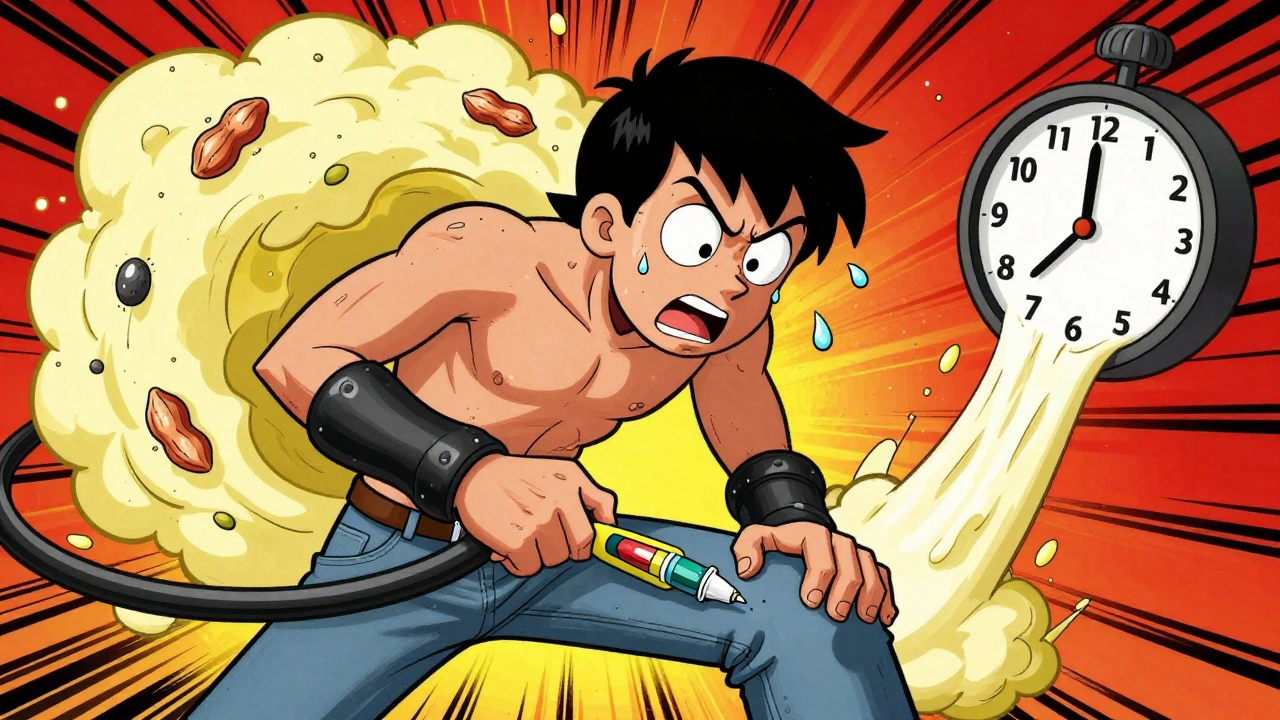
When someone has a severe allergic reaction, every second counts. Anaphylaxis can turn a mild itch into a life-threatening emergency in under five minutes. If you or someone you care about has a known food, insect, or medication allergy, knowing how to use an epinephrine auto-injector isn’t just helpful-it’s essential. This isn’t about being prepared. It’s about being ready to act when time is running out.
What Happens During Anaphylaxis
Anaphylaxis isn’t just a bad rash or a stuffy nose. It’s your body going into full alarm mode. Blood vessels leak fluid, airways swell shut, blood pressure drops, and your heart struggles to pump. Symptoms can include hives, swelling of the lips or tongue, trouble breathing, wheezing, dizziness, vomiting, or a feeling that something terrible is about to happen. You might feel your throat closing or your chest tightening. Some people go into shock-cold, clammy skin, weak pulse, confusion. Epinephrine is the only thing that stops this chain reaction. It tightens blood vessels to raise blood pressure, opens up airways, and helps the heart keep beating. Antihistamines like Benadryl won’t cut it. They help with mild symptoms, but they do nothing to stop the body’s collapse. Delaying epinephrine increases the chance of a second, even deadlier wave of symptoms later. Studies show that giving epinephrine within 5 to 15 minutes of symptoms starts cuts hospital stays by nearly half and lowers death risk by 75%.How Epinephrine Auto-Injectors Work
These devices are simple by design: you don’t need to be a doctor to use them. Inside is a tiny needle and a pre-measured dose of epinephrine. When you press it against the outer thigh, a spring fires the needle through clothing and into the muscle. The medicine delivers in under three seconds. That’s it. No syringes. No measuring. No mixing. The most common brand is EpiPen, but others exist: Auvi-Q, Adrenaclick, and the newer Neffy nasal spray. EpiPen delivers either 0.15mg or 0.3mg depending on weight. Auvi-Q talks you through each step with voice prompts. Adrenaclick is cheaper but needs you to pull off a cap and press two buttons. Neffy doesn’t use a needle at all-it’s sprayed into the nose. But even if you have the newest model, you still need to know how to use it correctly. The device doesn’t save lives. The person using it does.Step-by-Step: How to Use an Epinephrine Auto-Injector
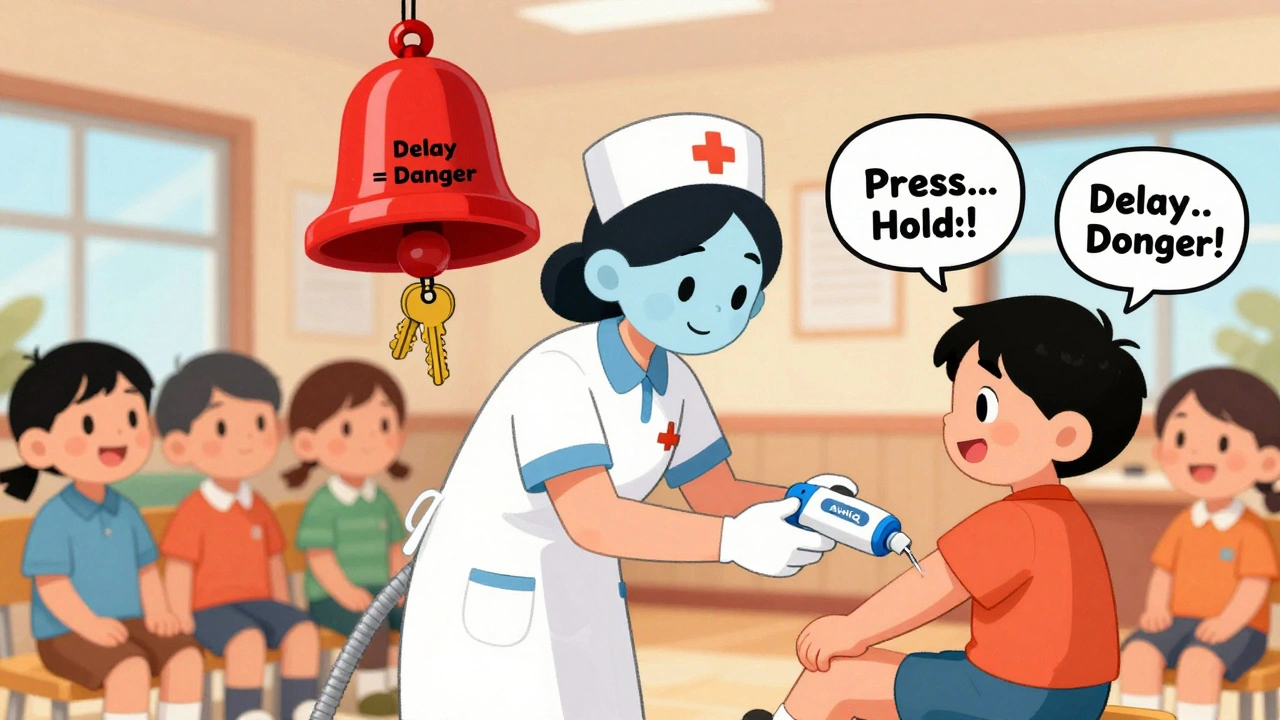
1. Recognize the signs. Don’t wait for everything to get worse. If you see trouble breathing, swelling, dizziness, or sudden vomiting after eating or being stung, act immediately. 2. Grab the auto-injector. Remove it from its case. Don’t try to open the plastic casing or twist the device. Just hold it firmly in your fist. 3. Pull off the blue safety cap. This is the step most people mess up. The blue cap is the safety. You must remove it before you can activate the device. Don’t point it at anyone. Don’t test it. Just remove the cap. 4. Place it against the outer thigh. It doesn’t matter if they’re wearing jeans, shorts, or leggings. The device works through clothing. Aim for the middle of the outer thigh-the thick muscle there. For kids, hold their leg steady. For adults, make sure they’re lying down or sitting with legs out. Never inject into the buttocks, hands, or feet. 5. Push hard until you hear a click. Press it firmly against the thigh. You’ll feel a click when the needle fires. Keep pushing for at least three seconds. Don’t pull away early. The medicine needs time to fully release. If you’re using Auvi-Q, listen to the voice instructions-it will tell you when to stop. 6. Remove the device and massage the area. Take it away. Rub the injection site for about 10 seconds. This helps the medicine absorb faster. 7. Call 911 or get to an ER immediately. Even if they feel better after the shot, they still need medical help. Anaphylaxis can come back. A second dose might be needed in 5 to 10 minutes if symptoms return. Don’t wait. Don’t drive yourself. Call for an ambulance.Common Mistakes and How to Avoid Them
Most failures aren’t because the device broke. They’re because someone didn’t do the right thing at the right time.- Waiting too long. People think, “Maybe it’s just a rash.” Don’t. If there’s any sign of breathing trouble or dizziness, use it. Delaying increases death risk.
- Forgetting to remove the safety cap. In training drills, over half of school nurses missed this step. Always check: blue cap off, black tip ready.
- Not holding it long enough. Many people pull away after one second. You need three full seconds. Count it out: “One-Mississippi, two-Mississippi, three-Mississippi.”
- Injecting in the wrong spot. The thigh is the only reliable place. Injecting into the arm or abdomen means slower absorption and less effectiveness.
- Not calling for help after. Epinephrine buys time, but it’s not a cure. Emergency care is still needed.
Storage and Maintenance
Your auto-injector won’t work if it’s been sitting in a hot car or freezing glove compartment. Keep it between 15°C and 30°C (59°F to 86°F). Don’t leave it in direct sunlight. Check the solution inside the window. If it looks cloudy, brown, or has particles, replace it. Even if it hasn’t expired, if the liquid looks off, get a new one. Most devices last 12 to 18 months. Write the replacement date on the case in big letters. Set a phone reminder. Expired epinephrine still has some effect, but you can’t rely on it. In an emergency, you need full potency.Training and Practice
You can’t learn this by reading. You need to practice. Get a trainer device-these look like the real thing but don’t have a needle or medicine. Practice every three months. Do it with your family, your partner, your coworkers. Make it routine. Schools and workplaces should have training sessions. In the U.S., 47 states require epinephrine to be available in schools, but only 28 require staff to be trained. If your child has allergies, ask if the school has a plan. If not, offer to help set one up.What About the New Nasal Spray?
Neffy, approved in late 2023, is the first needle-free option. It’s sprayed into one nostril and absorbed through the nasal lining. In trials, it worked in 81% of severe cases. But here’s the catch: 32% of people in simulations didn’t use it right. You have to tilt your head back, press the nozzle firmly, and breathe normally while spraying. If you sneeze or blow your nose right after, it won’t work. It’s great for people terrified of needles-but it’s not foolproof.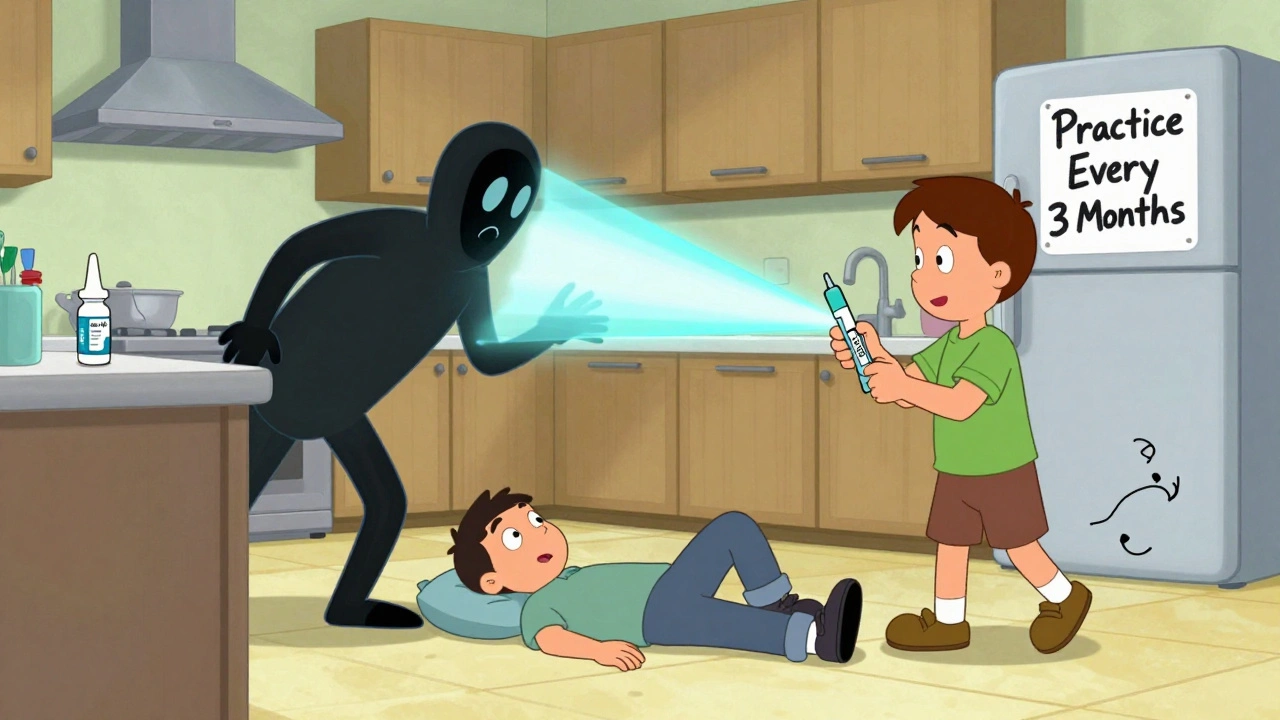
Cost and Access
EpiPen costs around $680 out of pocket. Auvi-Q is over $4,000 but often covered by assistance programs. Adrenaclick is under $200 but requires two steps to activate. If cost is an issue, ask your doctor about patient assistance programs. Many manufacturers offer free or discounted devices for those who qualify. Never skip getting a prescription just because it’s expensive. Anaphylaxis doesn’t care about your bank account.What to Do After the Injection
After giving epinephrine:- Keep the person lying flat. Don’t let them stand or walk. Their blood pressure is low-they could faint.
- Loosen tight clothing.
- Keep them warm.
- If they vomit, turn them on their side.
- If they stop breathing or their heart stops, start CPR.
- Give a second dose if symptoms return after 5-10 minutes.
Final Thought: Be the One Who Acts
Most deaths from anaphylaxis happen because epinephrine wasn’t given in time. Not because it wasn’t available. Not because it was expired. Because someone hesitated. You don’t need to be a medic. You don’t need to be brave. You just need to be ready. Practice with the trainer device. Keep it with you. Teach your kids, your partner, your coworkers. If you’re ever in a situation where someone’s struggling to breathe and you have an auto-injector-use it. Don’t wait. Don’t overthink. Just do it.It’s not about being perfect. It’s about being present. And sometimes, that’s all it takes to save a life.
Can I use an epinephrine auto-injector on myself?
Yes. If you’re having anaphylaxis and you’re conscious, you can use your own auto-injector. Hold the device against your outer thigh, remove the blue cap, and press firmly until you hear a click. Hold for three seconds. Then call 911. Many people use their device on themselves before help arrives.
What if I accidentally inject myself in the wrong place?
If you accidentally inject into your finger, hand, or arm, go to the ER immediately. Epinephrine in these areas can cause severe tissue damage and reduce blood flow. Even if you feel fine, you need medical evaluation. The outer thigh is the only safe site for self-administration.
Can I use someone else’s epinephrine auto-injector?
Yes. If someone is having anaphylaxis and you have an auto-injector-even if it’s not their prescription-you should use it. The dose difference between 0.15mg and 0.3mg is not dangerous in an emergency. Giving epinephrine is safer than not giving it. Most states have Good Samaritan laws that protect you from liability when helping in a medical emergency.
Do I need to carry two auto-injectors?
Yes. About 20% of people need a second dose within 10 to 30 minutes after the first. Anaphylaxis can come back stronger. Always carry at least two. Keep one at home, one in your bag, one at work or school. Don’t rely on just one.
Is it safe to use an expired epinephrine auto-injector?
If it’s your only option, yes. Expired epinephrine still contains active medication, though it may be less effective. In a life-or-death situation, using an expired device is better than doing nothing. But don’t make it a habit. Replace it before it expires. Store it properly and check the solution regularly.
Can children use epinephrine auto-injectors?
Yes. Children as young as infants can use them. For kids under 66 pounds (30 kg), the 0.15mg dose is used. For older children and adults, it’s 0.3mg. Parents and caregivers should practice on trainer devices. Schools and daycare centers should have trained staff and accessible devices.


Post A Comment