

Ever opened a pill bottle and seen two different dates? One says expiration date, the other says beyond-use date. You’re not alone if you’re confused. These aren’t the same thing-and mixing them up could mean taking a pill that doesn’t work, or worse, one that’s unsafe.
What’s the Difference Between Expiration and Beyond-Use Dates?
An expiration date comes from the drug manufacturer. It’s the last day they guarantee the medication is fully potent and safe, based on strict lab tests under controlled conditions. This date is printed on the original bottle or box, and it applies whether the container is open or sealed.
A beyond-use date (BUD) is set by the pharmacy. It’s used when a medication is changed after leaving the factory-like when a pill is turned into liquid, mixed with another drug, or repackaged into a different container. This often happens for kids who can’t swallow pills, people allergic to dyes in commercial meds, or those needing custom doses.
The key difference? Expiration dates are backed by years of manufacturer testing. BUDs are based on pharmacist judgment using general guidelines. One is science. The other is careful estimation.
How Expiration Dates Are Determined
When a drug company creates a new medicine, they don’t just guess how long it lasts. They run stability tests under conditions that mimic real-world storage: 25°C (77°F), 60% humidity, and exposure to light. These tests track how the chemical breaks down over time. The FDA requires that the drug still contains at least 90% of its labeled strength by the expiration date.
Most commercial pills and capsules have expiration dates between 12 and 60 months. Some, like insulin or liquid antibiotics, are shorter-often 28 days after opening. But even if you’ve had a bottle for years, the manufacturer’s date still stands. That’s because storage in your medicine cabinet isn’t controlled. Heat from a bathroom, humidity from a kitchen, or direct sunlight can speed up degradation.
There’s a myth that drugs expire and suddenly become dangerous. That’s not true. The FDA tested over 100 drugs and found 90% were still effective 15 years past their expiration date-if stored perfectly. But here’s the catch: your home isn’t a lab. So the FDA doesn’t recommend using expired meds. The risk isn’t poison-it’s weakness. A weakened antibiotic might not kill an infection. A weak heart pill might not control your rhythm.
How Beyond-Use Dates Are Set
When a pharmacy compounds a medication, they’re making something new. No manufacturer tested it. So the pharmacist has to guess how long it’ll stay safe and strong.
They follow USP (United States Pharmacopeia) guidelines. For example:
- A simple liquid made from two powders and water? BUD is 14 days if refrigerated.
- A capsule made from crushed tablets? BUD can be up to 180 days if kept dry and cool.
- A sterile IV bag? BUD might be 6 hours if kept at room temp, or 7 days if frozen.
The BUD is always based on the weakest link: the ingredient with the earliest expiration, the storage conditions, and how much the formula was changed. If the pharmacy uses a powder that expires in 6 months, your compounded liquid can’t last longer than that-even if the liquid itself could.
And unlike commercial drugs, compounded meds often need special storage. A pill that says “store at room temperature” might become a liquid that says “keep refrigerated.” That’s because preservatives are removed during compounding. Without them, bacteria and mold can grow faster.
Why BUDs Are Shorter and More Confusing
Think of it this way: a factory makes thousands of identical pills with perfect consistency. A pharmacy makes one bottle for one person. That bottle wasn’t tested. It’s a one-off.
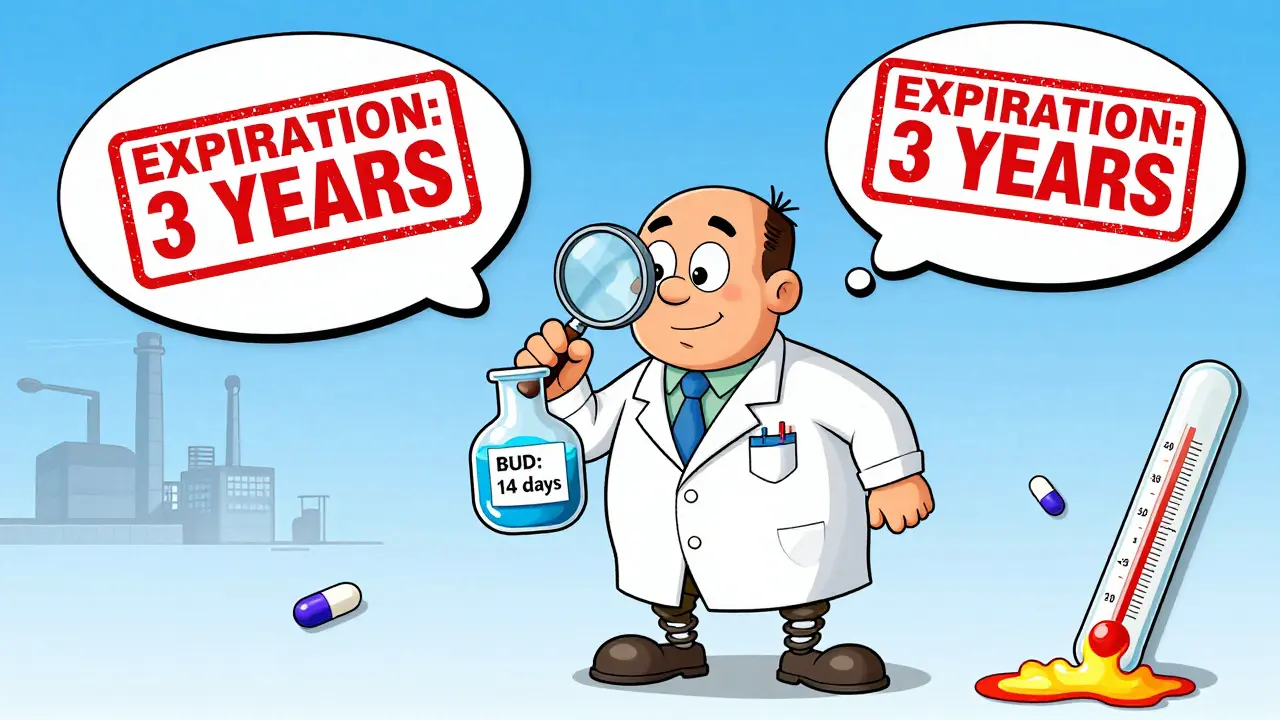
That’s why BUDs are almost always shorter. A compounded thyroid pill might have a BUD of 6 months. But the original tablet’s expiration date? 3 years. If you don’t know the difference, you might think your med is good until 2027. It’s not. It’s only good until 6 months after the pharmacy made it.
And it’s not just patients who get confused. A 2022 survey found 68% of people using compounded meds threw some away because the BUD ran out before they finished their course. That’s a lot of wasted money-compounded meds can cost 2 to 5 times more than regular ones.
One patient in Melbourne told me: “I paid $120 for my compounded thyroid liquid. The pharmacist said it expired in 6 months. I didn’t realize the original bottle said 2025. I felt like I got scammed.”
You didn’t get scammed. You just didn’t know the rules.
What Happens If You Use a Medication Past Its Date?
Using a drug past its expiration or BUD won’t usually poison you. But it might not help you either.
Here’s what can go wrong:
- Reduced potency: Your antibiotic might not kill the bacteria. Your painkiller might not touch the ache.
- Chemical breakdown: Some drugs turn into harmful substances over time. Tetracycline, for example, can degrade into compounds that damage kidneys.
- Contamination: Liquid meds, especially those without preservatives, can grow mold or bacteria. That’s a real risk with compounded oral suspensions.
- Wrong dose: If a tablet crumbles or a liquid separates, you might be getting too much or too little.
There’s no safe gray zone. If the date is past, the risk isn’t worth it. Even if it looks fine.
What Should You Do When You Get a New Prescription?
When you pick up your meds, always check for two dates:
- Look at the original packaging. If it’s still sealed and unopened, the expiration date is the one to trust.
- If it’s in a small pharmacy bottle with a handwritten label, that’s the beyond-use date. That’s the one that matters now.
Write both dates on your phone. Or stick a note on the bottle. Don’t assume the pharmacy told you correctly. Ask: “Is this a compounded med? What’s the BUD?”
Store meds properly. Keep them in a cool, dry place-like a bedroom drawer, not the bathroom. Keep liquids refrigerated if the label says so. Keep them away from kids and pets.
Never take a med past either date. Even if it’s just a few days over. Even if it looks fine. Even if you’re running low.
What to Do With Expired or Out-of-Date Medications
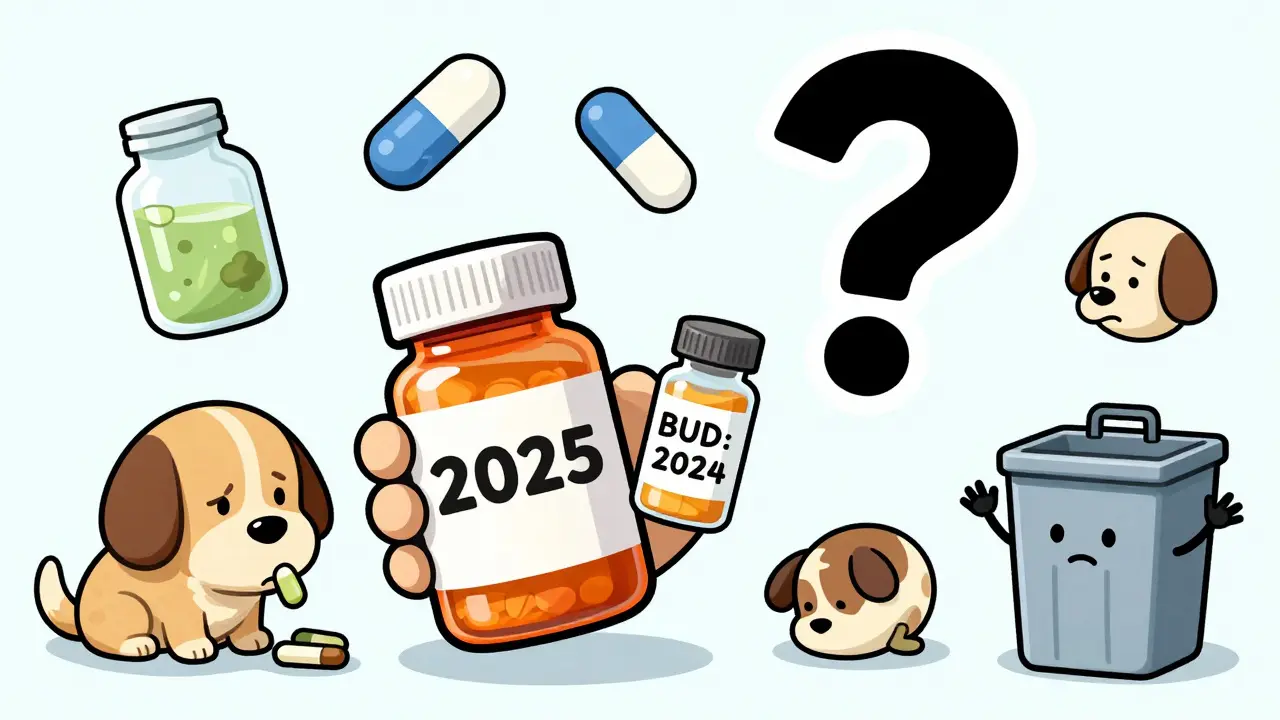
Don’t flush them. Don’t toss them in the trash. Don’t give them to a friend.
Most pharmacies in Australia and the U.S. offer free take-back programs. Bring your old meds to the counter and ask: “Can you dispose of these safely?”
Pharmacies are required to handle disposal properly-so nothing ends up in waterways or landfills. And it’s free. No questions asked.
If your pharmacy doesn’t offer it, check with your local council. Many cities have drug take-back days or permanent drop boxes at police stations or health centers.
Why This Matters in 2026
The compounding pharmacy market is growing fast. More people need custom meds-kids, seniors, people with rare allergies, those on complex regimens. That means more BUDs in circulation.
But regulations are still messy. In the U.S., each state sets its own rules for BUDs. Some allow 180 days for simple mixes. Others cap it at 30. In Australia, the TGA follows similar USP guidelines, but enforcement varies.
And the FDA is cracking down. In 2022, they issued 27 warning letters to compounding pharmacies for wrong BUDs. That’s up from 19 the year before.
Bottom line: if you’re using compounded meds, you’re on the front line of a system that’s still catching up. Knowing the difference between expiration and beyond-use dates isn’t just smart-it’s essential for your safety.
Quick Checklist: What to Do Every Time You Get Medication
- Check the original packaging for an expiration date.
- Check the pharmacy bottle for a beyond-use date.
- Ask: “Is this a compounded medication?”
- Write down both dates on your phone.
- Store meds as instructed-cool, dry, dark.
- Never use past either date.
- Return old meds to the pharmacy for safe disposal.
If you’re unsure, call your pharmacist. They’re not just dispensing pills-they’re your safety net. Ask questions. Don’t guess.


Post A Comment