
Ever wonder why a pill you swallow turns into relief for your headache, or how an injection can calm an allergic reaction? It’s not magic. It’s pharmacology-the science of how drugs interact with your body. At its core, pharmacology answers one simple question: How does this medicine actually work? Whether you’re taking insulin for diabetes, an antibiotic for an infection, or a pill for anxiety, every medication follows a predictable path through your body and targets specific biological switches. Understanding this isn’t just for doctors-it helps you make smarter choices, avoid dangerous interactions, and know what to expect when you start a new treatment.
What Happens When You Take a Pill? The ADME Journey
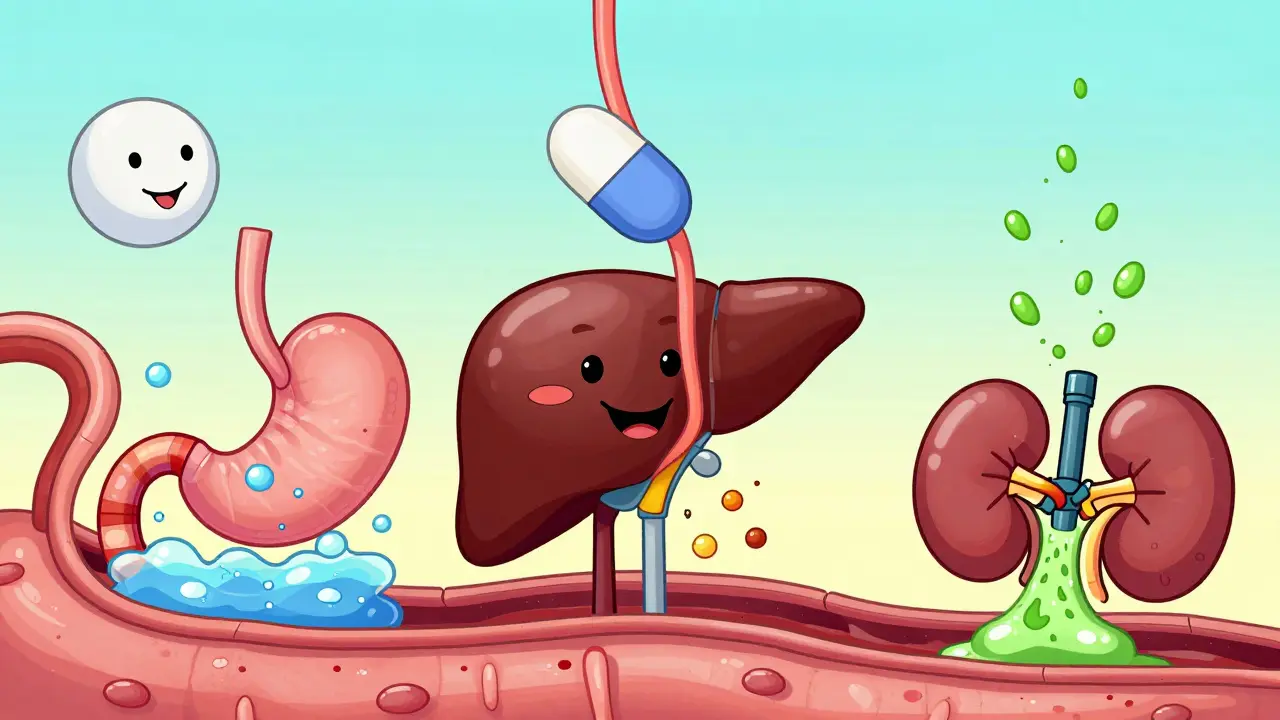
Before a drug can do anything, it has to get to the right place. That’s where pharmacokinetics comes in-basically, what your body does to the drug. Think of it as a four-step journey: Absorption, Distribution, Metabolism, and Excretion, or ADME for short.
First, absorption. If you swallow a tablet, it dissolves in your stomach or intestines and slips into your bloodstream. Some drugs are absorbed better on an empty stomach; others need food. Injected drugs skip this step entirely-they go straight in. The route matters. A nasal spray gets into your system faster than a pill because it avoids the digestive tract.
Then comes distribution. Once in your blood, the drug travels everywhere. But it doesn’t reach every tissue equally. Some drugs cling to proteins in your blood, slowing their movement. Others can’t cross the blood-brain barrier, which is why certain painkillers don’t help with migraines if they can’t reach the brain. Fat-soluble drugs can build up in fatty tissues, which is why some medications stay in your system longer than others.
Metabolism happens mostly in your liver. Enzymes there break down the drug into smaller pieces-some active, some inactive. This is where things get personal. Your genes determine how fast or slow your liver processes certain drugs. For example, about 17% of people have a genetic variation that makes them metabolize warfarin (a blood thinner) unusually slowly, putting them at risk of dangerous bleeding if dosed normally.
Finally, excretion. Your kidneys filter out the broken-down drug and flush it out in urine. Some drugs leave through bile and end up in stool. If your kidneys or liver aren’t working well, the drug can build up and cause side effects. That’s why doctors adjust doses for older adults or people with chronic kidney disease.
How Drugs Actually Change Your Body: Pharmacodynamics
Now that the drug is in your system, how does it create the effect? That’s pharmacodynamics-what the drug does to your body. Most drugs work by locking onto specific targets: proteins like receptors, enzymes, or transporters.
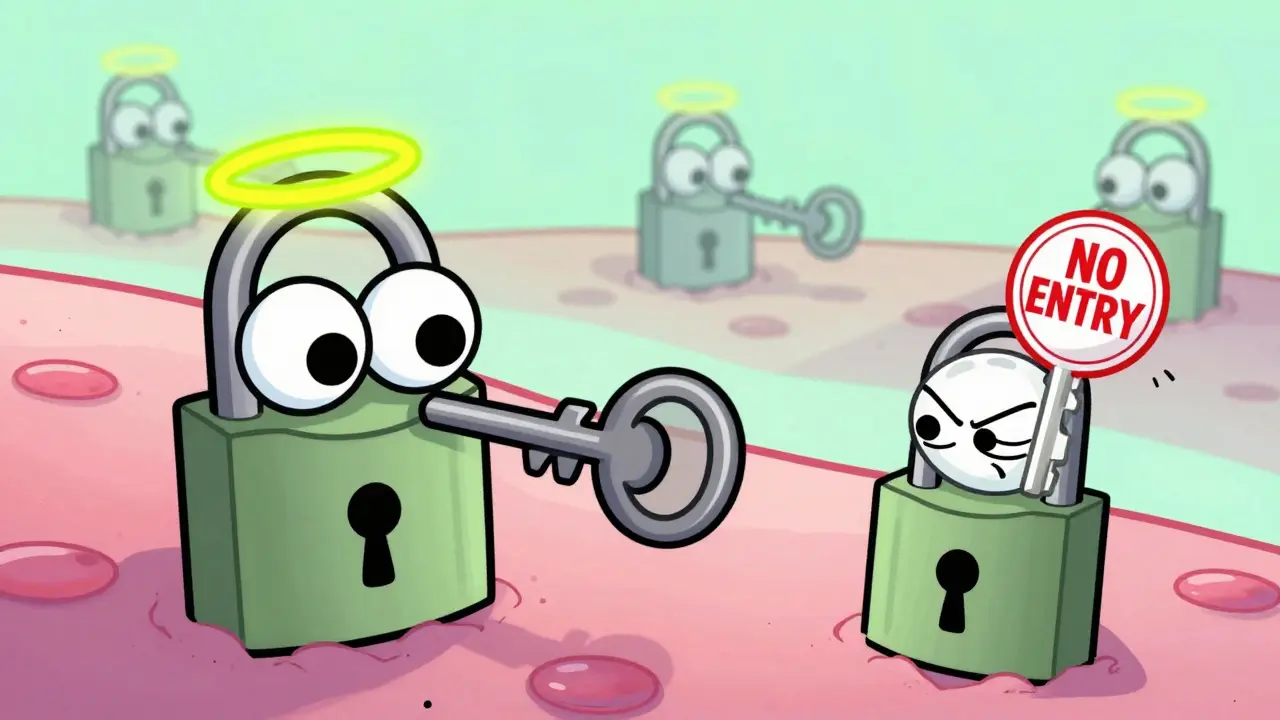
Receptors are like locks on the surface of your cells. Natural chemicals in your body-like serotonin or adrenaline-are the keys that normally fit. Drugs can act like fake keys. An agonist fits perfectly and turns the lock, triggering the cell’s response. That’s how morphine activates opioid receptors to reduce pain. An antagonist also fits the lock but doesn’t turn it. Instead, it blocks the real key from getting in. Beta-blockers, used for high blood pressure, work this way-they block adrenaline from speeding up your heart.
Not all drugs are that precise. Some work by changing the chemistry around them. Magnesium citrate, used for constipation, doesn’t bind to receptors. It pulls water into your intestines, softening stool. That’s a physical effect, not a biochemical one.
Another major group targets enzymes. Enzymes are molecular machines that speed up chemical reactions. Some drugs stop them. For example, MAO inhibitors used for depression block the enzyme that breaks down serotonin and dopamine. That lets those mood-lifting chemicals build up in your brain. Other drugs boost enzyme activity, though that’s less common.
There’s also a middle ground: partial agonists and inverse agonists. Partial agonists turn the lock just a little-giving a weaker effect than the real key. Inverse agonists don’t just block-they flip the lock to the opposite position. These are harder to grasp, but they explain why some drugs have unexpected effects in certain people.
Why Two People React Differently to the Same Drug
Two people take the same dose of a painkiller. One feels relief. The other feels dizzy and nauseous. Why? Because pharmacology isn’t one-size-fits-all.
Your genes play a huge role. The CYP450 enzyme family in your liver handles about 80% of all drugs. Variations in these genes mean some people break down drugs too fast (so the drug doesn’t work) or too slow (so it builds up and causes side effects). That’s why some people need higher or lower doses of antidepressants or blood thinners.
Age matters. Older adults often have slower liver and kidney function. A dose that’s fine for a 30-year-old can be dangerous for a 70-year-old. That’s why many medications come with special dosing guidelines for seniors.
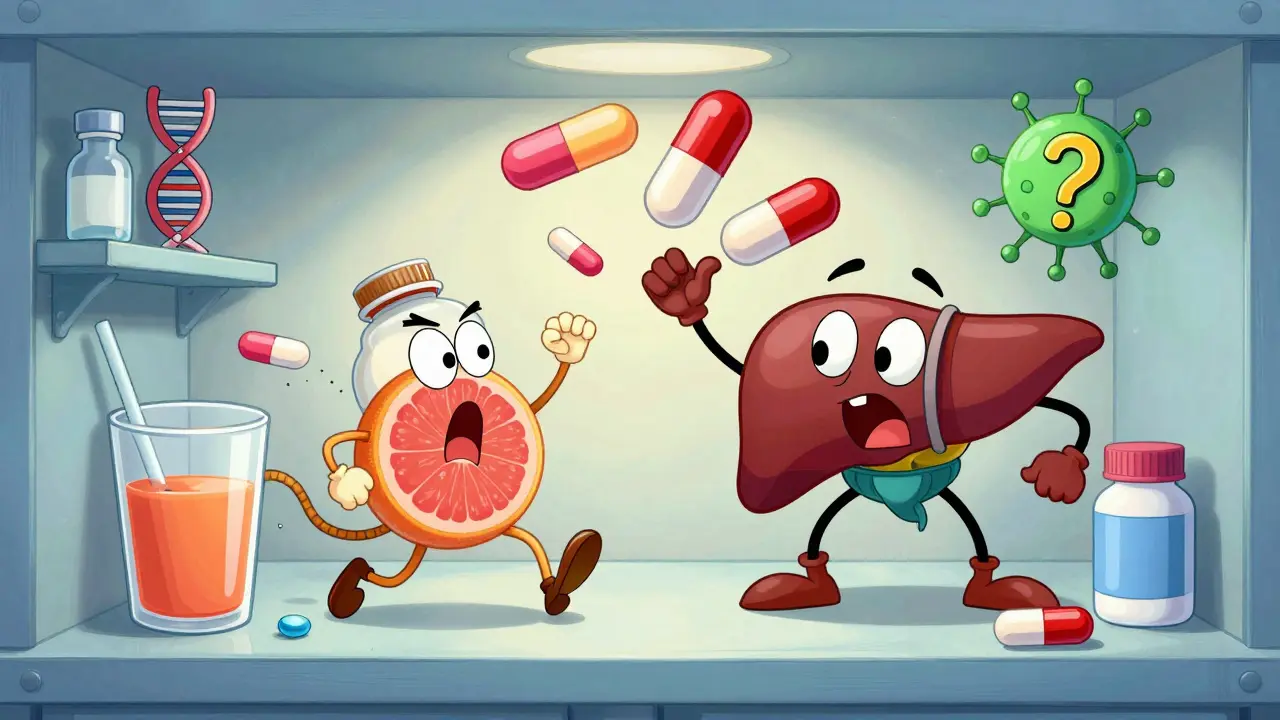
Other drugs you’re taking can interfere. Grapefruit juice, for example, blocks an enzyme that breaks down statins (cholesterol drugs). That can cause dangerous muscle damage. Antibiotics like erythromycin can interfere with how your liver processes heart medications. These aren’t rare mistakes-they happen all the time. A 2023 study found that nearly 1 in 5 hospital admissions for older adults was linked to a bad drug interaction.
Even your diet, sleep, and stress levels can change how a drug works. A tired liver processes drugs slower. A high-fat meal can delay absorption. These aren’t just side notes-they’re part of the full picture.
Biologics: The New Wave of Targeted Medicines
Not all drugs are small pills. A growing chunk of modern medicine-about 35% of new approvals since 2015-is made of biologics. These are large, complex molecules made from living cells, not chemicals. Think antibodies, proteins, or vaccines.
Biologics target very specific parts of your immune system. For example, drugs like adalimumab (Humira) block a protein called TNF-alpha that causes inflammation in rheumatoid arthritis. Instead of broadly suppressing your immune system, they cut out just the faulty signal. That means fewer side effects than older drugs like steroids.
But they come with trade-offs. Biologics usually need injections or infusions. They’re expensive. And your body can sometimes recognize them as foreign and build antibodies against them, making them less effective over time.
They’re revolutionizing treatment for conditions like psoriasis, Crohn’s disease, and certain cancers. But they’re not magic bullets. Understanding how they work helps you decide if they’re right for you-and when to push back if they stop working.
Real-World Mistakes and Why They Matter
Pharmacology isn’t just theory. It’s lived every day in clinics and homes.
One nurse on a popular healthcare forum described how a patient on an MAOI (an older antidepressant) was given an SSRI (a newer one). The two drugs together caused serotonin syndrome-a dangerous spike in serotonin that led to seizures and high fever. The mistake? No one checked for the interaction. It’s a known risk, but still happens because the details are easy to overlook.
Another case: a man on warfarin started taking a new antibiotic. His INR (a blood test that measures clotting) skyrocketed. He almost bled internally. The antibiotic blocked the enzyme that broke down warfarin. His dose hadn’t been adjusted. He survived, but only because his doctor caught it in time.
These aren’t outliers. A 2023 study in JAMA Internal Medicine found that when doctors followed pharmacokinetic principles-like adjusting doses for kidney function-adverse drug events dropped by 27%. That’s not a small number. That’s hundreds of thousands of preventable hospitalizations each year.
And yet, a 2022 survey found that only 62% of doctors feel confident explaining how drugs work to patients. That gap matters. If you don’t know why you’re taking something, you’re more likely to skip doses, take it wrong, or not speak up when something feels off.
What’s Next? AI, Personalized Dosing, and the Future of Medications
Pharmacology is changing fast. In 2024, DeepMind’s AlphaFold 3 could predict how drugs bind to proteins with 89% accuracy-far better than older tools. That means faster drug discovery and fewer failed trials.
Researchers are now using genetic data, lifestyle info, and even gut microbiome profiles to build personalized drug models. Early pilot studies show that when doctors adjust doses based on a patient’s receptor expression and metabolism profile, treatment success rates go up by 42%.
The FDA is also pushing for more real-world data-using electronic health records and wearable devices to track how drugs work in everyday life, not just in clinical trials.
But there’s a catch. The more complex the science gets, the harder it is for doctors and patients to keep up. Experts warn that without better education and simpler tools, we risk creating a gap between what science knows and what’s actually used at the bedside.
For now, the basics still matter most. Knowing how your drugs are absorbed, what they target, and how your body changes them gives you power. It turns you from a passive recipient of pills into an active partner in your own care.
What’s the difference between pharmacokinetics and pharmacodynamics?
Pharmacokinetics is what your body does to the drug-how it gets in, moves around, breaks down, and leaves. Think: absorption, distribution, metabolism, excretion (ADME). Pharmacodynamics is what the drug does to your body-how it binds to receptors, blocks enzymes, or changes cell behavior to create its effect. One is about movement; the other is about action.
Why do some medications need to be taken with food and others on an empty stomach?
It’s about absorption. Some drugs are absorbed better when food is present because it slows stomach emptying or helps dissolve the pill. Others are ruined by stomach acid or blocked by food. For example, antibiotics like tetracycline bind to calcium in dairy, making them useless if taken with milk. Always check the label or ask your pharmacist.
Can genetics really affect how a drug works?
Absolutely. Your genes control the enzymes that break down most drugs. About 17% of people have genetic variations that make them metabolize common medications too slowly or too quickly. This affects drugs like warfarin, antidepressants, and codeine. Some hospitals now test for these variations before prescribing, especially for high-risk medications.
What’s the risk of taking multiple medications at once?
The risk goes up fast. About 32% of adults over 65 take five or more medications. Each extra drug increases the chance of a harmful interaction. For example, combining blood thinners with NSAIDs like ibuprofen can cause stomach bleeding. Or mixing sedatives with alcohol can slow breathing dangerously. Always review your full list with your doctor or pharmacist at least once a year.
Are natural supplements safer than prescription drugs?
No. Just because something is "natural" doesn’t mean it’s safe or free of interactions. St. John’s Wort, for example, can make birth control pills, antidepressants, and blood thinners less effective. Garlic supplements can thin your blood. Many supplements aren’t tested the way prescription drugs are, so their effects and safety profiles are often unknown. Always tell your doctor what supplements you’re taking.
If you’re on any medication, take a moment to understand the basics: Why are you taking it? How does it work? What could interfere with it? That knowledge isn’t just helpful-it’s protective. And in a world full of pills, it’s the simplest way to take control.


Post A Comment