

Digoxin-Amiodarone Dosing Calculator
Critical Interaction Warning
Amiodarone increases digoxin levels by 40-100% and can cause life-threatening toxicity. Always reduce digoxin dose by 50% when starting amiodarone.
High-risk patients: Over 70 years old, CrCl < 50 mL/min, or digoxin dose ≥ 0.25 mg/day
Patient Assessment
Why This Drug Combo Can Be Deadly
Imagine you're treating a 78-year-old with atrial fibrillation and heart failure. You add amiodarone to control the rhythm. Everything seems fine-until they start vomiting, see yellow halos around lights, and go into a slow, dangerous heart rhythm. Their digoxin level? 2.8 ng/mL. Normal is 0.5-0.9. They almost died.
This isn't a rare accident. It's a predictable, preventable disaster. Digoxin and amiodarone are both powerful heart drugs with narrow therapeutic indices. That means the difference between a helpful dose and a toxic one is tiny. When you put them together, digoxin levels can jump by 100% or more. And because amiodarone sticks around in the body for weeks-even months-this danger doesn't go away quickly.
How the Interaction Actually Works
Amiodarone doesn’t just make digoxin work harder-it traps it in the body. Here’s how:
- It blocks P-glycoprotein, a protein that normally pumps digoxin out of kidney and liver cells. Without this pump, digoxin builds up.
- It slows down how fast the body clears digoxin by 29%, even when kidneys are working fine.
- It increases how much digoxin gets absorbed from the gut, making every pill more potent.
- Amiodarone’s main metabolite, desethylamiodarone, does the same thing-and it lasts up to 60 days after stopping the drug.
This isn’t a mild interaction. A 1984 study by Singh et al. showed digoxin levels jumped from 0.97 to 1.98 ng/mL in just days. That’s a 104% increase. And that’s just the start. Later studies confirmed a 40-60% rise in digoxin exposure. Even worse, the 2021 Circulation study found this combo triples the risk of hospitalization for toxicity compared to other common drug pairs.
Who’s Most at Risk
This isn’t a problem for everyone. But certain patients are sitting on a time bomb:
- Older adults (especially over 70)
- People with kidney problems (creatinine clearance under 50 mL/min)
- Those already on the higher end of the digoxin dose range (0.25 mg daily or more)
- Patients with low body weight or frailty
A 2021 JACC: Heart Failure analysis found that when doctors didn’t reduce digoxin before starting amiodarone, 35% of heart failure patients died within 30 days-up from 8%. That’s a 27% absolute increase in death. And it’s not just about death. Toxicity causes dangerous rhythms, kidney failure, and hyperkalemia. One case report described a patient with potassium levels of 6.8 mEq/L-life-threatening, and entirely preventable.
What You Must Do: The 3-Step Rule
If you’re prescribing or managing amiodarone in someone on digoxin, follow this:
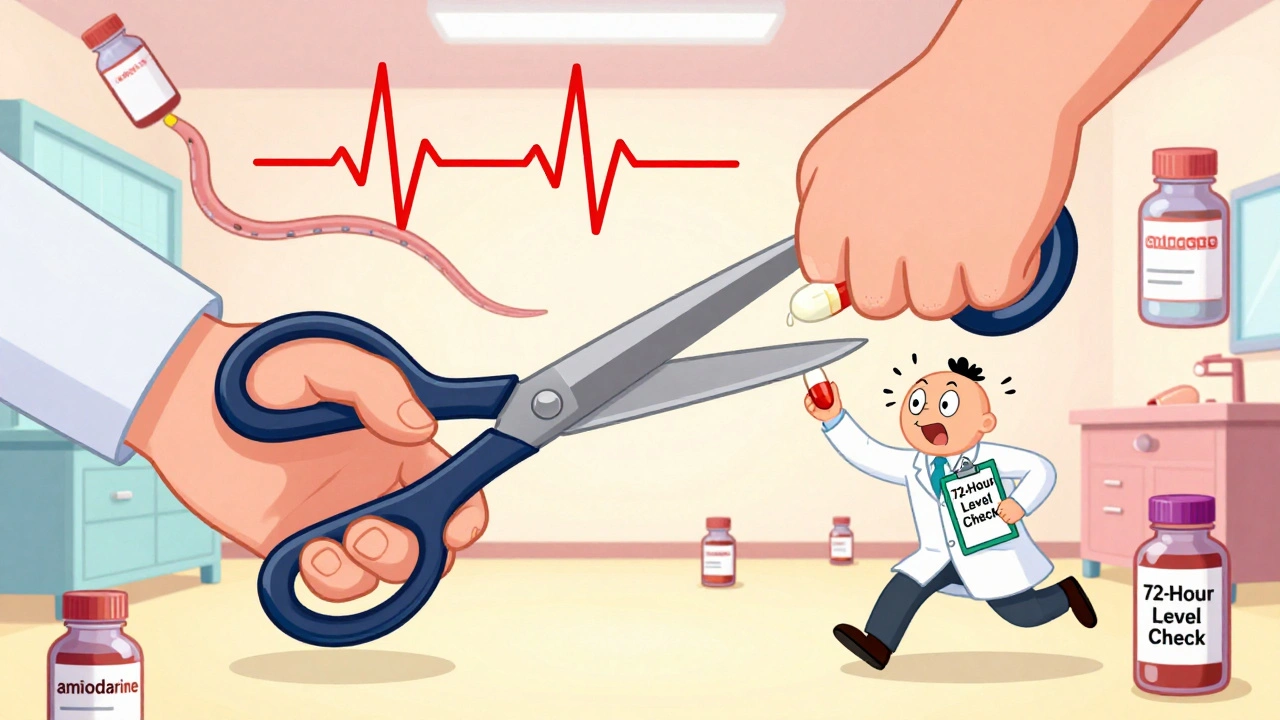
- Reduce the digoxin dose by 50% at the same time you start amiodarone. Don’t wait. Don’t check levels first. The rise happens fast, and by the time you see it, damage may already be done.
- Check digoxin levels 72 hours after starting amiodarone. Some protocols recommend checking at 24 and 168 hours for patients with poor kidney function. Levels should drop to the target range (0.5-0.9 ng/mL) after dose reduction.
- Keep checking levels for months. Because amiodarone lasts so long, the interaction can peak at 1-2 weeks and linger for up to 60 days after stopping. Never assume it’s over just because you stopped the drug.
For patients with severe kidney impairment (CrCl <30 mL/min), reduce digoxin to 33% of the original dose. In these cases, levels should be checked at 24, 72, and 168 hours.
Why So Many Doctors Still Get It Wrong
You’d think this is common knowledge by now. But a 2022 study across 15 U.S. hospitals found only 43.7% of patients had their digoxin dose reduced properly when amiodarone was started. In community hospitals? The failure rate was 68.2%.
Why? Three reasons:
- Doctors assume the patient’s current digoxin dose is "safe" because they’ve been on it for years.
- They don’t realize amiodarone’s effects last months after stopping.
- They don’t know how to monitor it-many don’t even check levels after starting.
One cardiologist on Reddit said he’s seen three digoxin toxicity cases in the past year-each in patients over 75 with kidney disease. All were avoidable.
What Works: Real Solutions from Real Hospitals
Some places have fixed this. At the University of Michigan, they created a mandatory protocol: when amiodarone is ordered, the system auto-reduces digoxin by 50% and flags the pharmacist to check levels within 72 hours. Result? Toxicity dropped from 12.3% to 2.1%.
At the Veterans Health Administration, they added an EHR alert. If a provider tries to prescribe amiodarone to someone on digoxin, a pop-up says: "Dose reduction required. Check level in 72 hours." They cut digoxin toxicity events by 41%.
Pharmacist-led interventions made a huge difference too. One study showed the rate of inappropriate dosing fell from 58% to 12% after pharmacists started actively managing these cases.
What to Watch For: Signs of Digoxin Toxicity
Know the red flags. They’re not always obvious:
- Nausea, vomiting, loss of appetite
- Visual changes (yellow or green halos around lights, blurred vision)
- New or worsening arrhythmias (especially bradycardia, AV block, ventricular tachycardia)
- High potassium (hyperkalemia)
- Confusion or fatigue (often mistaken for aging)
These symptoms can show up days or weeks after starting amiodarone. Don’t dismiss them. If you see them, check the digoxin level immediately. Don’t wait for the next scheduled test.

The Bigger Picture: Is Digoxin Even Worth It?
Amiodarone is still used because it’s effective for tough arrhythmias. But digoxin? Its role is shrinking. The 2024 European Society of Cardiology guidelines now recommend beta-blockers or calcium channel blockers as first-line for rate control in atrial fibrillation-especially if amiodarone is needed.
Digoxin use has dropped 32% since 2010. It’s no longer the go-to for AF. But it still has a place in heart failure patients with reduced ejection fraction who haven’t responded to other drugs. The problem isn’t digoxin itself-it’s using it carelessly with amiodarone.
And here’s the kicker: a 2024 Circulation study found patients on both drugs had a 2.1-fold higher risk of stroke than those on amiodarone alone. Digoxin may promote clotting at high levels. That’s another reason to avoid it if you can.
What’s Coming Next
Research is still active. The DIG-AMIO trial (NCT05217891) is comparing 50% vs. 33% digoxin dose reduction when starting amiodarone. Results are due in late 2025. We may get more precise guidance soon.
For now, the rules are clear: if you’re starting amiodarone in someone on digoxin, reduce the digoxin dose by half right away. Monitor levels. Watch for symptoms. Don’t wait. Don’t assume. Don’t hope it’s fine.
Bottom Line
This interaction kills. And it kills quietly-often in older, sicker patients who can’t even tell you they’re feeling off. The fix is simple: cut the digoxin dose in half when you start amiodarone. Check levels within 72 hours. Keep monitoring for months. It’s not complicated. It’s just not done often enough.
If you’re prescribing either drug, know this combo. If you’re managing a patient on both, demand action. A single dose adjustment can mean the difference between life and death.
How soon after starting amiodarone should digoxin levels be checked?
Digoxin levels should be checked 72 hours after starting amiodarone. For patients with kidney impairment (creatinine clearance under 50 mL/min), check at 24 hours, 72 hours, and 168 hours (7 days). Levels peak between 1 and 2 weeks after starting amiodarone, so checking at 72 hours catches the early rise. Don’t wait for symptoms to appear.
Should I stop digoxin instead of reducing the dose?
No. Stopping digoxin abruptly can worsen heart failure or cause uncontrolled heart rate in atrial fibrillation. The goal is to reduce the dose by 50%-not eliminate it-unless there’s clear toxicity. Digoxin still has a role in heart failure with reduced ejection fraction. The key is managing the dose safely, not removing it entirely.
Does the interaction still happen if I stop amiodarone?
Yes. Amiodarone has an extremely long half-life-up to 100 days. Its active metabolite, desethylamiodarone, can keep inhibiting digoxin clearance for up to 60 days after stopping. So even if you discontinue amiodarone, digoxin levels may stay high. Don’t increase the digoxin dose until levels have been stable for at least 6-8 weeks after stopping amiodarone.
Can I use dronedarone instead of amiodarone to avoid this interaction?
No. Dronedarone is structurally similar to amiodarone and also increases digoxin levels. The PALLAS trial showed dronedarone increased cardiovascular death when used with digoxin. This interaction isn’t unique to amiodarone-it’s a class effect of benzofuran antiarrhythmics. Avoid both with digoxin unless you’re prepared to reduce the dose.
What’s the safest alternative to digoxin when amiodarone is needed?
For rate control in atrial fibrillation, beta-blockers (like metoprolol or carvedilol) or non-dihydropyridine calcium channel blockers (like diltiazem or verapamil) are preferred. These don’t interact dangerously with amiodarone. The 2024 ESC guidelines now recommend these as first-line when amiodarone is being considered. Reserve digoxin for patients with heart failure who don’t respond to these agents.
Is this interaction more dangerous in elderly patients?
Yes. Elderly patients are more vulnerable because they often have reduced kidney function, lower body weight, and are more sensitive to digoxin’s effects. A 2023 analysis showed that patients over 75 with CKD stage 3 or worse had the highest risk of toxicity. In this group, even a 50% dose reduction may be too much-some need 33% or less. Always start low and go slow.


Post A Comment