
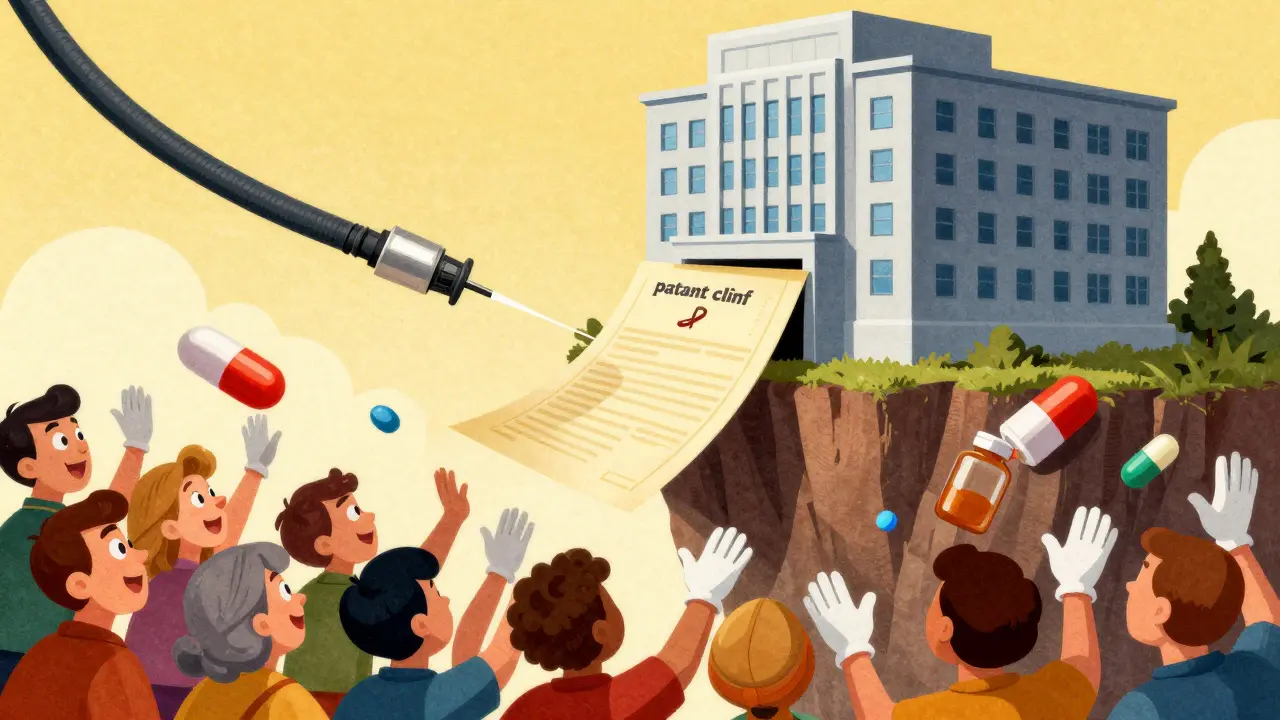
The pharmaceutical world is currently staring at a massive financial cliff. We aren't talking about a small dip in sales, but a systemic shift where hundreds of billions of dollars in branded revenue are about to vanish as patents expire. For the average person, this means the promise of cheaper, life-saving medicine. For the economy, it's a high-stakes game of timing, regulatory hurdles, and manufacturing scale. If you've ever wondered why some medications suddenly drop in price while others stay expensive for decades, you're looking at the machinery of the generic drug markets is the sector of the pharmaceutical industry that produces bioequivalent versions of branded drugs after their patent protection ends.
The Big Picture: Where is the Money Moving?
Predicting the exact size of this market is like forecasting the weather in a hurricane-different experts see different patterns. Some analysts, like those at Strategic Market Research, expect the global market to hit $643.8 billion by 2030. Others, like Mordor Intelligence, are more cautious, eyeing a target closer to $530 billion. The common thread? Growth is inevitable. We're seeing a compound annual growth rate (CAGR) generally hovering between 4% and 8%.
Why the discrepancy? It comes down to the "patent cliff." Between 2025 and 2030, branded drugs that currently rake in between $217 billion and $236 billion annually will lose their exclusivity. When a drug goes generic, the price doesn't just dip; it plummets. This creates a massive volume surge that offsets the lower price per pill, keeping the industry's revenue climbing even as individual products become commodities.
| Analyst Source | Projected Value | Estimated CAGR | Outlook Focus |
|---|---|---|---|
| Strategic Market Research | $643.8 Billion | 6.8% | Global Expansion |
| Mordor Intelligence | $530.32 Billion | 4.23% | Conservative Baseline |
| DrugPatentWatch | $700-$800 Billion | 5-8% | Patent Expiry Impact |
| BCC Research | $655.8 Billion (by 2028) | 8.5% | Historical Momentum |
The Rise of the "Complex" Generic: Biosimilars
For years, generics were simple: a chemist replicated a small-molecule pill. But the tide is turning toward Biosimilars is highly similar versions of biologic medicines, which are derived from living organisms rather than chemical synthesis. Because these are massive, complex proteins, they can't be perfectly "copied" like a chemical formula. Instead, they are "similar," requiring a much more expensive and rigorous approval process.
This is where the real economic battle is happening. The 2025-2027 window is critical, as high-revenue monoclonal antibodies used in oncology and immunology lose their patents. We are looking at a potential $25 billion opportunity in these specific sectors by 2029. Interestingly, biosimilars are growing faster than traditional generics, with a projected 8.20% CAGR. If you're a manufacturer and you haven't invested in biologics, you're essentially fighting for scraps while the new giants carve up the immunology market.
Regional Power Shifts: India, China, and the West
The geography of drug making is shifting east. India has effectively become the world's pharmacy, supplying about 20% of the global volume of generics and a staggering 60% of global vaccine demand. Their scale is unmatched, allowing them to drive down costs across the board.
Then there is China. China isn't just manufacturing; they are rewriting the rules of pricing through "volume-based procurement" (VBP). Essentially, the government tells companies: "If you want to sell to our massive population, you'll accept this low price." These tenders are so large that they reset the global benchmark for what a drug should cost, forcing manufacturers in Europe and the US to rethink their margins.
Meanwhile, in Europe, Germany and the UK remain the gold standards for generic adoption due to supportive policies. In the US, the market is a fierce brawl between giants like Teva, Viatris, and Sandoz, where the primary goal is to be the first to file an Abbreviated New Drug Application (or ANDA) to capture the early market share.
Therapeutic Hotspots: Where Demand is Spiking
Economics follows epidemiology. As global populations age and lifestyle diseases climb, certain drug classes are seeing a surge in generic demand. We're seeing a massive shift toward:
- Metabolic Health: With obesity and diabetes reaching epidemic levels, the focus is shifting to complex generics of GLP-1 agents. While branded drugs like Ozempic and Mounjaro are currently printing money, the generic versions of these agents will eventually be the most contested territory in health economics.
- Oncology: Cancer treatment remains the most valuable therapy area. Even as generics enter the space, the sheer cost and complexity of these drugs keep the revenue high.
- Inflammatory Diseases: Drugs like Dupixent and Skyrizi are current blockbusters, but they are the "next wave" of future generic targets.
The Tech Edge: Automation and Data
It's not just about the chemistry anymore; it's about the robots. To survive the pricing pressure from China and India, Western firms are turning to Robotic Process Automation (RPA). By automating the manufacturing line, they can shave cents off the production cost, which is the only way to maintain a profit margin when a drug is being sold for pennies.
We're also seeing a rise in "tech-enabled medication synchronization." This is a fancy way of saying that pharmacies are using data to ensure patients refill their generics on a strict schedule. This doesn't just help the patient; it creates a predictable, recurring revenue stream for the generic provider, reducing the volatility of the market.
Risks and Roadblocks to Growth
It isn't all smooth sailing. The "race to the bottom" on pricing can be dangerous. When margins get too thin, companies cut corners, which leads to quality issues and regulatory crackdowns. Furthermore, the legal battles are intense. "At-risk" sales-where a generic company launches a drug while the original patent holder is still suing them-are expected to hit $100 billion by 2028. One court ruling can instantly wipe out a company's quarterly profit or hand them a billion-dollar windfall.
Why are generic drugs so much cheaper than branded ones?
Branded drugs are expensive because the original company has to recoup the billions spent on research, development, and clinical trials. Once the patent expires, generic manufacturers don't have those R&D costs; they only need to prove that their version is bioequivalent, allowing them to sell the product at a fraction of the original price.
What is the difference between a generic and a biosimilar?
A generic is a precise chemical copy of a simple molecule. A biosimilar is a version of a complex biological drug made from living cells. Because biologics are so large and complex, they cannot be perfectly copied, so biosimilars are "highly similar" but not identical, requiring more complex testing for safety and efficacy.
Which region is growing the fastest in the generic market?
The Asia Pacific region, led by India and China, is seeing the highest growth rates. This is driven by expanding healthcare access, an increasing middle class with higher incomes, and massive government procurement programs that prioritize cost-effective medications.
What is a "patent cliff"?
A patent cliff occurs when a blockbuster drug loses its patent protection, allowing generic competitors to enter the market. This typically leads to a sharp drop in revenue for the original manufacturer and a surge in availability and lower prices for consumers.
Will the generic market continue to grow after 2030?
Yes, most analysts project continued growth. While simple generics may mature, the emergence of biosimilars and the ongoing need to manage chronic diseases like diabetes and hypertension in aging global populations ensure a steady demand for affordable medicine.
What's Next for Investors and Patients?
If you're tracking this space, keep an eye on two things: the legal outcomes of "at-risk" launches and the speed of biosimilar adoption in the US and Japan. For patients, the next five years will likely see a significant drop in the cost of oncology and immunology treatments. For the industry, the winners will be those who can navigate the shift from simple chemistry to complex biology while keeping their manufacturing costs lean through automation.