
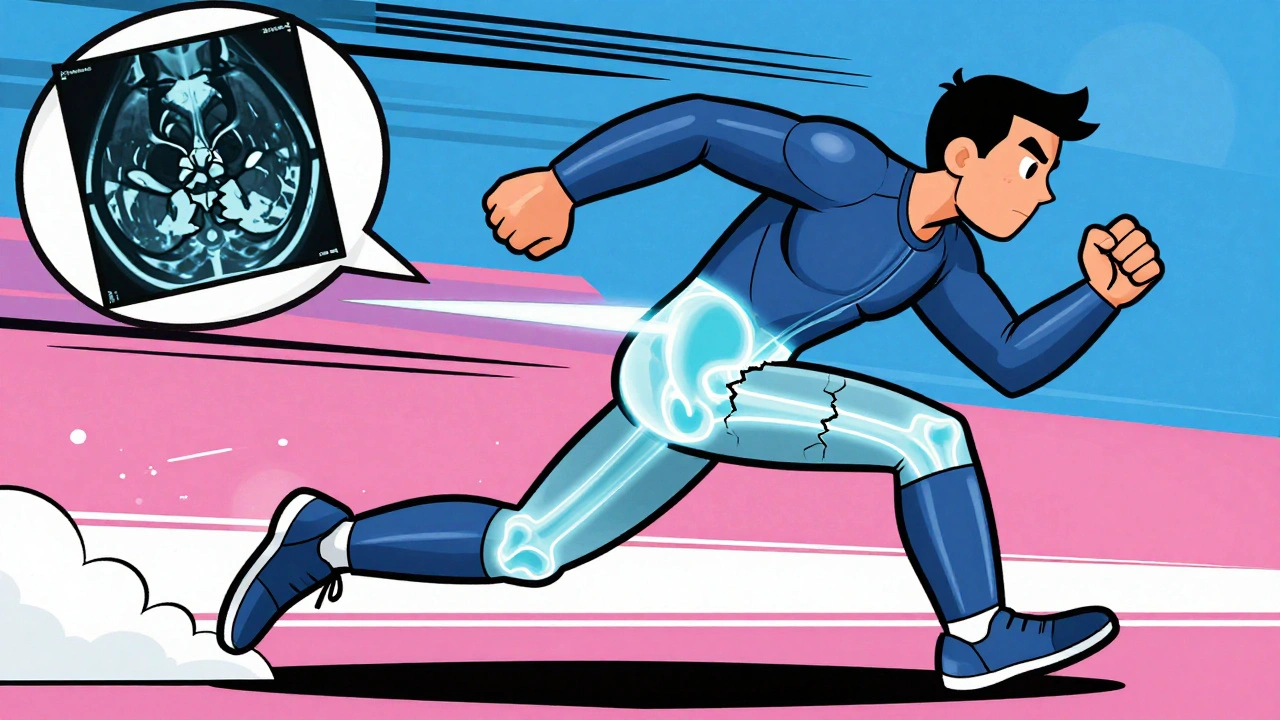
When your hip starts clicking, locking, or aching during a sprint or a squat, it’s easy to write it off as a strain. But for athletes-especially those in soccer, basketball, hockey, or ballet-persistent hip pain isn’t just muscle fatigue. It could be a hip labral tear, a condition that’s become one of the most misunderstood yet common causes of athletic hip pain. Unlike a sprained ankle or a pulled hamstring, this injury hides deep inside the joint, often missed on basic scans and misdiagnosed as groin strain or bursitis. The good news? With the right imaging and timely intervention, most athletes don’t just recover-they return stronger.
What Exactly Is a Hip Labral Tear?
The labrum is a ring of tough, rubbery cartilage that wraps around the socket of your hip joint (the acetabulum). Think of it like a gasket: it deepens the socket, keeps the ball of the femur securely in place, and absorbs shock during movement. When it tears, you’re not just dealing with a damaged piece of cartilage-you’re risking joint instability, early arthritis, and chronic pain.
Most tears happen because of femoroacetabular impingement (FAI), where bone spurs on the hip ball or socket rub against the labrum over time. Athletes who twist, pivot, or squat deeply-like soccer players, dancers, or hockey goalies-are at highest risk. Studies show 22-55% of athletes with chronic hip pain have labral damage. And it’s not just older athletes: 80% of cases occur in people under 40.
How Do You Know It’s a Labral Tear?
There’s no single symptom that screams “labral tear,” but there are patterns. Most athletes report deep groin pain that worsens with activity-especially when bending the hip past 90 degrees, like sitting low in a car or doing a deep squat. You might feel a catch, click, or locking sensation. Some describe it as “something slipping” inside the hip.
Doctors use physical tests to spot these clues. The FADIR test (flexion, adduction, internal rotation) and FABER test (flexion, abduction, external rotation) are the most reliable. When performed correctly, they trigger pain in about 78% of people with confirmed labral tears. But here’s the catch: these tests aren’t perfect. A positive result doesn’t guarantee a tear, and a negative result doesn’t rule one out.
That’s why imaging is non-negotiable.
Imaging: The Real Diagnostic Game-Changer
Standard X-rays are the first step-not to see the labrum, but to spot bone problems. Are there bone spurs? Is the socket too shallow (dysplasia)? Is there early arthritis? These structural issues are often the root cause.
But here’s where most clinics fail: a regular MRI won’t cut it. Conventional MRI only catches 35-60% of labral tears. That means nearly half the time, the tear is invisible. That’s why magnetic resonance arthrography (MRA) is now the gold standard for diagnosis. In MRA, contrast dye is injected directly into the hip joint before the scan. This makes the labrum pop out in high resolution, revealing even tiny tears. Sensitivity jumps to 90-95%, specificity to 85-92%.
And now, the latest upgrade: 3D MRI sequencing. Introduced in 2023, this technique gives surgeons a full 3D model of the hip joint before surgery. One multicenter trial showed diagnostic accuracy hit 97% with 3D MRA-up from 90% with standard MRA. For athletes, this means fewer surprises in the operating room and more precise repairs.
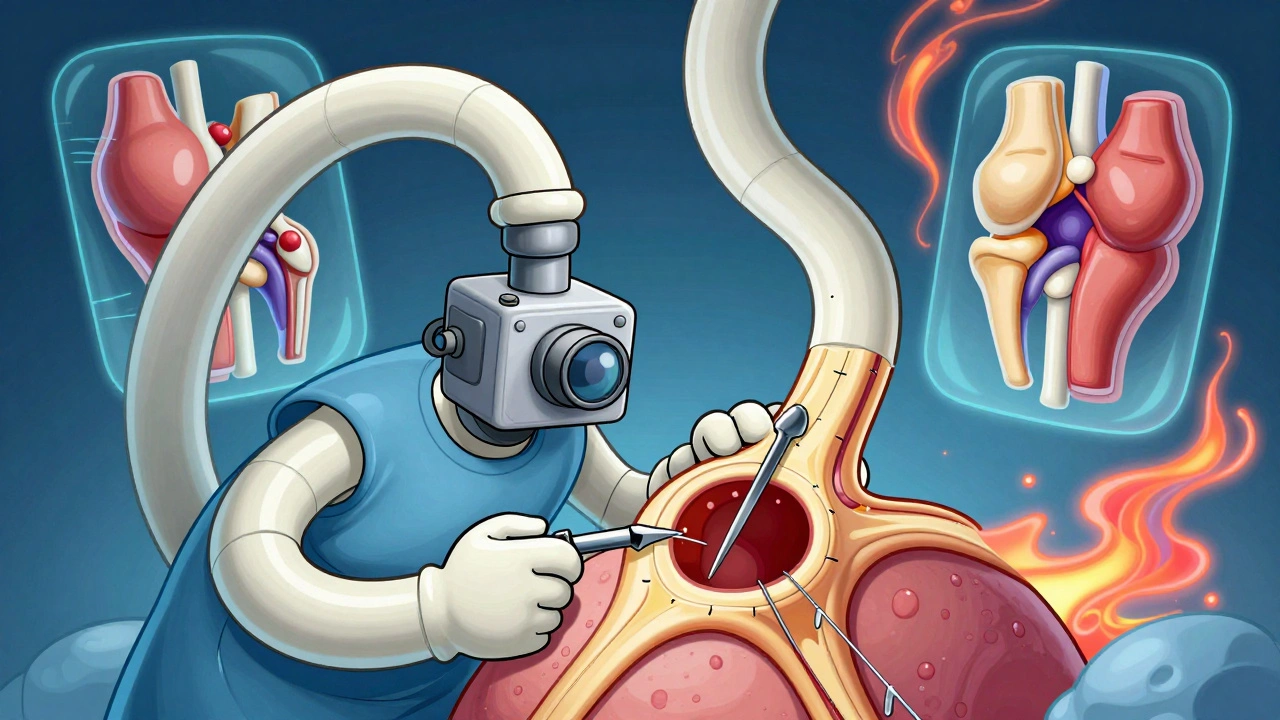
Arthroscopy isn’t just a treatment-it’s the final diagnostic tool. When everything else is inconclusive, a surgeon can look inside the joint directly. With a tiny camera, they see the tear in real time. Accuracy? 98%. That’s why, in elite sports medicine, arthroscopy is often used to confirm what imaging suggests.
Conservative Treatment: Can You Avoid Surgery?
Not everyone needs surgery. If your pain is mild and you’re not a high-level athlete, conservative care can work. The standard first step is 4-6 weeks of rest, avoiding deep hip flexion, and using NSAIDs like ibuprofen or naproxen to manage inflammation.
Physical therapy is controversial. Some studies say only 30-40% of athletes fully recover without surgery. But newer data from True Sports Physical Therapy shows 65% of patients improve with targeted rehab-especially when the program focuses on hip stability, core strength, and movement retraining. The key? It’s not just stretching. It’s reprogramming how your body moves.
Corticosteroid injections can buy time. They reduce inflammation and pain in 70-80% of cases, usually for 3-6 months. That’s useful if you’re trying to finish a season or delay surgery. But it’s not a cure. If the tear is structural, the pain will come back.
And then there’s PRP (platelet-rich plasma). In a 2022 randomized trial at Hospital for Special Surgery, 55% of patients who got PRP injections avoided surgery entirely after 12 months. It’s not magic, but for athletes who want to delay or avoid surgery, it’s a legitimate option.
When Surgery Becomes Necessary
If pain persists after 3-6 months of conservative care, or if imaging shows a large tear with structural damage, arthroscopy is the next step. The procedure is minimally invasive: two or three small incisions, a camera, and tiny instruments.
There are two main approaches:
- Debridement: Trimming away the torn, frayed part of the labrum. This is faster to recover from but doesn’t fix the underlying problem.
- Repair: Sewing the labrum back to the bone using suture anchors. This is the preferred option when the tissue is still healthy enough to heal.
But here’s the critical point: if you have hip dysplasia or FAI, repairing the labrum alone is like patching a leaky roof without fixing the broken shingles. Studies show 60-70% of dysplastic hips re-tear if the bone abnormality isn’t corrected. That’s why top surgeons now combine labral repair with osteoplasty (reshaping the bone) in the same surgery.
The American Academy of Orthopaedic Surgeons (AAOS) explicitly advises against isolated labral debridement without addressing structural issues. Their data shows a 40% higher chance of needing revision surgery if you skip the bone correction.
Recovery: What to Expect After Surgery
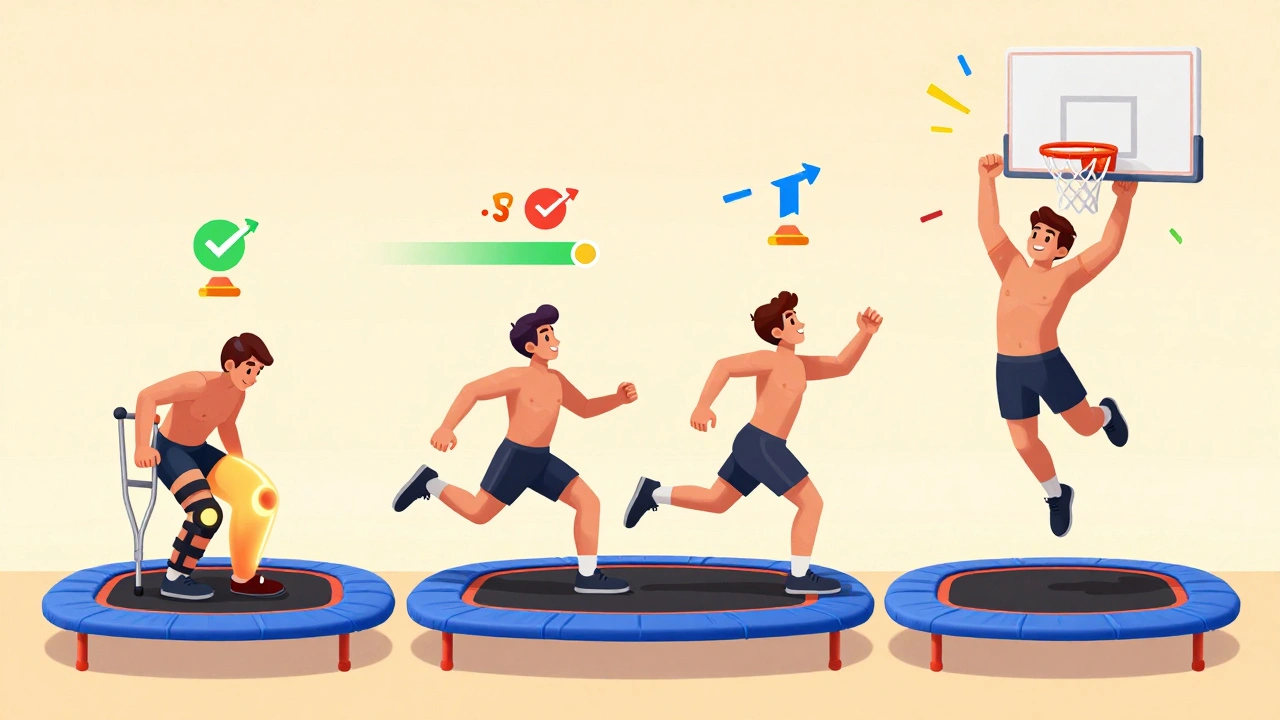
Recovery isn’t a straight line. It’s a phased process that takes 5-6 months for a repair, 3-4 months for debridement.
Phase 1 (Weeks 1-6): Protection
You’ll use crutches for 2-4 weeks. No hip flexion beyond 90 degrees. No twisting. Physical therapy starts immediately with gentle motion and core activation. The goal? Prevent stiffness without stressing the repair.
Phase 2 (Weeks 7-12): Strengthening
Now you focus on rebuilding strength-especially the glutes and quadriceps. You’ll work on symmetry. Surgeons at Boston Children’s Hospital require athletes to hit 90% strength balance before moving on. If one leg is weaker, you risk reinjury.
Phase 3 (Weeks 13-20): Sport-Specific Training
This is where athletes get excited. You start mimicking your sport: cutting drills for soccer, pivots for basketball, jumps for volleyball. But it’s controlled. No full-speed contact yet.
Phase 4 (Weeks 21-26): Return to Sport
You’re cleared when you can do all sport-specific movements pain-free, with full range of motion and equal strength. NHL player Ryan Nugent-Hopkins took 5.5 months to return after repair. A marathon runner on Reddit returned at 4.5 months-faster, but with a debridement.
Complications? They’re rare but real. Persistent pain affects 15-20% of patients. Heterotopic ossification (bone growing where it shouldn’t) happens in 5-10%. Nerve injury is rare-under 2%. But revision surgery is needed in 8-12% of cases within five years.
Who Has the Best Outcomes?
Young athletes under 35 with isolated labral tears and no dysplasia have the best results: 85-90% return to pre-injury levels. But for those over 35, that number drops to 70-75%. Why? Healing capacity declines. Also, older athletes often have early arthritis, which complicates recovery.
High-risk sports? Hockey, ballet, and gymnastics. These require extreme hip rotation. Post-surgery complication rates are 25% higher here. That’s why athletes in these sports need more aggressive prehab and longer rehab.
Access to care matters too. Athletes treated at specialized sports medicine centers report 92% satisfaction. At general orthopedic clinics? Only 75%. Why? Specialized centers have surgeons who’ve done 50+ hip arthroscopies-the minimum needed for competency. They also have access to 3D imaging and dedicated rehab teams.
The Bigger Picture: Preventing Arthritis
Ignoring a labral tear isn’t just about pain. It’s about your future. A 15-year study published in the Journal of Bone and Joint Surgery found untreated labral tears increase the risk of hip osteoarthritis by 4.5 times within a decade. That’s not a hypothetical-it’s a timeline.
That’s why the goal isn’t just to fix the tear. It’s to preserve the joint. That’s why modern treatment combines repair, bone correction, and rehab. It’s why MRA is now standard. And why, in 2023, the FDA approved a new bioabsorbable suture anchor (Smith & Nephew’s BioX) that dissolves over time, reducing long-term irritation.
The market is booming. Over 150,000 hip arthroscopies were done in the U.S. in 2022-up 300% since 2010. The global market hit $1.2 billion. That’s not just because more people are getting diagnosed. It’s because we’re getting better at treating them.
What Athletes Wish They Knew Sooner
On Reddit, one runner wrote: “I ignored the pain for 8 months. By the time I got an MRA, the tear was massive. I lost three months of training.” Another dancer said: “They told me it was bursitis. I had revision surgery because the first surgeon didn’t see the dysplasia.”
Insurance is another hurdle. MRA costs $1,200-$1,800 out-of-pocket. Standard MRI? $500-$800. Many athletes skip the MRA because of cost-and end up with the wrong diagnosis.
The message is clear: if you’re an athlete with persistent hip pain, don’t wait. Get the right imaging. Find a surgeon who specializes in hip arthroscopy. And don’t settle for a quick fix. Your hip isn’t just a joint-it’s your foundation for movement, performance, and long-term health.


Post A Comment