
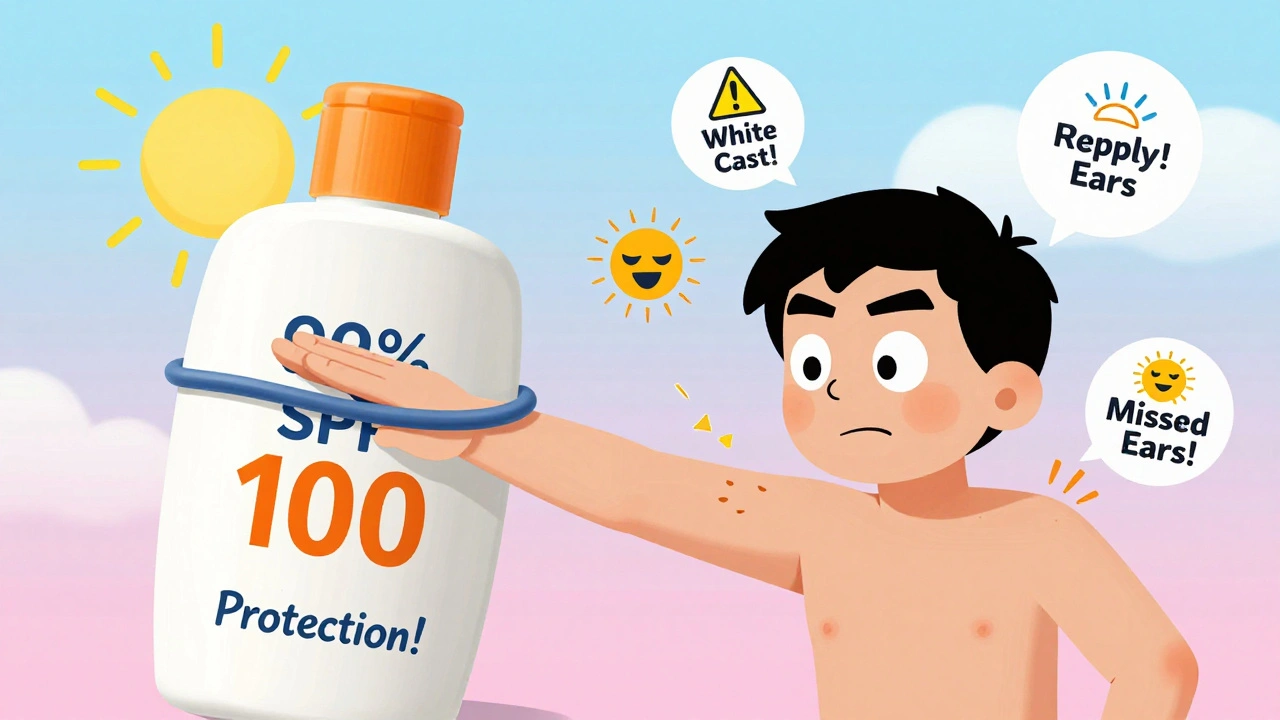
Every year, millions of people buy sunscreen without really understanding what’s in it or how to use it properly. You grab the bottle with the highest SPF number, slap it on, and assume you’re covered. But here’s the truth: SPF doesn’t tell you the whole story. And if you’re not reapplying the right way, you might as well not be wearing any at all.
What SPF Actually Means (And Why Higher Isn’t Always Better)
SPF stands for Sun Protection Factor. It measures how well a sunscreen blocks UVB rays - the ones that cause sunburn. SPF 30 blocks about 97% of UVB rays. SPF 50 blocks 98%. SPF 100 blocks 99%. That’s it. There’s no magic jump in protection after SPF 50. The difference between SPF 50 and SPF 100 is just 1% more UVB blocked. Yet, SPF 100 products cost more, feel thicker, and trick people into thinking they’re invincible. The FDA has been pushing for clearer labeling since 2019. By late 2025, sunscreens making broad-spectrum claims must be at least SPF 30. Anything below SPF 15 can’t claim to reduce skin cancer risk. So if you see an SPF 10 sunscreen labeled as “skin cancer protection,” it’s misleading. Stick with SPF 30 or higher. That’s the sweet spot for daily use - enough protection without the hype.Broad Spectrum Isn’t Just a Marketing Word
UVB burns your skin. UVA ages it. UVA rays penetrate deeper, cause wrinkles, and contribute to melanoma. That’s why “broad spectrum” matters. It means the sunscreen protects against both. To qualify as broad spectrum, a product must pass a test called Critical Wavelength. It needs to block UV rays up to 370 nanometers. That’s the minimum standard set by the FDA. But not all broad-spectrum sunscreens are equal. In Consumer Reports’ 2025 testing, some mineral sunscreens labeled “broad spectrum” only blocked UVA rays at 40% efficiency. Meanwhile, top chemical sunscreens like La Roche-Posay Anthelios blocked over 95%. Look for active ingredients that signal real UVA protection: avobenzone (at least 3%), zinc oxide (10%+), or ecamsule. If the label just says “broad spectrum” without listing these, it’s a red flag.Mineral vs Chemical: What’s the Real Difference?
There are two main types of sunscreen: mineral and chemical. Mineral sunscreens use zinc oxide or titanium dioxide. They sit on top of your skin and physically block UV rays. They start working immediately. That’s great for sensitive skin or kids. But here’s the catch: many mineral sunscreens don’t spread well. They leave white casts, especially on darker skin tones. In Consumer Reports’ tests, mineral sunscreens averaged a protection score of 55 out of 100 - far below chemical options. Chemical sunscreens absorb UV rays and convert them into heat. Common ingredients include avobenzone, octinoxate, and oxybenzone. They blend in better, feel lighter, and offer stronger protection. But they need 15-20 minutes to activate after application. And some ingredients like oxybenzone are linked to coral reef damage - which is why Hawaii banned them in 2021. For everyday use, chemical sunscreens are more effective. For sensitive skin, eczema, or melasma, mineral options like EltaMD UV Clear (with 9% zinc oxide and niacinamide) are dermatologist-recommended. But don’t assume mineral = better protection. It’s about matching the product to your skin and needs.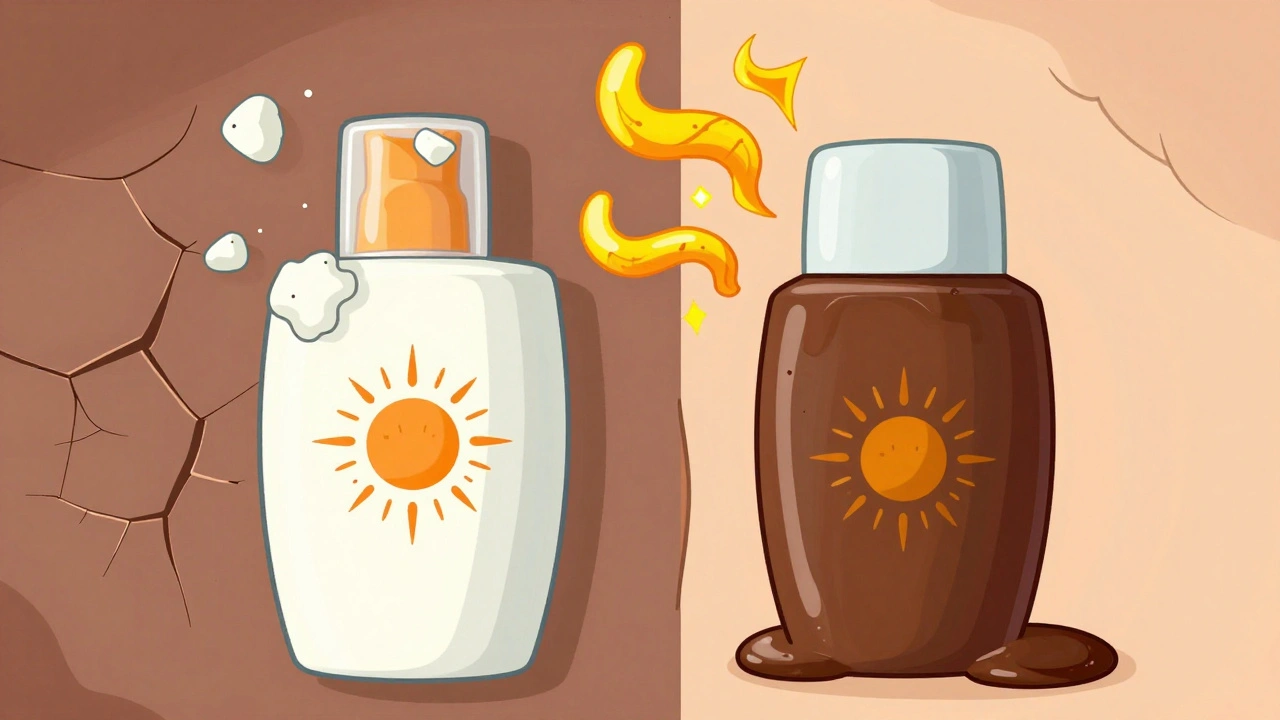
How Much Should You Actually Use?
Most people apply only 25-50% of the recommended amount. That cuts protection in half. The FDA says you need 2 milligrams of sunscreen per square centimeter of skin. For your face, that’s about a quarter teaspoon - or five pea-sized dots. Try this: squeeze a line of sunscreen from the tip of your middle finger to your palm. That’s enough for your face and neck. If you’re using a spray, spray it into your hand first, then rub it on. Spraying directly onto skin rarely gives even coverage. A 2024 study in the Journal of the American Academy of Dermatology found that 78% of people using sprays missed spots on their ears, neck, and back of hands. And don’t forget your lips. Use a lip balm with SPF 30+. Your eyelids? Use a mineral stick or wear UV-blocking sunglasses.Reapplication: The Most Ignored Rule
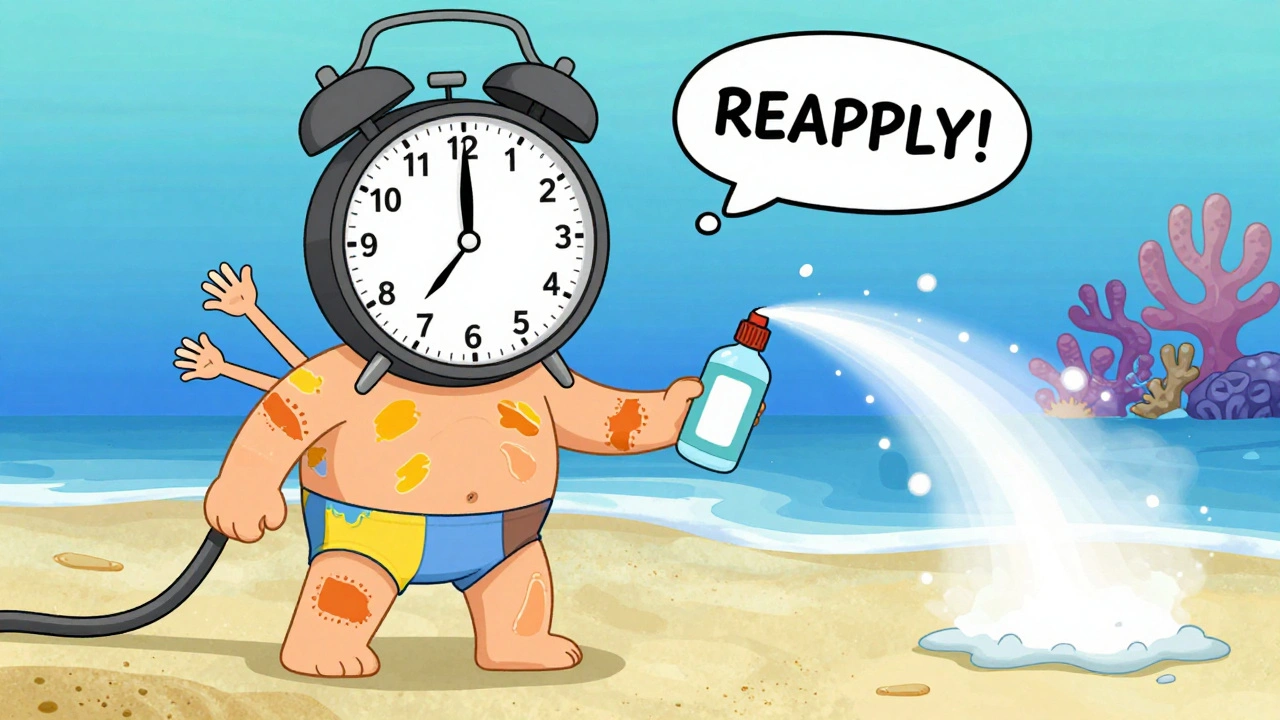
Sunscreen doesn’t last all day. Even “water-resistant” formulas wear off. Water resistance means it stays effective for either 40 or 80 minutes while swimming or sweating. After that, you must reapply. The American Academy of Dermatology says reapply every two hours - no exceptions. But here’s the hard truth: only 14% of people at the beach do. Most think, “I applied this morning, I’m fine.” That’s how sunburns happen. Reapply after:- Swimming or sweating (even if it says “80 minutes”)
- Towel drying (you’re wiping off the product)
- Every two hours, even if you’re under an umbrella
What’s Really in Your Sunscreen?
The FDA has approved 18 active ingredients for OTC sunscreens. But not all are created equal.- Zinc oxide: Safe, effective, non-irritating. Best for sensitive skin. Needs to be 10%+ for strong UVA protection.
- Avobenzone: One of the best UVA blockers. But it breaks down in sunlight unless stabilized with octocrylene or other ingredients.
- Octinoxate: Great for UVB, but banned in Hawaii and Key West due to coral damage.
- Oxybenzone: Effective, but linked to hormone disruption and reef bleaching. The FDA is reviewing its safety.
Real-World Failures and Wins
Not all sunscreens perform as claimed. In Consumer Reports’ January 2025 tests:- Australian Botanical Mineral SPF 30 tested at SPF 4 - less than half the label.
- Black Girl Sunscreen Kids Lotion SPF 50 delivered only SPF 13 and poor UVA coverage.
- Caravee Hydrating Sheer Sunscreen SPF 30 improved skin barrier function in 89% of users over 30 days.
- Supergoop! Unseen Sunscreen SPF 40 disappeared on darker skin tones with zero white cast.
How to Make Sunscreen Part of Your Routine
The goal isn’t to use sunscreen only on beach days. Daily use reduces melanoma risk by 50%, according to the American Academy of Dermatology. It also prevents 90% of visible skin aging. Here’s how to make it stick:- Use it every morning, even if it’s cloudy. UVA rays penetrate windows.
- Choose a formula you like. If it feels greasy or stings your eyes, try another.
- Pair it with a moisturizer or foundation that has SPF - but only if it’s SPF 30+ and you apply enough.
- For makeup wearers, wait 15 minutes after sunscreen before applying foundation to avoid pilling.
- Use UV detection apps like Sunscreenr to spot missed areas.
What’s Changing in 2025?
New FDA rules are coming. By December 2025, all OTC sunscreens must meet stricter UVA protection standards matching those in Europe. That means fewer weak mineral sunscreens on shelves. Also, UV-monitoring wearables like Shade Smart (launching Q2 2025) will sync with your phone and remind you when to reapply based on your skin type and UV index. That’s the future - smart, personalized protection. For now, stick with the basics: SPF 30+, broad spectrum, 2 mg/cm², reapply every two hours. You don’t need the fanciest bottle. You need consistency.Is SPF 100 better than SPF 50?
No. SPF 50 blocks 98% of UVB rays. SPF 100 blocks 99%. That 1% difference doesn’t mean you can stay out longer. Both need reapplication every two hours. Higher SPF often means thicker texture, more chemicals, and higher cost - with little real benefit.
Can I rely on makeup with SPF instead of sunscreen?
Only if you apply a thick, even layer - which most people don’t. A typical foundation with SPF 30 gives you less than SPF 15 because you use a fraction of the needed amount. Use a dedicated sunscreen underneath. Makeup with SPF is a bonus, not a replacement.
Do I need sunscreen if I have dark skin?
Yes. While darker skin has more natural melanin, it’s still vulnerable to UVA damage, skin cancer, and hyperpigmentation. Melanoma is often diagnosed later in people of color, leading to worse outcomes. Broad-spectrum sunscreen is essential for everyone.
Why does my mineral sunscreen leave a white cast?
Traditional zinc oxide and titanium dioxide particles are large and reflect light, creating a white film. Newer formulas use micronized or tinted particles that blend better. Look for “sheer,” “tinted,” or “invisible” mineral sunscreens - they’re designed for deeper skin tones.
Is spray sunscreen safe and effective?
Sprays are convenient but hard to apply evenly. Most people miss spots, especially on the back, ears, and neck. Always spray into your hand first, then rub it on. Never spray directly on the face - inhaling sunscreen particles is risky. Use sprays only as a touch-up, not your main defense.
What should I look for on the label to know it’s good?
Check for: SPF 30 or higher, “broad spectrum,” active ingredients like avobenzone, zinc oxide (10%+), or ecamsule. Avoid PABA, oxybenzone (if you care about reefs), and trolamine salicylate. Look for water resistance (40 or 80 minutes) and avoid expired products - sunscreen loses effectiveness after three years.
If you’re unsure which sunscreen to pick, start with a dermatologist-recommended brand like La Roche-Posay, CeraVe, or EltaMD. Test one in the morning. See how it feels. Reapply at noon. If it works, make it part of your routine - not just for summer, but for every day.


Post A Comment