
Switching from one generic levothyroxine to another might seem like a simple pharmacy swap - same drug, same dose, same pill. But for millions of people managing hypothyroidism, that small change can trigger anxiety, fatigue, or even a spike in TSH levels. The question isn’t whether generics work - they do. It’s whether you need a blood test every time your pharmacist hands you a different bottle.
Why Levothyroxine Is Different
Levothyroxine isn’t like taking an ibuprofen or a statin. It’s a narrow therapeutic index (NTI) drug. That means the difference between the right dose and a dose that’s too high or too low is tiny. For most adults, the target TSH range is 0.4 to 4.0 mIU/L. Go outside that, and you might feel sluggish, gain weight, or risk heart problems. Even a 10% change in how much hormone your body absorbs can push TSH out of range.That’s why people worry when generics switch. The FDA says approved generics are bioequivalent - meaning they deliver the same amount of active ingredient as the brand. But bioequivalence standards allow for an 80-125% range in absorption. For a drug like levothyroxine, where precision matters, that gap feels wide. Some experts argue it should be tighter - 90-111% - like they use for other NTI drugs such as warfarin or phenytoin. But that standard hasn’t been adopted for levothyroxine.
What the Evidence Really Shows
In 2022, a massive study of over 15,000 patients published in JAMA Internal Medicine found no meaningful difference in TSH levels between people who switched generics and those who didn’t. The average TSH was 2.7 mIU/L in both groups. That’s a big deal. It’s one of the largest real-world studies ever done on this topic.Yet, not everyone agrees. The American Thyroid Association (ATA) used to recommend checking TSH six weeks after any switch. That advice came from older, smaller studies and clinical anecdotes. Now, the ATA is updating its guidelines. The draft, expected in late 2024, will likely drop routine monitoring for most patients.
But here’s the catch: the data isn’t perfect. Some studies, like one from the Netherlands, found that patients on higher doses (over 100 mcg) had abnormal TSH levels in 63% of cases after switching - compared to just 24% in those who stayed on the same product. And patient reports tell another story. In the UK, over 1,200 adverse reaction reports linked to levothyroxine switches were filed between 2015 and 2021. Common symptoms? Fatigue, palpitations, and weight changes.
Who Really Needs a TSH Check?
Most people can switch generics without issue. But not everyone. You should get your TSH checked after switching if you fall into one of these groups:- Thyroid cancer survivors - These patients need ultra-stable TSH levels, often kept below 0.1 mIU/L. Even a small fluctuation can be risky.
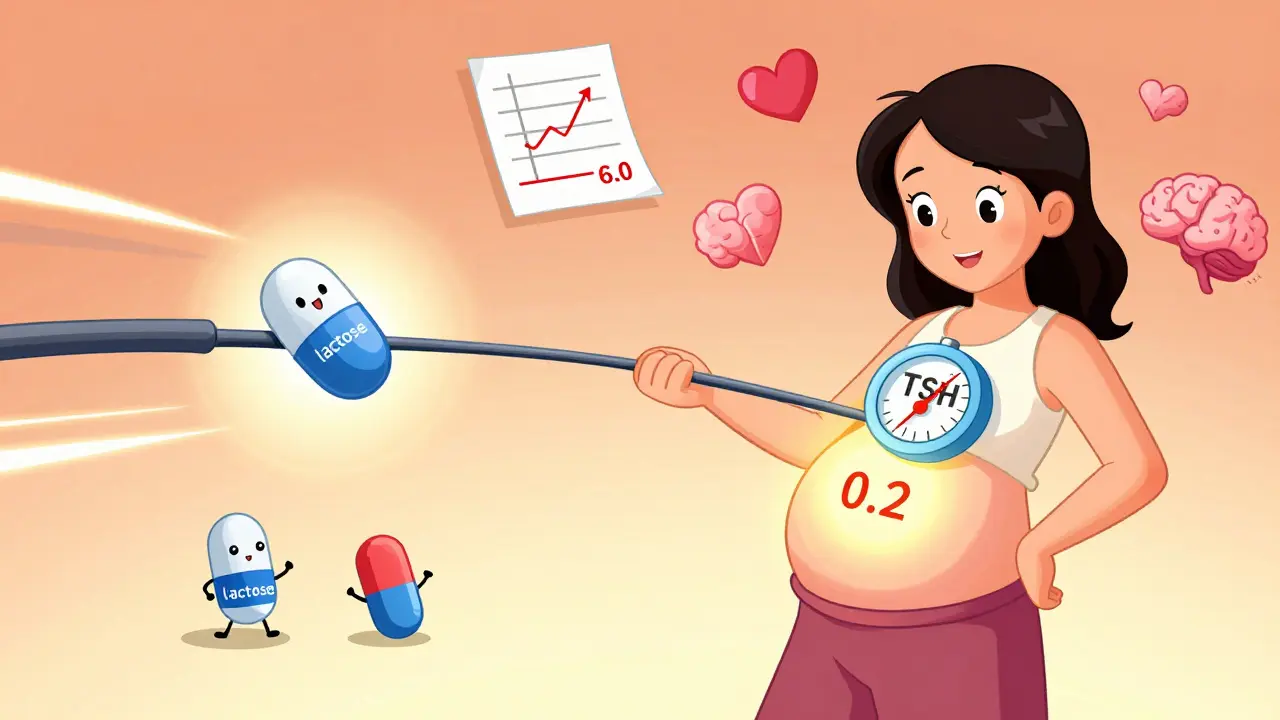
- Pregnant women - Thyroid needs jump during pregnancy. A shift in absorption could affect fetal brain development.
- People with severe heart disease - Too much thyroid hormone can trigger arrhythmias. Too little can worsen heart failure.
- Those with a history of TSH instability - If your levels bounced around before, you’re more likely to react to a new formulation.
- Anyone who feels different after the switch - If you’re suddenly tired, shaky, or gaining weight despite the same dose, get tested. Your symptoms matter more than any guideline.
For everyone else - the 88-92% of patients who don’t notice a change - routine TSH checks after switching aren’t necessary. The cost, hassle, and stress of unnecessary blood tests aren’t worth it.
What the Experts Say Now
The FDA’s official stance is clear: “For most patients, switching between different levothyroxine products does not require additional TSH monitoring beyond routine follow-up.” That update came in January 2024, directly based on the 2022 study data.The American Association of Clinical Endocrinologists (AACE) revised its 2023 guidance to say routine monitoring isn’t needed for most. The UK’s NHS says: “If you feel fine after a switch, no test is needed. If you feel off, get your TSH checked.”
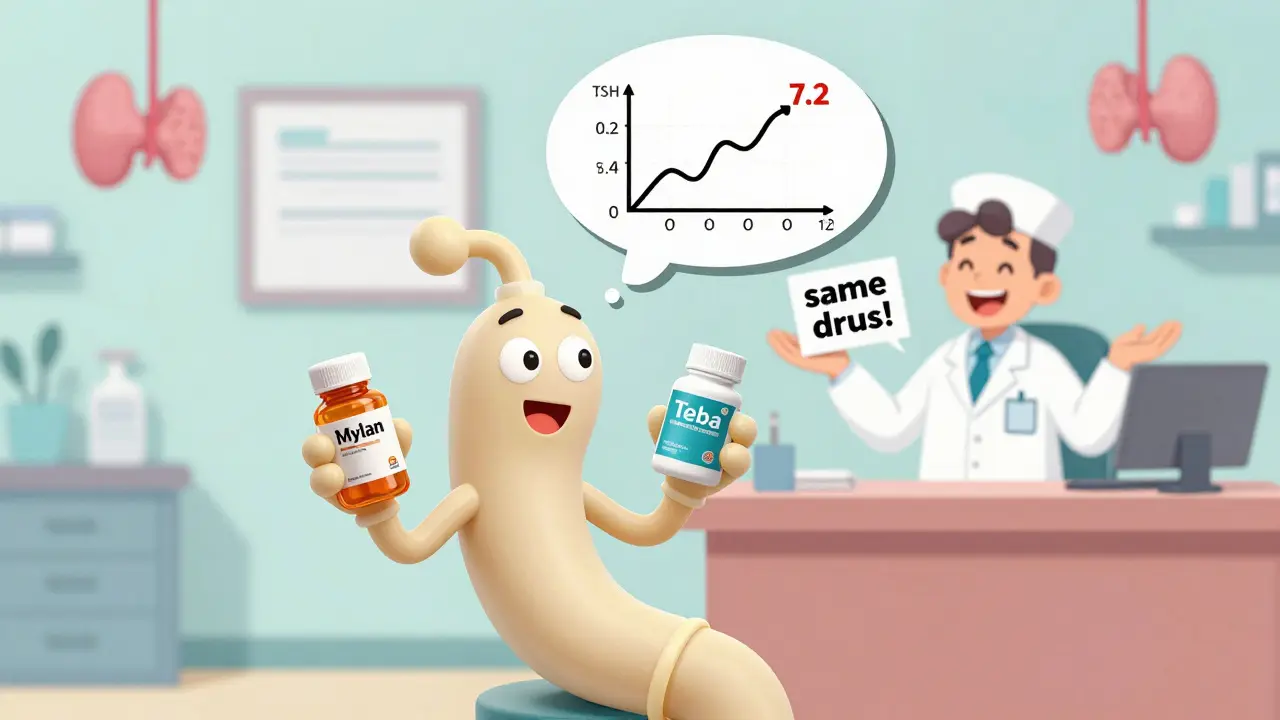
But some doctors still stick to the old rule - “Always test after a switch.” Why? Because they’ve seen patients who had big changes. One patient in Melbourne switched from Mylan to Teva and saw her TSH jump from 1.8 to 7.2 in eight weeks. Her doctor had to bump her dose up by 12.5 mcg. That’s real. That’s not rare. It’s just not common.
The Real Culprits: Fillers and Excipients
Here’s something most people don’t know: the active ingredient in every levothyroxine generic is identical. But the fillers - the non-medicinal ingredients - aren’t. Some brands use lactose, others use cornstarch. A few use dyes or preservatives.For most, this doesn’t matter. But about 1.7% of patients have sensitivities to these fillers. That’s small, but it’s enough to cause problems. One 2022 study in BMJ Open found that patients with unexplained symptoms after switching were more likely to react to a specific excipient than to the hormone dose itself.
If you’ve had symptoms after switching - and your TSH is normal - ask your doctor about excipient sensitivity. It’s rare, but it’s real. And if you’ve had a reaction before, stick with the same brand. Don’t let cost override your health.
What You Can Do
You don’t need to panic every time your pharmacy switches your pill. But you do need to be smart.- Know your dose. Keep a note of your current dose and when you last had a TSH test.
- Ask your pharmacist. When you pick up your prescription, ask: “Is this the same brand as last time?” If not, note the name.
- Track your symptoms. If you feel worse - tired, cold, bloated, anxious - write it down. Don’t wait for your next appointment.
- Don’t assume all generics are equal. If you’ve had a bad reaction to one brand, tell your doctor. You might need to request a specific one.
- Don’t skip routine monitoring. Even if you don’t switch, TSH should be checked every 6-12 months if you’re stable. More often if you’re adjusting doses or pregnant.
The Bigger Picture: Cost vs. Care
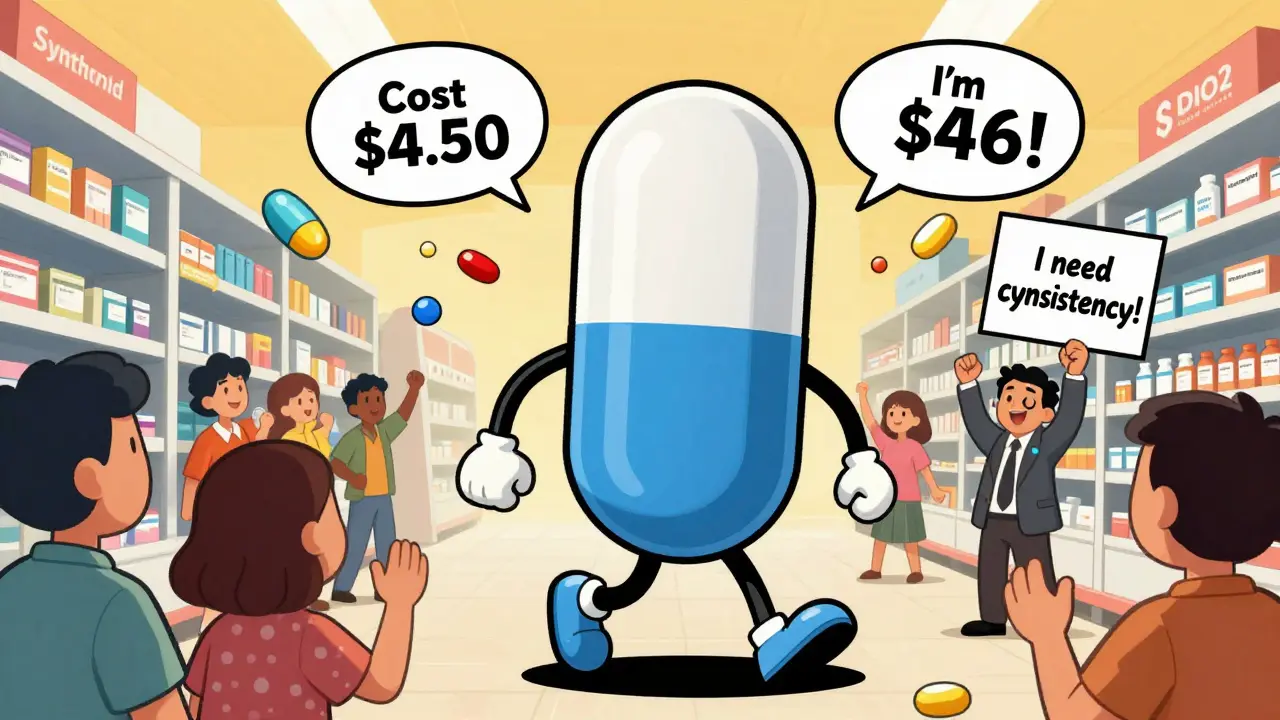
Levothyroxine is one of the most prescribed drugs in the U.S. - over 120 million prescriptions a year. Brand-name Synthroid costs about $46 for a 90-day supply. The generic? Around $4.50. That’s a 90% savings.Because of this, pharmacy benefit managers push generics. In 2023, 89% of levothyroxine prescriptions were filled as generics. That saved the U.S. healthcare system $2.1 billion last year.
But here’s the trade-off: if every switch triggers a TSH test, those savings vanish. A single TSH test costs $50-$100. If 10 million patients got tested after every switch, that’s $500 million to $1 billion in extra costs. And for most, it’s unnecessary.
The goal isn’t to eliminate monitoring. It’s to make it smarter. Target it to the people who need it - not everyone.
What’s Next?
Researchers are now looking for ways to predict who will react to a switch. Early work points to genetics - specifically, variants in the DIO2 gene, which affects how the body converts T4 to T3. About 0.8% of people have this variant. Others may have thyroid receptor differences.Eventually, we may have a simple genetic test to tell you whether you’re in the 8-12% who need consistency - or the 88-92% who can switch freely. Until then, listen to your body. If you feel fine, you’re probably fine. If you don’t, get tested.
Levothyroxine works. Generics work. But your health isn’t a number on a chart. It’s how you feel. Don’t let policy override your experience.
Do I need to get my TSH checked every time I switch generic levothyroxine brands?
No - not for most people. If you’re stable, healthy, and not in a high-risk group (like thyroid cancer, pregnancy, or severe heart disease), routine TSH testing after switching generics isn’t needed. Large studies show no significant change in TSH levels for the majority. But if you feel different - more tired, jittery, or gaining weight - get tested. Your symptoms matter more than any guideline.
Can switching levothyroxine generics cause symptoms even if TSH is normal?
Yes. While TSH is the best marker for thyroid hormone levels, some people report fatigue, heart palpitations, or weight changes after switching - even when TSH is in range. This may be due to differences in inactive ingredients (like lactose or dyes) that affect absorption or trigger sensitivities. If this happens, talk to your doctor. You might need to stick with the same brand.
Which generic levothyroxine brands are most commonly used?
In the U.S., the top four manufacturers are Mylan (32% market share), Teva (28%), Pfizer (22%), and Sandoz (18%). These brands all contain the same active ingredient - levothyroxine sodium - but differ in fillers and manufacturing processes. If you’ve had a reaction to one, note the name and ask your doctor to prescribe it specifically.
Is brand-name Synthroid better than generics?
For most people, no. Studies show no meaningful difference in TSH control between Synthroid and approved generics. The main difference is cost: Synthroid can be 10 times more expensive. Unless you’ve had a confirmed reaction to a generic, or you’re in a high-risk group, generics are just as effective and safe.
What should I do if my pharmacy switches my levothyroxine without telling me?
Always check the label when you pick up your prescription. If the brand name changed and you’re feeling unwell, contact your doctor. Don’t wait for your next appointment. If you’ve had issues before, ask your doctor to write “Dispense as Written” or “Do Not Substitute” on your prescription. Pharmacists are required to honor that.


Post A Comment