
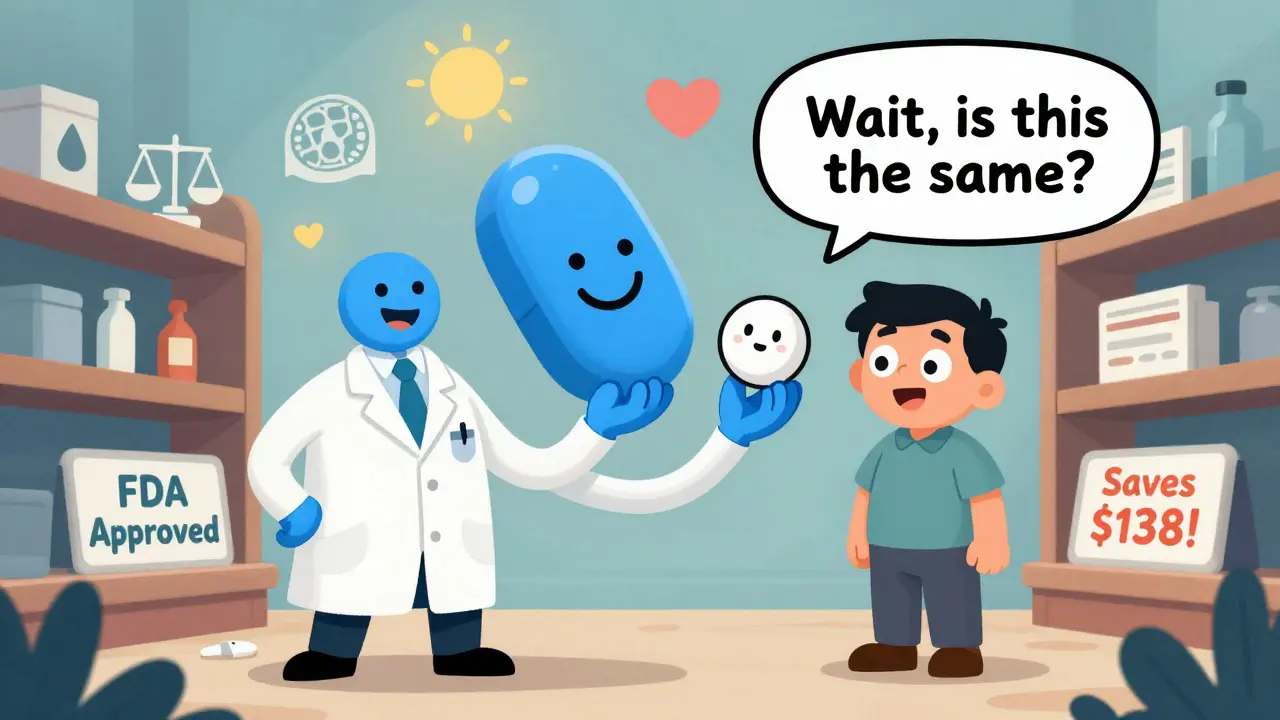
When you pick up a prescription, you might notice your pill looks different than last time - maybe smaller, a different color, or with a weird logo. That’s not a mistake. It’s probably a generic medication. And if you’ve ever wondered whether it’s just as good as the brand-name version you used to take, you’re not alone. The truth? For most people, it is. But not everyone knows how to ask the right questions - or even if they should.
Why Generic Medications Exist
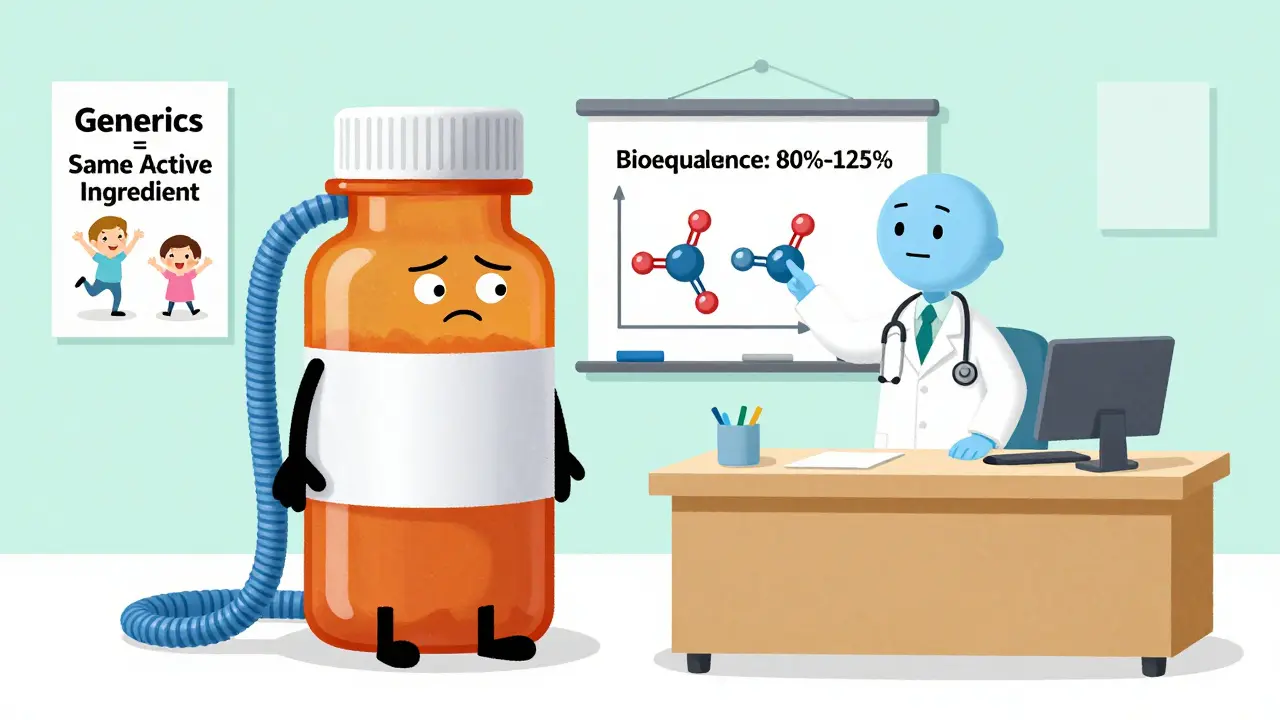
Generic drugs aren’t knockoffs. They’re legally required to be exact copies of brand-name drugs in every way that matters: same active ingredient, same dose, same strength, same way of working in your body. The U.S. Food and Drug Administration (FDA) doesn’t allow them on the market unless they prove they work the same way. This is called bioequivalence. The FDA says generics must deliver between 80% and 125% of the brand-name drug’s absorption rate. In practice, most generics are within 3.5% of the original. That’s less variation than you’d see between two different batches of the same brand-name drug.So why do they cost so much less? Because the company that made the original drug spent years and millions developing it, running clinical trials, and getting FDA approval. Once the patent expires - usually after 20 years - other manufacturers can step in. They don’t have to repeat those expensive studies. They just have to prove their version behaves the same way. That’s why a 30-day supply of a brand-name blood pressure pill might cost $150, while the generic version costs $12.
What’s Actually Different
The only real differences between generic and brand-name drugs are things you can’t control: shape, color, flavor, and inactive ingredients. These are called fillers or binders - things like cornstarch, dyes, or flavorings. They don’t affect how the drug works. But they can affect how you feel about it.Some people swear they feel different on a generic. They say their headaches come back, or their anxiety spikes. But studies show this is often the nocebo effect - the opposite of placebo. If you believe the cheaper version won’t work, your brain can convince your body it’s not working. One Kaiser Permanente survey found that 17% of patients worried when switched to generics - but 92% of them felt fine after a pharmacist explained the science.
Also, generics can’t look exactly like the brand-name version. That’s trademark law. So if you’re used to a big blue pill with a stripe, and now you get a small white pill with a dot, it’s normal. But it can be confusing. That’s why you should always check the label and ask your pharmacist if something looks off.
When Brand-Name Might Still Be Worth It
There are exceptions. For drugs with a narrow therapeutic index - where tiny changes in blood levels can cause serious side effects or make the drug useless - some doctors prefer brand-name. Think warfarin (blood thinner), levothyroxine (thyroid hormone), or certain seizure meds. Even here, the FDA says approved generics are safe. But some patients, especially those with unstable conditions, do better staying on one version.And then there are biologics - complex drugs made from living cells, like insulin or rheumatoid arthritis treatments. These don’t have true generics. Instead, they have biomimetics or biosimilars. These are similar, but not identical. Switching between biosimilars and the original brand can be risky without close monitoring. If your doctor prescribes one of these, ask if it’s a biosimilar and whether switching is safe for you.
What to Say to Your Doctor
You don’t need to be a pharmacist to have a smart conversation about your meds. Here’s what to ask:- Is there a generic version available? - This is the simplest question. If there is, and you’re paying out of pocket, it could save you hundreds a year.
- Will the generic work as well for my condition? - Especially if you have a chronic illness like epilepsy, heart disease, or autoimmune disorder.
- Are there any reasons I should take the brand-name drug instead? - This invites your doctor to speak up if there’s a real clinical reason to avoid the generic.
- Have you seen patients have problems switching? - This opens the door for honest feedback based on real experience.
Don’t be afraid to say: “I’m on a tight budget. Can we go with the cheaper option?” Doctors hear this more than you think. They’re not there to sell you expensive pills. They’re there to keep you healthy - and that includes helping you afford your meds.
State Laws and Pharmacy Rules
In Australia and most U.S. states, pharmacists are required to substitute a generic unless your doctor writes “dispense as written” on the prescription. That means if your doctor doesn’t say otherwise, the pharmacy will automatically give you the generic. This is meant to cut costs - and it works. Over 90% of prescriptions filled in the U.S. are for generics. But it also means you might not get a say unless you speak up.So if you’ve had a bad experience with a generic in the past - say, your migraines got worse, or your blood sugar went haywire - tell your doctor before they write the script. Say: “I had a reaction when I switched to a generic last time. Can we make sure I get the brand?”
What Patients Are Really Feeling
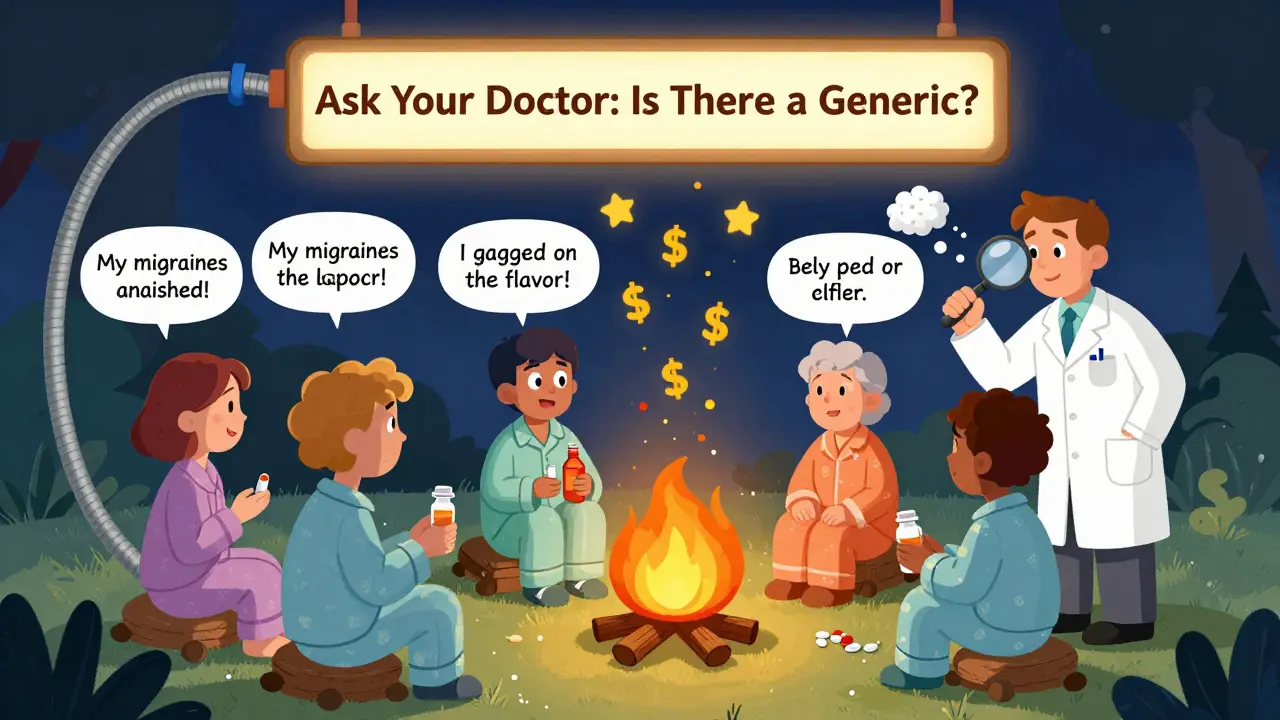
Real-world data tells us something surprising: 89% of people who switch from brand-name to generic report no difference in effectiveness. That’s according to Consumer Reports. On Reddit, users in r/Pharmacy say they’ve switched back and forth between generics and brands for years - and most say they can’t tell the difference.But the complaints? They’re real. Some people say their generic pills make them nauseous. Others say they don’t “feel” the same. Often, it’s the inactive ingredients - like lactose, gluten, or artificial dyes - that cause sensitivity. If you have allergies or intolerances, ask your pharmacist: “What’s in this pill?” They can check the manufacturer’s sheet and sometimes switch you to a different generic brand that uses different fillers.
One woman in Melbourne told her pharmacist she couldn’t tolerate the flavor of her generic thyroid pill. She’d gag every time she swallowed it. The pharmacist found a different manufacturer that used a flavor-free version. She’s been fine since.
How to Save Money Without Sacrificing Care
Generic drugs save the U.S. healthcare system over $1.6 trillion since 2007. In Australia, the Pharmaceutical Benefits Scheme (PBS) relies heavily on generics to keep costs down. If you’re paying full price, ask your pharmacist if the generic is covered under PBS. Often, it’s a fraction of the cost.Use tools like GoodRx or the PBS app to compare prices. Sometimes, two different generic brands cost different amounts. One might be $8, another $15. Same drug. Same effect. Just different manufacturer. You can ask for the cheaper one.
And if you’re on a fixed income or struggling to afford meds, talk to your doctor about patient assistance programs. Many drugmakers offer discounts or free supplies - even for brand-name drugs - if you qualify.
Final Thought: It’s Not About Cheap. It’s About Smart.
A generic isn’t “inferior.” It’s just a different version of the same thing. The FDA doesn’t approve drugs based on price. They approve them based on science. And the science says: for nearly every condition, generics work just as well.But your experience matters. If you feel worse after a switch, don’t assume it’s in your head. Talk to your doctor. Ask for a different generic. Or ask to stay on the brand. Your health isn’t a cost-cutting exercise. It’s your life.
Next time you get a prescription, ask: “Is there a generic?” Then listen. You might save money. You might save your health. Or you might just get the same pill for less.


Post A Comment